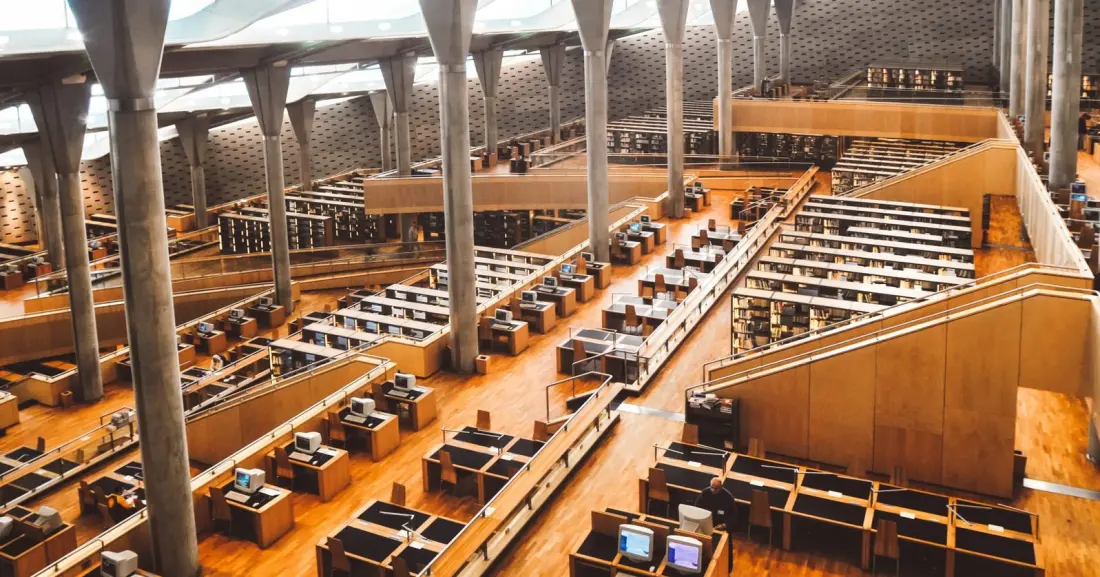
Alexandria's modern great library has added a new role to its repertoire: keeper of a national self-portrait. The Bibliotheca Alexandrina, the striking 2002 building on the Mediterranean corniche whose curved wall is carved with characters from scripts around the world, has issued the 'Alexandria Document on National Identity' — a reference text produced at the close of a national identity conference held 21–23 September under the patronage of President Abdel Fattah al-Sisi.
The document is the work of a committee of scholars and cultural figures, and it reaches back a long way: they anchor Egyptian identity to the unification of Upper and Lower Egypt in the late fourth millennium B.C., and to the shared homeland of the Nile and its delta. Identity, they argue, rests on collective memory, religious and moral values, the Arabic language and national symbols, all guaranteed by Article 47 of the Constitution — and broad enough to embrace Egypt's Arab, African and Mediterranean ties. Eight pillars are listed, from unity of the land to equal citizenship.
What makes it more than a ceremonial statement is the diagnosis of threats. The authors flag digital media, consumer culture, misinformation, hate speech and weakening social bonds as pressures — with young people and children most exposed. Arabic gets particular attention: the document worries the language is losing ground in science, education and online spaces, and warns that a two-track school system could deepen class divides. It also credits families, and mothers especially, with passing on stories, proverbs and songs, and calls for more support for that role.
The practical proposals include teaching Egyptian history as one continuous story, protecting both tangible and intangible heritage, promoting Arabic in education and digital spaces, backing translation, and building digital literacy — with priority for remote areas, poorer communities and people with disabilities. The conference is set to become an annual September fixture.
Why should a traveller care? Because Alexandria is one of Egypt's most rewarding cities, and the Bibliotheca Alexandrina is its anchor attraction — a working library, museums, planetarium and exhibition spaces right on the harbour. Visiting now, you're seeing an institution actively shaping how a nation tells its own story, not just preserving papyrus. Pair it with the Greco-Roman Museum, the catacombs of Kom El Shoqafa and the Citadel of Qaitbay, built on the site of the ancient lighthouse, and you get the full sweep the document talks about: Pharaonic, Greek, Roman, Arab and Mediterranean layers in one waterfront city. Egypt's heritage debates are also a reminder for visitors to treat historic sites and local traditions with the respect the document is campaigning for — a good instinct anywhere.