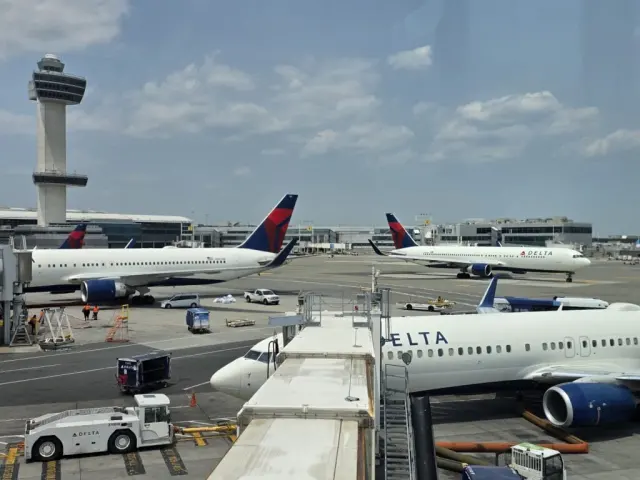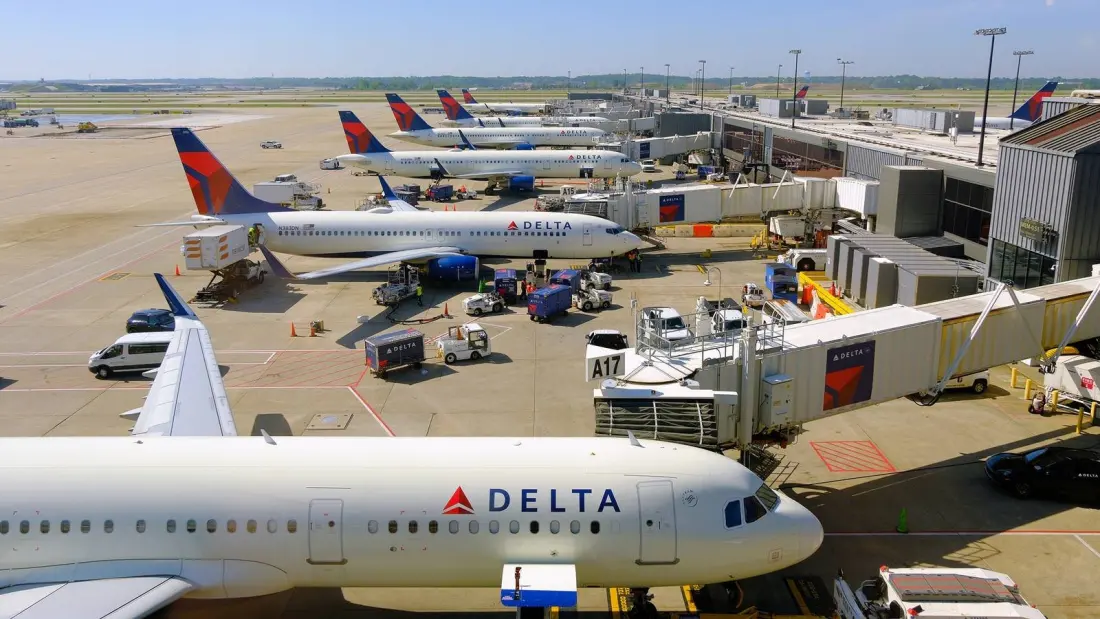
A technical failure at Delta Air Lines froze departures into the busiest airport in the United States on Sunday morning, just as the Thanksgiving travel rush was getting underway. The problem: an outage in the airline's Automated Load Instruction System (ALIS), the software that handles the weight-and-balance calculations required before every flight can safely take off.
At Delta's request, the Federal Aviation Administration imposed a ground stop on Delta flights heading to Hartsfield-Jackson Atlanta International Airport (ATL), initially set to run until at least 9:00 AM ET. It was downgraded to a ground delay program shortly after 8:40 AM, letting flights resume under restrictions. By then, more than 400 flights at ATL had been delayed — nearly 20% of all traffic at the airport — with inbound delays averaging 57 minutes. Delta passengers also reported disruption at Newark, LaGuardia, Reagan National, Dulles, Boston, Baltimore, Miami and Minneapolis.
Why does a software glitch ground hundreds of planes? Every departure needs a final load sheet confirming the aircraft's total weight and centre of gravity once passengers, bags, cargo and fuel are aboard. Those figures determine takeoff speeds and engine thrust. When automation fails, crews must do the maths by hand, which slows every departure. At a hub the size of Atlanta, slow turnarounds mean parked aircraft clog gates, so holding inbound flights at their origin airports prevents planes arriving with nowhere to park. Delta said it was using "manual workarounds" and coordinating with air traffic control to protect gates and tarmac space, though it had not revealed what caused the outage.
The timing could hardly be worse. The Sunday before Thanksgiving marks the start of the year's biggest travel surge, with US carriers expected to fly nearly 29 million passengers between November 20 and 30 — roughly 2.7 million a day — and about 38,000 more daily seats than last year. It is also Delta's second major operational blow in under two weeks: a four-hour nationwide FAA ground stop on November 13, triggered by a telecoms failure, left aircraft and crews scattered and caused days of knock-on delays and cancellations.
There is a pattern here, too. United Airlines suffered a strikingly similar weight-and-balance outage just a week earlier, holding departures network-wide for over 90 minutes. Together the incidents show how dependent modern airlines are on a handful of automated systems — and how quickly a single failure can ripple across the country.
For travellers, the practical lesson is about buffers, not alarm. If you are flying during peak periods, build slack into connections, keep an eye on your airline's app for status updates, and know that weather is not the only thing that can upend a holiday schedule. Airlines are generally quick to rebook passengers affected by system outages, but recovery takes longer when aircraft and crews are already stretched thin at the start of a record travel week.