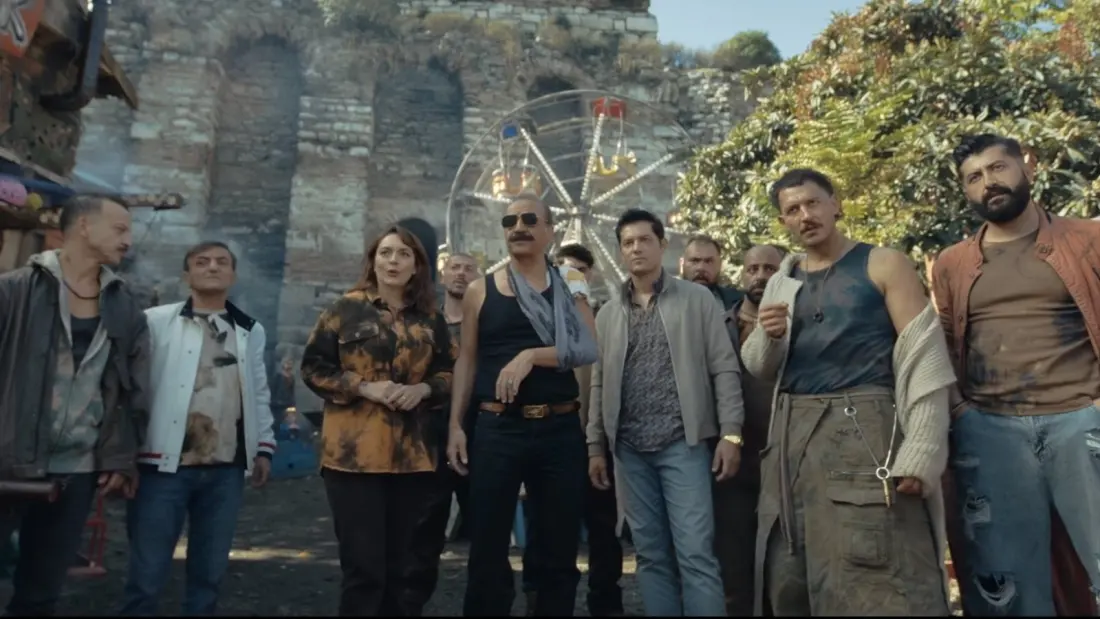
Twenty years after "Organize Işler" charmed Turkish cinema audiences, Yılmaz Erdoğan has brought his band of schemers back for an eight-episode Netflix series, "Organize Işler: Karun Hazinesi" ("Money Trap: The Karun Treasure"). The premise: Asım Noyan and his crew chase a treasure map linked to the legendary wealth of Croesus — the ancient Lydian king known in Turkish as Karun, a byword for untold riches. Along the way come rival gangs, shifting alliances and plenty of obstacles.
The review in Daily Sabah Travel finds the ingredients all present — familiar characters, solid performances, flashes of genuine comic timing — yet concludes the series rarely earns the emotional depth that made Erdoğan's earlier work endure. The critic's core complaint is structural: rather than cause and effect driving events, new action simply generates new scenes. Characters lurch from one confrontation to the next, keeping viewers busy without building real dramatic tension. Length, the review argues, doesn't automatically produce depth; an eight-episode format only works if it deepens the people on screen.
There's also a moral shift worth noting. The 2005 original gave weight to the victims of the cons — real people outside the criminal world who paid the price for Asım Noyan's cleverness. The new series largely confines itself to rivalries within the underworld, where charisma rather than conscience determines who wins the audience's sympathy. Erdoğan's gift, honed from "Bir Demet Tiyatro" to "Vizontele," has always been portraying ordinary people through their embarrassments, vanities and doomed dreams — nobody wholly good, nobody wholly bad. That human resonance is what the reviewer says is thinner this time around.
The most interesting thread the review picks up is Asım Noyan himself. His appeal has never been the crime; it's his refusal to treat society's rules as anything more than obstacles. For audiences who can't afford to break the rules, a character who mocks them openly is irresistible — though identifying with him carries a cost the series mostly sidesteps. The critic suggests the richest material was left unexplored: whether a man can genuinely escape the life he built, not just say he wants to.
For travellers, this is a decent entry point into modern Turkish screen culture — the kind of series locals actually talk about, and a reason to add Istanbul's film locations and Anatolian backdrops to a watch-and-visit list. The underlying legend is real too: the Lydian treasure associated with Croesus is tied to western Turkey, where Sardis, the ancient Lydian capital, sits near modern Salihli in Manisa province. Fans of the original film should temper expectations but may still enjoy catching up with characters they first met two decades ago. The review's closing question lingers beyond the screen: maybe the treasure was never the gold, but the stories we still carry with us.
Review by İbrahim Varelci, Daily Sabah Travel.