A string of high-profile technology failures has left travellers and businesses alike asking an uncomfortable question: what happens when the systems we depend on simply stop working?
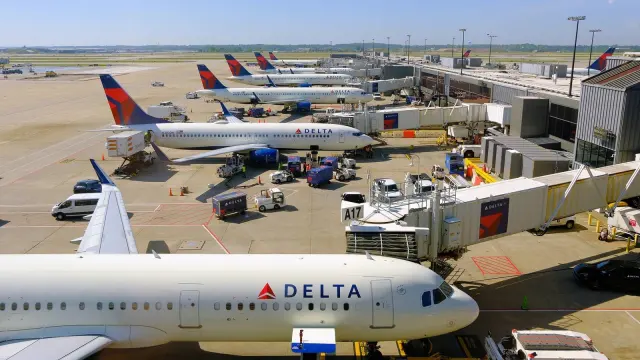
The past few weeks have delivered a remarkable list. Microsoft services went down across dozens of countries. JPMorgan Chase suffered an outage that knocked out banking services for US customers. A cyberattack hit the European Commission, Ethiopian Airlines reported a data breach, and a US aviation disruption grounded flights — the kind of event that, even at just a few hours long, can scramble airline schedules and passenger plans for days or weeks afterwards.
The causes differed, but the pattern did not: each problem originated in a shared dependency and rippled far beyond it. Security researcher Scott Helme, founder of Report URI, put it plainly — when thousands of organisations rely on a single provider, one failure becomes thousands of incidents at once. And switching providers doesn't necessarily help, since backups and alternative suppliers often share the same underlying weak points.
The anxiety is showing up in spending, too. Emergency-preparedness retailer Ready America reportedly saw a roughly five-fold jump in e-commerce sales in recent days, part of what CNBC has dubbed a "doomsday economy." Social media has amplified the panic, with unfounded theories blaming artificial intelligence for the glitches. Georgia Tech professor Saman Zonouz noted that public evidence shows no direct AI involvement — the real problem, he argued, is bolting new technology onto ageing infrastructure.
AI may still make things worse before it makes them better. Microsoft CEO Satya Nadella warned at the New York Times DealBook Summit that AI tools are rapidly finding software vulnerabilities, pressuring companies to patch flaws before attackers exploit them — and potentially enabling what he called a nation-state-level persistent attacker, which would mean "a lot of fragility." Meanwhile, US President Donald Trump shrugged the whole thing off as "life," even as his administration pushes AI development with a 90-plus-point policy agenda.
So why should a holidaymaker care? Because modern travel runs on exactly the fragile stack this story describes: cloud platforms like Microsoft Azure, AWS and Google Cloud, plus DNS providers, authentication systems and payment processors. When any one layer fails, you can't check in, board, pay or even message family — since much daily communication now sits with a handful of companies running apps like Teams and WhatsApp.
The practical response is old-fashioned resilience. Keep printed copies of bookings and key documents, carry some physical cash, note airline and hotel phone numbers on paper, and build slack into tight connections — a couple of hours of disruption can cascade into days of chaos. Experts also want companies to do their part: staged rollouts, tested rollback procedures, manual fallbacks and transparent incident reporting, so systems keep operating safely even when the software doesn't.
No single fix is coming. Until then, a little analogue backup is the cheapest travel insurance you can buy.
Credit: Daily Sabah Travel