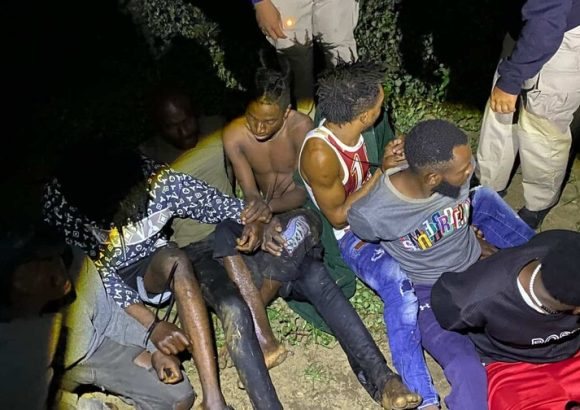
Dominican Republic immigration authorities carried out a large one-day sweep on Friday, October 30, detaining 2,256 foreigners who were in the country without regular migration status. The General Directorate of Migration (DGM) said operations ran across urban neighbourhoods, rural communities and border corridors, with support from the army, the national police and the border security corps known as Cesfront.
The DGM directly registered 1,466 of the detainees, with the rest logged by the supporting agencies. The heaviest activity was along the Haitian border: Dajabón led with 317 detentions, followed by Elías Piña with 292. Valverde recorded 157, Pedernales 150, and La Vega and Santo Domingo 149 each. Detainees were transferred to the Haina Processing Center in San Cristóbal for immigration procedures.
The geographic spread is what stands out for anyone travelling in the country. Border towns such as Dajabón, Loma de Cabrera, Comendador, Jimaní and Oviedo were covered, but so were areas firmly on the tourist map: Samaná on the northeast coast, La Altagracia — home to Punta Cana — San Pedro de Macorís, and Pedernales in the far southwest. In the Cibao region, operations touched Santiago, Tamboril, Navarrete, Licey al Medio and several rural spots, with additional activity in Azua, Peravia, San Cristóbal, Espaillat, Duarte, Neiba and Villa Jaragua.
This was not a single isolated day, either. Between October 23 and October 30, the DGM reported 339 detentions of undocumented Haitians working in agriculture in a single province, while Dajabón province logged 1,375 apprehensions for the week and Valverde 818. Further northern operations were reported in Montecristi, María Trinidad Sánchez and Samaná, plus Santiago Rodríguez, Monseñor Nouel and Duarte.
Why does this matter to travellers? For most visitors staying at resorts in Punta Cana or exploring Samaná's beaches, day-to-day impact is minimal — enforcement is aimed at undocumented workers, not tourists. But there are practical takeaways. Anyone crossing the land border between the Dominican Republic and Haiti should expect a heavier security presence and possible delays at crossings like Dajabón and Jimaní, and should carry valid travel documents at all times. Travellers of Haitian descent, even those with foreign passports, may want to keep ID easily accessible. Road trips through border-adjacent provinces such as Pedernales or Elías Piña — both increasingly pitched to eco-tourists — are more likely to involve checkpoint stops for the foreseeable future.
The broader picture is worth noting: the scale of these operations signals a sustained enforcement push, not a one-off, so conditions could shift quickly in border areas. Tourists should monitor local news if their itinerary includes overland border crossings, and consider flying between the two countries rather than crossing by land if documentation isn't fully in order. Resort zones and main tourist corridors remain largely unaffected by the operations themselves, but heightened immigration activity nationwide can occasionally slow traffic at routine police checks.
Original source: Dominican Today