The Dominican Republic has quietly become the staging ground for one of the more unusual military operations in the Caribbean in recent years. El Salvador's government has sent more than 2,000 soldiers towards Haiti to try to rescue four Salvadoran aeronautical technicians who have been missing since 18 October, when their team was caught in a gang ambush. And nearly everything moving between the two countries is passing through Dominican soil.
Santo Domingo insists it is not joining the fight. What it has offered is transit, equipment transfers and medical evacuations for international personnel — plus help moving blood and supplies, which matters because Haiti's own ports and airports are barely functioning. President Luis Abinader says he personally coordinated the arrangement with Salvadoran president Nayib Bukele on the 24th.
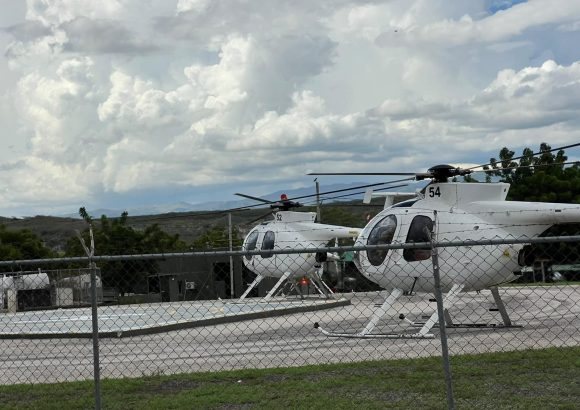
The movement itself read like a logistics exercise. Seven military helicopters stopped at the El Rodeo fortress in Jimaní, near the Haitian border, before crossing over. Five MD500E machines belonging to El Salvador had arrived at Las Américas International Airport earlier that Wednesday, flown in from San Salvador aboard a Boeing 747-400 freighter operated by US carrier National Airlines. They reached Jimaní at 3:45 p.m., were joined by two Black Hawks at 4:10 p.m., refuelled, and lifted off for Haiti an hour later.
Bukele has been quick to frame the deployment as a rescue, not an occupation. Writing to Haitians in Creole on X, he denied any intention of taking territory or resources, said El Salvador is covering most of the operation's costs, and promised his troops will go home once it ends. His wording was blunt: the mission, he said, is about teaching criminal gangs a lesson.
The backdrop remains grim. The Norwegian Refugee Council reported that two of its Haitian staff members, Bonaparte Février and Richard Alexandre, were murdered in Port-au-Prince on the night of 27 October. The organisation's secretary general, Jan Egeland, condemned the killings and urged Haitian authorities and the international community to do more to protect civilians.
For travellers, the practical takeaway is simple: Haiti remains off the itinerary. Gang violence has hollowed out basic infrastructure, humanitarian workers are being targeted, and foreign governments maintain the strongest possible warnings against travel there. The Dominican Republic, by contrast, continues to welcome millions of visitors a year along its resort-heavy northern and eastern coasts — though anyone planning to drive near the 400-kilometre border with Haiti should expect checkpoints and heightened security while this operation runs. Punta Cana, Santo Domingo and Puerto Plata are unaffected in practical terms, but flights that would normally overfly or connect through Haitian airspace may see reroutes, so it's worth double-checking itineraries if your route touches the region.