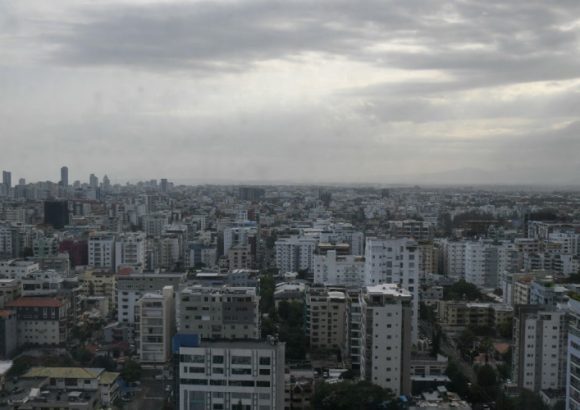
Photos from early-20th-century Santo Domingo show a city almost unrecognisable today: Bolívar Avenue was a corridor of pink oaks, mahoganies lined Duarte Avenue, and laurels shaded Independence Avenue. Those trees were deliberately planted in the decades after the devastating San Zenón cyclone of the 1930s. Eighty years on, an inventory by researchers at the Technological Institute of Santo Domingo (Intec) has found tree cover across the National District at just 15.4%, with more than 60% of the ground sealed under cement, asphalt and buildings — a combination that pushes up temperatures and worsens flooding.
The decline was gradual rather than sudden. Road projects and high-rise development swallowed gardens and yards, while replanting schemes were either never implemented or used the wrong species. There were bright spells: between 1966 and 1978 the city created Mirador Sur park, the Zoo, the Botanical Garden and Mirador del Este, lifting green space per resident from 3.6 to 13 square metres. But Hurricane David and Tropical Storm Federico in 1979 wiped out roughly 40% of the city's trees — half of Mirador Sur and 60% along the coast — and 1980s replanting leaned on fast-growing, short-lived exotics like casuarina and yellow acacia.
Even the city's safety net has shrunk. The Santo Domingo Green Belt, created by decree in 1993 at around 130 square kilometres, had lost an estimated two-thirds of its land to urban sprawl by 2010. Recent efforts include 2004 urban tree regulations banning the worst offender species, and the "Plant Your City" scheme launched in 2021, which reported over 110,000 trees, shrubs and ornamentals planted since 2020 — though the figure doesn't clarify how many are actual trees. Gaps remain: sidewalk and park trees fall under municipal rather than national jurisdiction, leaving enforcement murky, and a reform to the ordinance was tabled in September by councilman Wilkin Martínez. Neither the Ministry of Environment nor the Mayor's Office responded to requests for comment.
For travellers, this isn't just civic trivia. Santo Domingo runs hot, and the lack of canopy makes walking the Colonial Zone or the Malecón in the middle of the day genuinely punishing — plan sightseeing for mornings, and head for the shaded refuges that survive. The National Botanical Garden is the city's green showpiece, and Mirador Sur Park gives a sense of what the capital's planners once intended. The story is also a reminder that Dominican nature tourism doesn't stop at the city limits: the green belt and nearby reserves are under real pressure, so supporting well-run parks and tours matters.
What happens next depends on whether the capital's replanting promises turn into streets that actually look like those old photographs. For now, visitors should pack the sunscreen — the grey has, for the moment, won.
Story via Dominican Today.