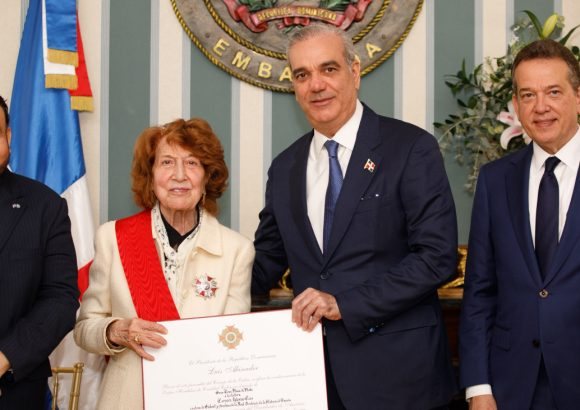
President Luis Abinader has decorated Spanish historian Carmen Iglesias Cano — Countess of Gisbert and director of Spain's Royal Academy of History — with the Heraldic Order of Christopher Columbus, one of the Dominican Republic's highest distinctions, in the grade of Grand Cross Silver Plaque.
The award recognises a long and rigorous academic career. Iglesias has published more than 200 works and built her reputation studying political ideas, institutions and the social changes that shaped the modern world. She has also led the Center for Political and Constitutional Studies in Madrid and served on Spain's Council of State, a resume that Miguel Reyes Sánchez, head of the Dominican Academy of History, described as exactly the kind of scholarship the honour exists to reward.
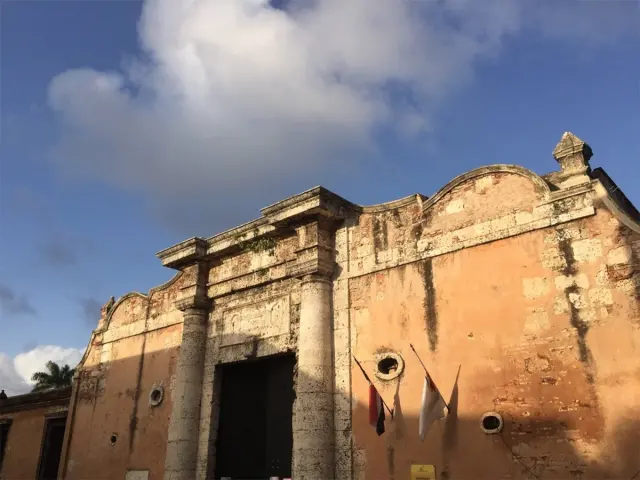
Why does a Spanish historian matter to the Dominican Republic? Reyes put it plainly: her research helps explain the shared history of Spain and the Dominican Republic, a story that begins with Columbus's 1492 landfall on the island of Hispaniola. Santo Domingo, founded in 1496, is the oldest continuous European settlement in the Americas, and the colonial quarter's cathedrals, forts and cobbled streets are a direct legacy of that Spanish connection. Rigorous, independent historical work — Reyes stressed the need for dialogue between different perspectives — underpins how both countries understand that shared past.
For her part, Iglesias thanked the president and the Dominican Academy of History, and recalled two decades of involvement with the Forum of America and her travels across Latin America, ties that give her a personal stake in the region's story.
For travellers, this is a reminder that Santo Domingo's Colonial Zone is one of the Caribbean's genuinely rewarding heritage destinations, not just a stopover between beaches. The award ceremony itself is a piece of diplomatic news, but the subject at its heart — the Spanish-Dominican historical relationship — is written into the very streets visitors walk. A morning in the Zona Colonial, taking in the Catedral Primada de América, Alcázar de Colón and the ruins along the Ozama River, is effectively a walk through the same 500-year story this decoration honours.