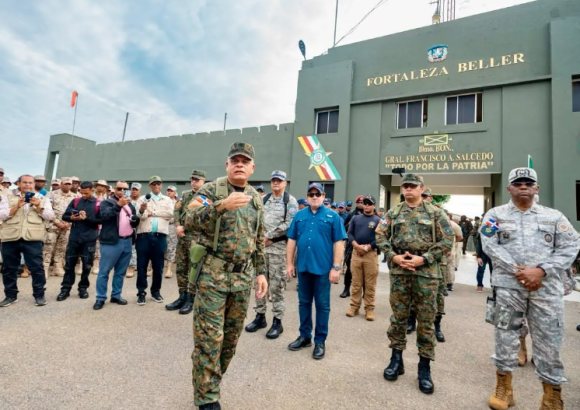
Travellers crossing between the Dominican Republic and Haiti have been watching the news nervously, but the Dominican government says there's no cause for alarm on the border itself. Defence Minister Lieutenant General Carlos Antonio Fernández toured the main official crossings this week and described the situation there as "completely calm".
Fernández travelled the border with Presidency Minister José Ignacio Paliza, stopping at the four principal checkpoints: Dajabón and Elías Piña in the northwest, Jimaní in the centre, and Pedernales in the far south. Officials report that trade, authorised crossings and day-to-day activity are all running as normal at these points.
The reassurance tour comes against a backdrop of serious instability inside Haiti, where armed gangs have taken control of large areas. Fernández noted that the gang activity is concentrated around Mirebalais and Croix-des-Bouquets — further from the Dominican border than some coverage has implied. El Salvador has sent troops into Haiti to confront the gangs, after four of its soldiers disappeared following an attack on 18 October, and the Dominican Republic is backing that effort with logistics, intelligence, equipment and medical support.
Still, Santo Domingo isn't taking chances. President Luis Abinader said the government has recently reinforced the frontier with two extra battalions plus heavy equipment and artillery, on top of roughly 11,000 military personnel already stationed along the border. Paliza cautioned that the regional response should follow international procedures to avoid prolonging the crisis, and both ministers said more measures will follow if needed.
For travellers, the practical takeaway is straightforward: the official crossings are open and functioning, but the border zone is heavily militarised and the situation in Haiti remains volatile. Anyone planning to cross — whether overland through Dajabón's busy market days or via Jimaní — should check current conditions shortly before travelling, carry proper documentation, and cross only at official points during daylight hours. Travellers sticking to the Dominican side of the island, from Punta Cana to Puerto Plata, are unaffected by these security operations.