Skip the shinkansen for a few days and you'll find a slower Japan hiding in the mountains between Kyoto and Tokyo. The Nakasendo — literally the 'road through the mountains' — was one of five great highways of the Edo period (1603-1868), running roughly 530km across the interior of Honshu. Samurai, merchants, pilgrims and feudal lords hauling their entourages to Edo every other year all walked it, resting in 69 official post towns along the way.
Much of the original route has vanished, but the Kiso Valley preserves some of its best stretches. The classic walk links Magome-juku in Gifu Prefecture to Tsumago-juku in Nagano: 8km through woodland, farmland and hamlets, with Otaki and Metaki waterfalls and an old teahouse for rest stops. It takes about three hours at an easy pace and is signposted in English. Starting in Magome means less uphill. If you're carrying luggage, tourist information centres run a forwarding service between the villages — though it operates seasonally, so check ahead. Want something tougher? The 8.5km climb over Torii Pass from Yabuhara to Narai takes around two and a half hours.
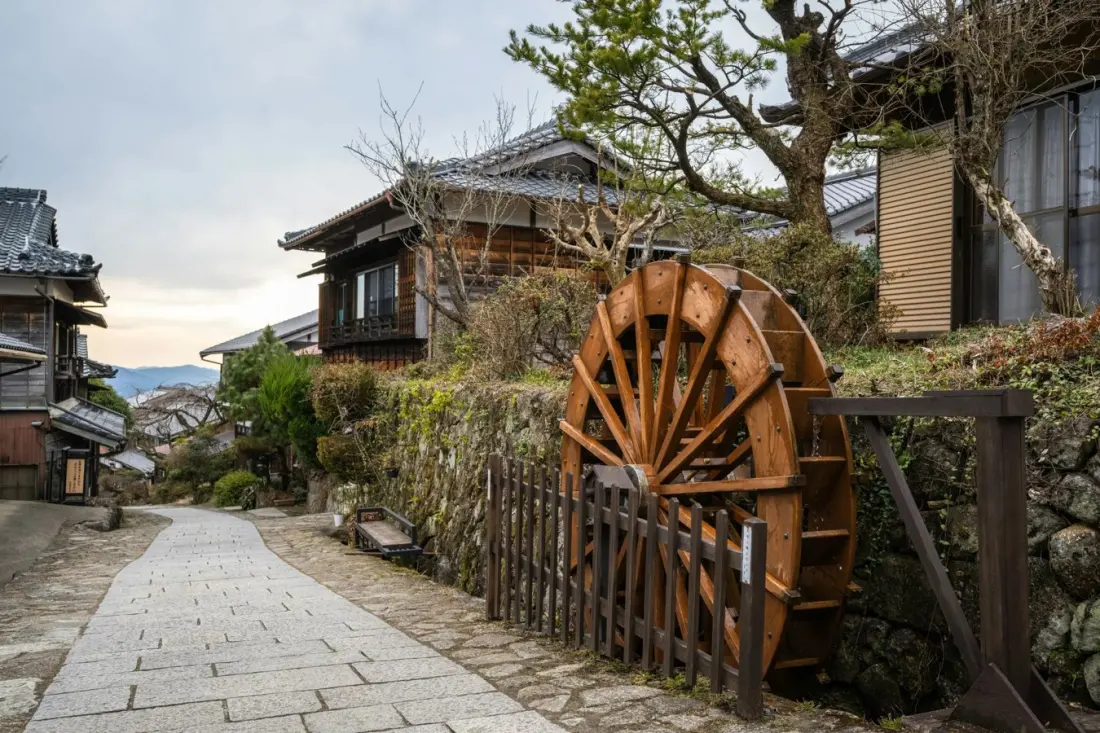
The post towns are half the appeal. Magome's historic main street doubles as the birthplace place of novelist Shimazaki Toson, honoured in a local museum. Tsumago is arguably Japan's best-preserved post town, saved since 1968 by residents who restricted daytime traffic and buried power lines; you can visit the restored honjin and wakihonjin inns that once ranked travellers by status, or stay overnight in one. Further on, Narai — 'Narai of a Thousand Houses' — has a kilometre-long historic street and a reputation for Kiso lacquerware, and it sits right by the train station. Kiso-Fukushima adds a twist: a restored Edo-period checkpoint, now a museum, where officials once screened everyone moving along the highway.
Timing matters. April-May and July-November are the reliable walking windows, with spring and autumn the busiest — book autumn accommodation early. June and early July are rainy, and winter trails get slippery. Lodging ranges from ryokan to family-run minshuku, with Tsumago and Narai the atmospheric picks and Kiso-Fukushima offering the widest choice.
Access is straightforward: reach Nagoya from Tokyo or Kyoto, then take the JR Chuo Line. Nakatsugawa Station connects by bus to Magome; Nagiso Station serves Tsumago by bus or taxi. Buses are infrequent, so plan around timetables. Pack decent shoes, water and layers — the forest stretches have few shops — and note that parts of the trail pass through bear habitat; follow local advice and carry a bear bell where recommended.
If your Japan itinerary is all cities, this is the counterweight: a few days of preserved streets, mountain forest and inn dinners in communities that have guarded their Edo-era character for decades.