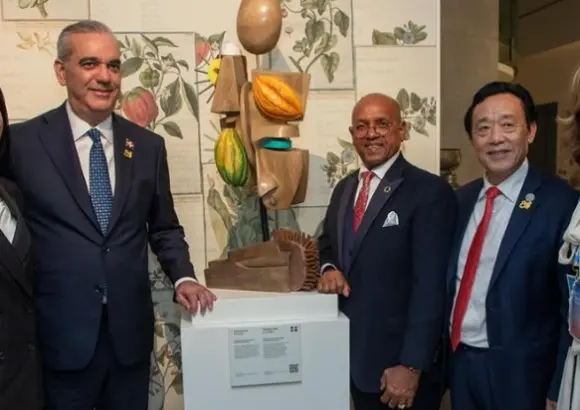
President Luis Abinader took the stage in Prague this week to make a case that has less to do with diplomacy and more to do with something every Caribbean traveller quietly cares about: is the Dominican Republic a stable, reliable place to visit?
Speaking at the 30th Annual Forum 2000 Conference on Tuesday, Abinader pointed to the country's independent Attorney General's Office and Central Bank, transparent elections, and record levels of foreign direct investment even as much of Latin America slows down. He framed the 2024 general elections as proof that the country's institutions are holding up.
The boldest moment of his address was a promise, not a boast. Abinader said his administration backed constitutional reforms that would stop him from seeking a second consecutive term, even though he had the congressional votes to change the rules in his favour. He confirmed he will leave office in August 2028, contrasting the Dominican Republic's trajectory with the institutional crises in Nicaragua and Cuba, and name-checking Uruguay and Chile as the region's democratic gold standard. His argument, in short: democracy earns its keep when it delivers better daily lives — jobs, investment, functioning institutions.
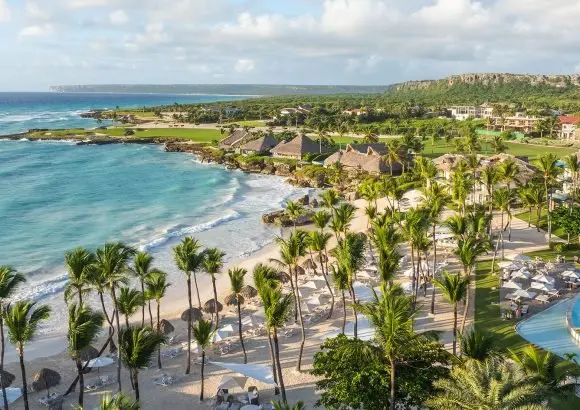
For holidaymakers, the takeaway is straightforward. The Dominican Republic is the Caribbean's most-visited country, and tourism depends on exactly the kind of predictability Abinader was selling: secure airports, smooth transfers between Punta Cana, Santo Domingo and Samaná, and a government that treats foreign visitors and foreign capital as priorities. Record investment usually means new hotels, upgraded infrastructure and better roads — the unglamorous stuff that shapes whether a trip goes smoothly.
There's also a wider point for anyone planning travel across Latin America and the Caribbean. Political stability varies enormously between neighbouring destinations, and a country where power changes hands peacefully and the central bank answers to no single leader is, practically speaking, a lower-risk booking. Abinader's message in Prague was essentially a reassurance pitch, and for once it was aimed at an audience of democracy experts rather than tour operators.
None of this means travellers need to think about constitutional reform when booking a beach week. But it does explain why the DR keeps landing new resorts and direct flights while some regional peers struggle. Stable politics, steady investment, a tourism-first economy — that's the formula, and the president used a conference podium in Prague to say so out loud.