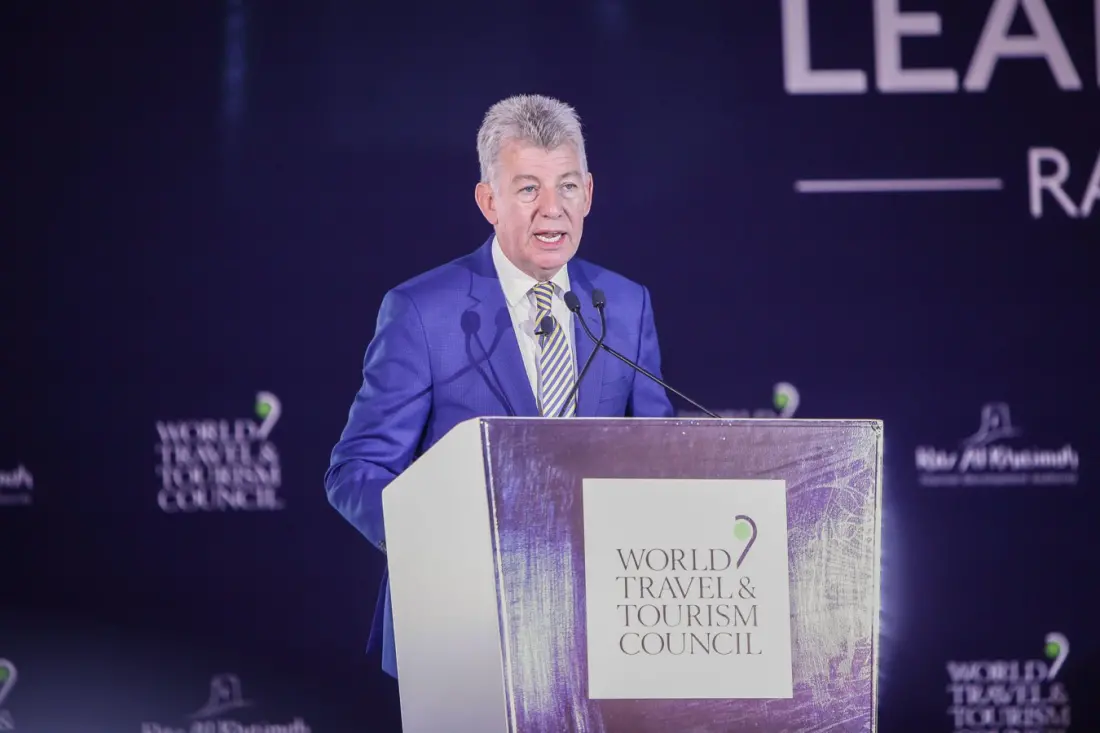
Imagine boarding a narrowbody jet in Exeter, Valencia or Baden-Baden and flying direct to Dubai — no connecting flight through a major hub first. That is the future predicted by Paul Griffiths, chief executive of Dubai Airports, who told a World Travel & Tourism Council Global Summit roundtable in Malta that smaller, longer-range aircraft are about to reshape how we fly.
His argument is straightforward: modern narrowbody planes can now cross the Atlantic and reach further afield, so secondary cities no longer need a widebody-sized crowd to make a route commercially viable. Over the next decade, he expects regional airports across Europe to expand, connecting places like Lyon, Marseille and Exeter straight to Dubai — and from there, to the world. His one caveat for those airports? Sort out ground transport links, which he called a smart investment for regional economies.
The prediction sits inside a much bigger bet on Dubai itself. Griffiths is driving plans to make Al Maktoum International Airport, also known as Dubai World Central, the largest airport on the planet. Once complete during the 2030s, it would offer more than 600 cities direct routes to Dubai, run on five runways (outside the US, only Amsterdam Schiphol, Beijing Daxing and Istanbul have six) and, by 2032, handle up to 260 million passengers a year across 400 terminal gates. Traffic is already heading the right way: Dubai's main hub DXB processed 31.5 million passengers in the first half of 2026, up 26% year on year.
There is an environmental catch, and Griffiths did not dodge it. He called sustainable aviation fuel "probably the only way" to deal with aviation's carbon emissions, and pointed to Singapore's SAF levy on departing passengers as a model — making travellers contribute modestly to sustainability without pricing hubs out of the market. He urged the industry and regulators to set real targets and frameworks rather than treating environmental impact as an afterthought.
For travellers, the takeaway is tangible. If you live near a regional airport rather than a mega-hub, the next decade could bring you long-haul options that currently require a domestic hop or a train to a bigger city. Dubai, meanwhile, is positioning itself as the connecting point for all of it — whether or not the 260-million-passenger target lands exactly on schedule. The flip side may show up on your ticket: levies like Singapore's could become more common as airports fund the SAF transition. Watch this space if regional connectivity and greener flying matter to how you plan trips.