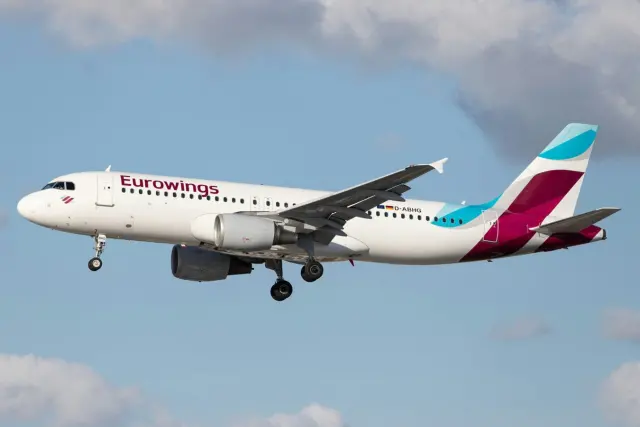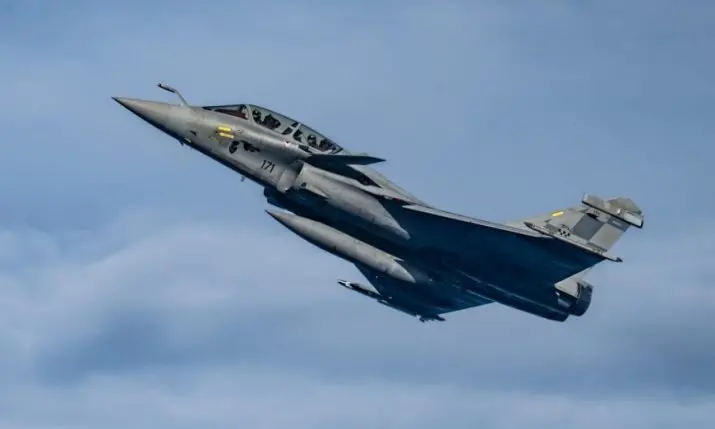
A Finnair Airbus A320 flying from Helsinki to Rome got an unusual escort over Croatia this week, after a suspected bomb threat prompted NATO to scramble a Croatian Air Force Rafale fighter jet to meet it.
The sequence played out quickly. The aircraft crossed into Croatian airspace near Čakovec and Varaždin at 8:34 am on Thursday. Croatia's Ministry of Defence says a warning about a possible explosive device on board had already reached NATO's Combined Air Operations Centre in Torrejón, Spain, which ordered the intercept. Seven minutes after the plane entered Croatian skies, a Rafale rose from its base and made contact with the airliner between Jastrebarsko and Karlovac.
From there, the fighter jet shadowed the passenger plane west toward the Italian border, where Italian quick-reaction fighters took over the escort. The A320 exited Croatian airspace at 8:54 am — just twenty minutes after entering it. No details have been released about whether the threat was assessed as credible, or what checks were carried out on the ground or in the air.
It was the second such intercept by Croatian Rafales this year. Recently, a Maltese-registered Boeing passenger aircraft was also flagged as a possible risk and met over Croatian territory. Croatia has been running its own Air Policing mission — guarding its own skies with Rafale multirole fighters — since 1 January 2026, operating within NATO's integrated air and missile defence framework, NATINAMDS.
Why does this matter to anyone booking a flight? Intercepting a civilian airliner sounds alarming, but it's actually the system working as designed. When an aircraft is flagged — whether through a bomb threat, a communication failure or a transponder problem — national and NATO air defences coordinate to identify and escort it within minutes. Passengers on board the Finnair flight, most likely, experienced little more than a routine-looking continuation of their journey to Rome, possibly unaware of the jet flying alongside. If you're flying routes across Central and Southern Europe, this is the safety net behind the scenes.
The story is also a reminder of how little visibility travellers get during a security incident. Airlines and authorities rarely broadcast details in real time, and outcomes — as here — are often left vague even after the event. The practical takeaway: if your flight is met by military aircraft or diverted following a threat, follow crew instructions and expect follow-up interviews or checks on landing. Disruption aside, the speed and coordination on display over Croatia this week should be reassuring rather than worrying — the whole intercept, escort and handover to Italy took less than half an hour.