An Ebola outbreak in the Democratic Republic of the Congo has now produced imported cases beyond Africa, and Colombian health officials are being asked a pointed question: could the country actually contain a case if one landed in Bogotá?
The numbers explain the concern. On October 8, the World Health Organization reported that the Bundibugyo virus outbreak had spread to another health zone in North Kivu, eastern DRC. By October 6 the country had logged 8,728 confirmed cases and 4,205 deaths – a crude fatality rate of 48.2%. The outbreak, declared on May 15, 2026, has since touched five countries, with Kenya and Nigeria both confirming travel-linked infections. Nigeria's case, announced October 20, involves a woman who had recently been in Uganda; she fell ill four days after arriving, sought care at a private clinic in Abuja, and tested positive on October 20. Authorities have identified 44 contacts and placed her in isolation.
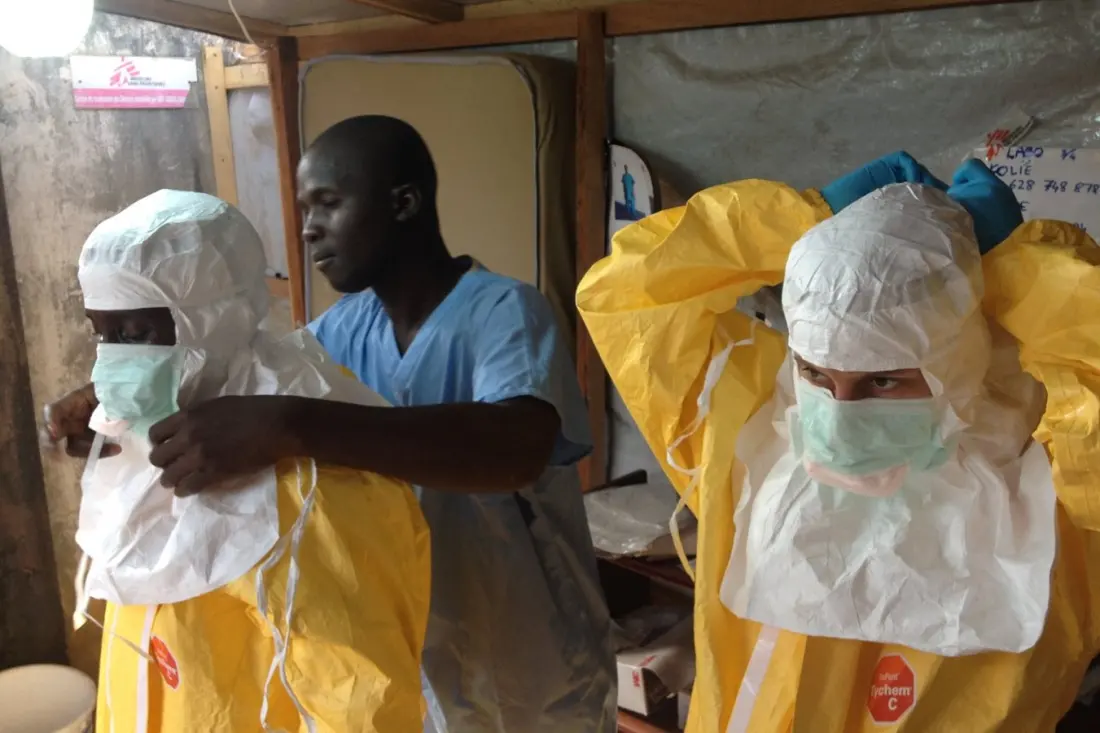
Colombia's Ministry of Health and the National Institute of Health (INS) already have protocols covering exactly this scenario: screening travellers at points of entry, isolating suspected cases, safe patient transport, sample handling and contact tracing. The INS has run training and refresher courses for regional and local health authorities. On paper, the machinery exists.
The catch, as the country learned during its 2020 Covid-19 experience, is that protocols only work if they can be executed instantly – with trained staff, protective equipment, isolation beds, specialist transport and tight coordination between national and regional authorities. A further complication is diagnosis: early Ebola symptoms (fever, general malaise) mimic dengue and malaria, both far more common in Colombia, so travel history is critical to catching a real case early.
There's also a geography problem. Bogotá, Medellín and other major cities have specialised hospital services, but rural and remote regions could struggle with patient transport, diagnostics and timely isolation if several cases appeared at once.
For travellers, the reassurance is how Ebola actually spreads. Unlike flu or measles, it is not airborne – transmission requires direct contact with the blood or bodily fluids of a symptomatic person, or contaminated materials. The WHO has explicitly advised against any travel or trade restrictions to affected countries, and there's no indication of an imminent threat to Colombia or community transmission there. Worth noting too: Bundibugyo virus currently has no licensed vaccine or specific treatment, though candidates are under investigation, so supportive care and rapid isolation remain the main tools.
The realistic takeaway for holidaymakers planning a Colombia trip is that the risk remains very low. The story matters mainly as a reminder of how health systems hold up under pressure – and that early detection and contact tracing, as Nigeria's response shows, are what stop an imported case from becoming an outbreak. Colombia has the frameworks; whether they translate into verifiable operational capacity nationwide is the open question officials are now pressing.