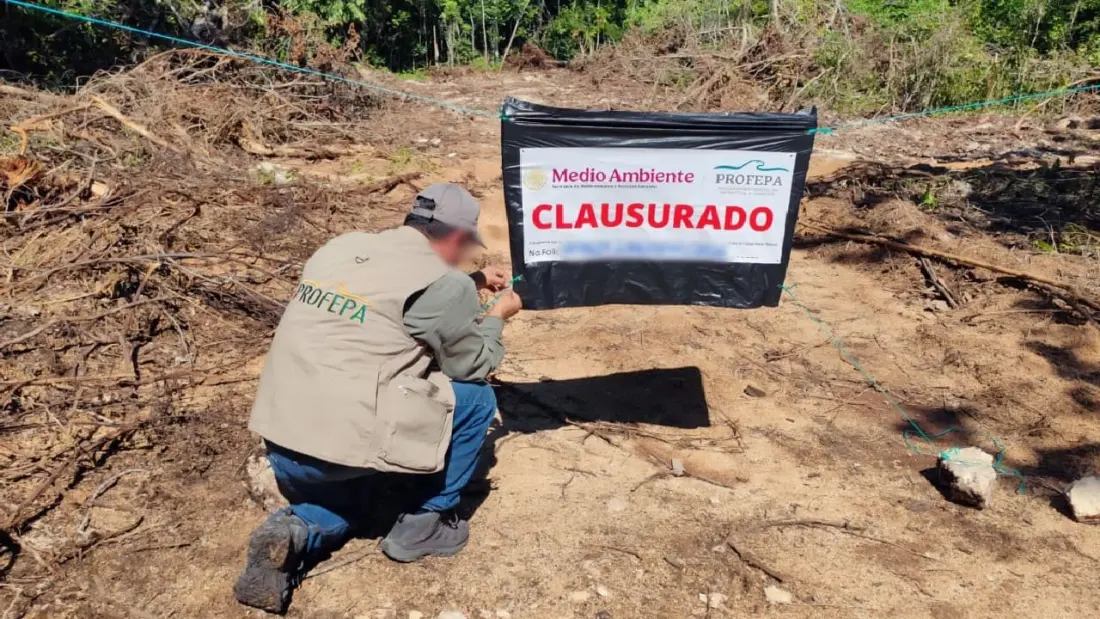
Federal environmental inspectors have closed off a sizeable plot of Playa del Carmen land after discovering more than 14,000 square metres of forest had been stripped without permission.
The Federal Attorney General's Office for Environmental Protection — known in Mexico as Profepa — carried out a forestry inspection of the property on October 14. Inspectors confirmed the complete removal of forest vegetation across 14,632 square metres, with none of the authorisations Mexican law requires for changing land use in forested areas. Work on the site was shut down on the spot, and the property has been placed under a total temporary closure while an administrative case is put together.
The land wasn't pristine old-growth jungle — it's described as secondary vegetation of semi-evergreen medium-height forest. But Profepa stressed that clearing this kind of cover still carries real consequences: habitat loss and fragmentation, plus damage to the ecosystem services the vegetation provides, from soil conservation and water regulation to supporting local biodiversity. A statement issued October 21 said the case will be resolved under the General Law of Sustainable Forest Development, with potential administrative responsibilities to be determined from the evidence in the file.
Why does this matter if you're heading to the Riviera Maya? Playa del Carmen has boomed over the past two decades, and pressure to clear land for hotels, residential developments and tourist infrastructure has been a recurring flashpoint between developers and environmental authorities. Scrub and secondary forest around the town form corridors for wildlife and help regulate water in a region famous for its cenotes — the sinkhole pools many visitors come to swim in. Profepa's message in this case was blunt: any activity involving the removal of forest vegetation needs the proper legal authorisations first, and enforcement is active.
For travellers, it's a reminder that the green patches between Playa's beach zone and the highway aren't empty space waiting for development — they're part of the ecosystem that makes the area attractive in the first place. It's also a sign Mexico's environmental watchdog is willing to step in mid-project, which matters for anyone who cares about responsible tourism choices along the Caribbean coast. If you've booked a stay or a tour with a new operator in the area, incidents like this explain why some projects stall or shift plans: environmental compliance in forest zones isn't optional, and the paperwork is checked.
For now, the site remains closed while the administrative procedure runs its course. No party has been named as responsible, and any fines or penalties will follow once Profepa resolves the file. Travellers in Playa del Carmen won't notice the closure day to day — but it's a small signal that the strip of coast between Cancún and Tulum is being watched more closely than its rapid growth might suggest.