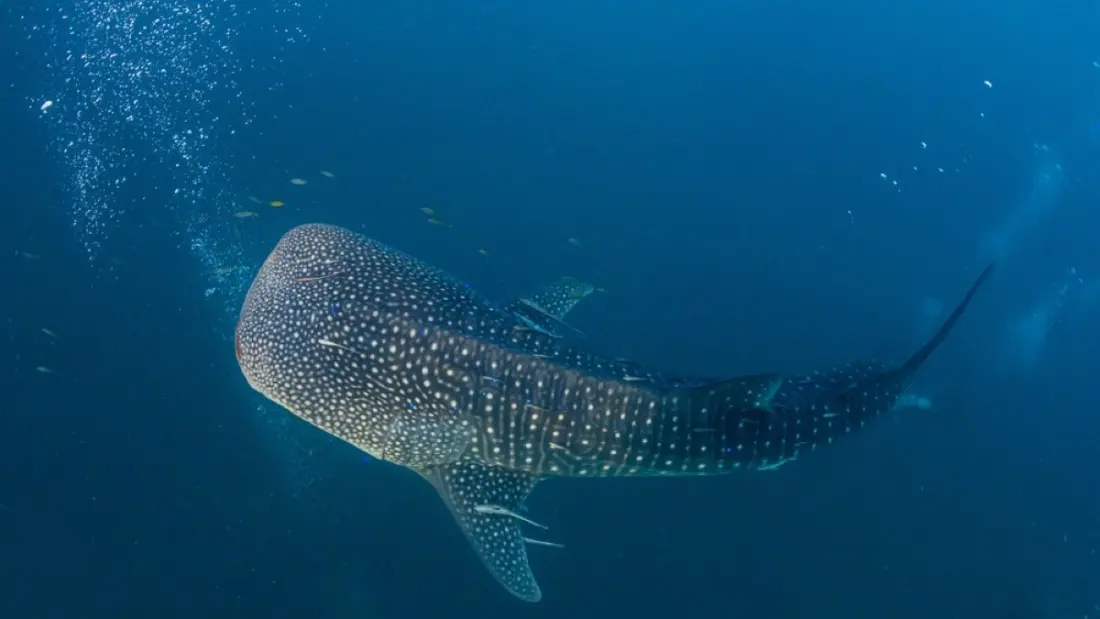
California's coastline is hosting some very un-Californian guests right now. A longfin bigeye fish has been recorded in the state for the first time, sea turtles have nested on its beaches for the first time ever, and whale sharks, hammerheads, manta rays and flying fish are cruising offshore — all thanks to this year's unusually strong El Niño.
El Niño is a natural climate cycle that recurs every few years, pushing warm tropical water northward along the Pacific coast. This year's edition arrived on top of an existing marine heat wave, and the effects have been dramatic. Two olive ridley sea turtle nests turned up on Orange County beaches in September — one spotted by a beachgoer in Seal Beach on 16 September, the second by lifeguards in Huntington Beach three days later. According to NOAA, those were the first sea turtle nests ever recorded anywhere on the US West Coast.
The fishing has been exceptional. Dana Wharf Sportfishing & Whale Watching in Dana Point reported around 5,000 yellowfin tuna caught this year, compared with just two in a typical year, plus wahoo and acrobatic dorado (mahi-mahi) hooked near floating kelp paddies. Anglers are thrilled; so are marine watchers. A rare yellow-bellied sea snake — only the sixth or seventh confirmed sighting in California, the last during the 2015-16 El Niño — washed ashore sick in Orange County in September, and a passer-by gently returned it to the water.
There's a serious side too. The warm water coincided with eastern Pacific hurricanes that drove sea level rise and heavy surf, destroying homes and stripping sand from some Southern California beaches. The state has declared an emergency ahead of winter, and scientists worry about kelp forests, which need colder water and shelter countless species. Mobile animals like sharks can simply move; anchored ones can't.
Experts expect conditions to settle back toward normal once El Niño passes next year, and with the event still ongoing, more surprise arrivals are possible. For travellers, it's a rare chance to see normally tropical species — even whale sharks, the largest fish on Earth — off the California coast, particularly around Los Angeles and Orange County. A white shark nursery has also reappeared in Santa Monica Bay for the first time since 2011, where juveniles swim without bothering people. If you're heading to the Southern California coast this winter, keep a camera handy; you might catch something usually found a thousand miles south.