Switzerland may own the chocolate reputation, but Peru is quietly making a case for itself, one cacao varietal at a time. The country is the world's eighth-largest cacao producer and grows Theobroma trees native to the upper Amazon – and thanks to a small cluster of producers in Lima's arty Barranco district, travellers can now taste exactly what that means.
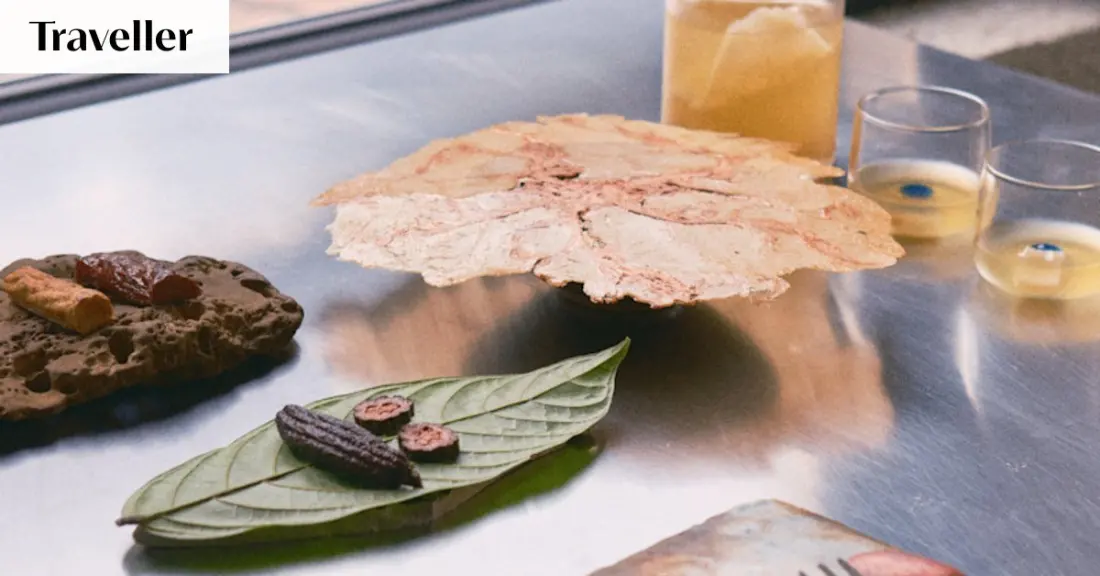
The most ambitious of these is Theobromas Lab, a high-tech chocolate laboratory inside Casa Tupac on Avenida Pedro de Osma. It's run by Rafael Urbina, chocolate director for some of Peru's most famous restaurants: Central, Kjolle, Mil and Masi. Getting a table at any of those can take weeks or months, but the lab's two-hour sensory experience – launched in 2025 – is a cheaper, easier way in. Visitors handle and smell every part of the cacao plant before tasting their way through Urbina's creations: dark chocolate made with alpaca milk, a square flavoured with cacao leaf, and bars built around little-known native cacao species. A group booking costs 1,360 Peruvian soles (about AU$580), and a small retail range is now on sale at Casa Tupac.
A short walk away is El Cacaotal, a chocolate studio run by American anthropologist Amanda Jo Wildey, who describes it as an "edible library" – open shelves of bars organised by maker, the way a library shelves authors. Her focus is tree-to-bar chocolate, made by the farmers who grow the cacao itself. Half her collection qualifies, and she argues the multi-species ecosystems those farmers maintain genuinely improve the flavour. Curated tastings run 45 or 90 minutes, from 130 soles (around AU$55) per person. Take-home picks include Paytiti dark chocolate from Cuzco province, Miroshnik milk chocolate from Ayacucho, and Elemento's white chocolate and pistachio bar from the Amazon.
Here's the irony: Peru's cacao is widely regarded as among the finest in the world, but most of it leaves the country unprocessed and anonymous, ending up in big international brands without any Peruvian labelling. Urbina says the fine-chocolate scene barely existed when he started a decade ago; both he and Wildey are trying to build recognition for the country's artisanal makers. It's still niche, but growing every year.
For travellers, this is a genuinely different way into Lima's food scene. You don't need a reservation months out or a tasting-menu budget – a couple of hours in Barranco gets you the science, the flavours and the story behind Peru's most celebrated restaurants. And if you're the kind of person who plans holidays around what you eat, tasting ten different cacaos from a single region is a rabbit hole worth falling into.