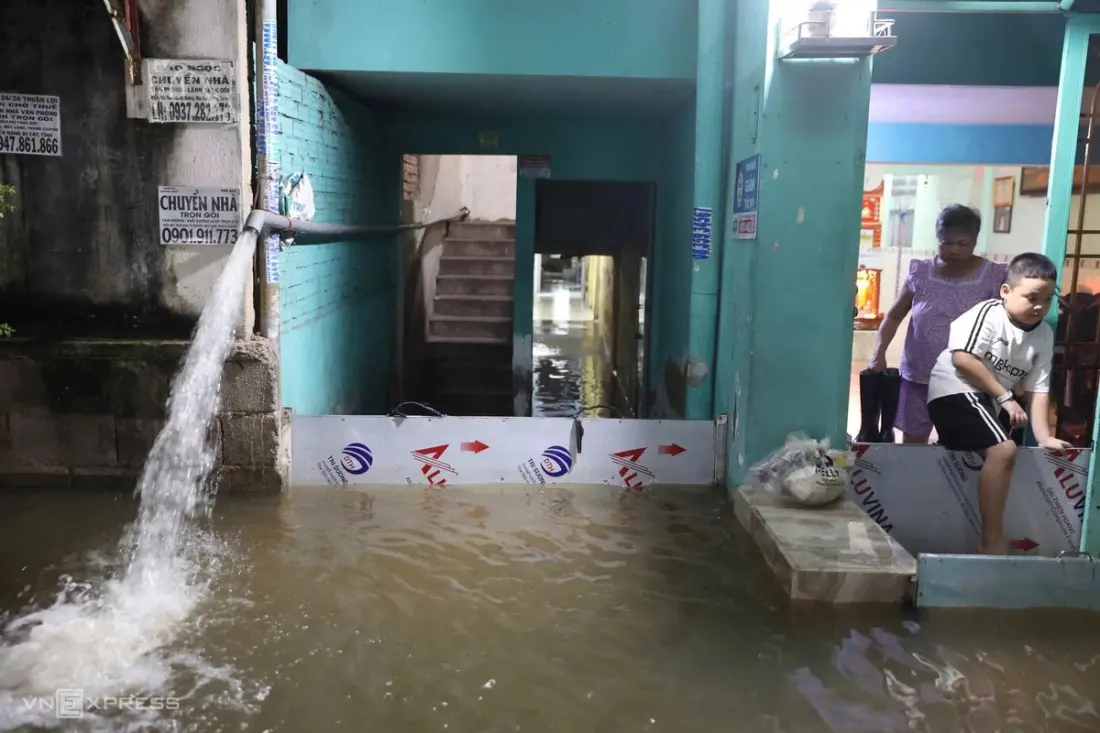
Evening rush hour in Ho Chi Minh City turned into a wade-a-thon on October 27, when peak seasonal tides pushed water over a dozen streets across the city's southern districts. At the Nguyen Huu Tho–Nguyen Thi Thap intersection, cars and motorbikes stalled in deep water and traffic backed up for hours. Along Bui Van Ba street in Tan Thuan ward, roughly two kilometres of road disappeared under water that reached halfway up motorcycle wheels, and shops threw sandbags at their doorways to hold back the surge.
The numbers behind it were serious. The Southern Regional Hydro-Meteorological Center recorded 1.75 metres at the Nha Be station at 5 PM, 1.71 metres at Phu An an hour later and 1.86 metres at Thu Dau Mot by 7 PM — all beyond Alarm Level III, the highest official warning threshold. Tides peaked between October 26 and 28, then began easing, though forecasters said levels would stay above the Alarm III line for a few more days.
For locals, this is not a one-off. Residents of Alley 136 off Bui Van Ba described a chronic flooding hotspot that goes under every time tides crest. One woman, Nguyen Thi Quynh Anh, spent hours trapped as murky water filled her ground floor, sheltering on the bed and mezzanine with her child. Nearby on Tran Nao street in An Khanh ward, a 72-year-old resident said her home floods on every high tide because the family can't afford to raise the floor. Half-metre depths were reported inside some alley homes.
Motorists fared no better near the SC VivoCity mall in the former District 7, where streets around villa compounds flooded deeply enough that officials were stationed at access points turning traffic away. On Street 15B by Phuoc Long market, dozens of engines cut out, and drivers hauled bikes onto pavements to wait it out.
Why should travellers care? Late October to early December is peak tide season in Ho Chi Minh City, and when a big tide coincides with evening rain, low-lying southern districts — District 7, Nha Be, Thu Duc — can flood fast, often right at the 5–7 PM commute. If you're visiting in autumn, keep plans flexible after dark, favour accommodation on higher ground or in the city centre, expect motorbike taxi delays, and keep phones and passports off ground floors in guesthouses. The flooding typically drains within hours rather than days, so day trips usually recover quickly — but a tide-timed downpour can rewrite an evening itinerary.