Travellers arriving in Europe may soon face shorter queues at passport control. A senior European Commission official has hinted that extra breathing room is coming for the EU's Entry/Exit System, the biometric border regime that has caused hours-long waits at some airports since it launched this spring.
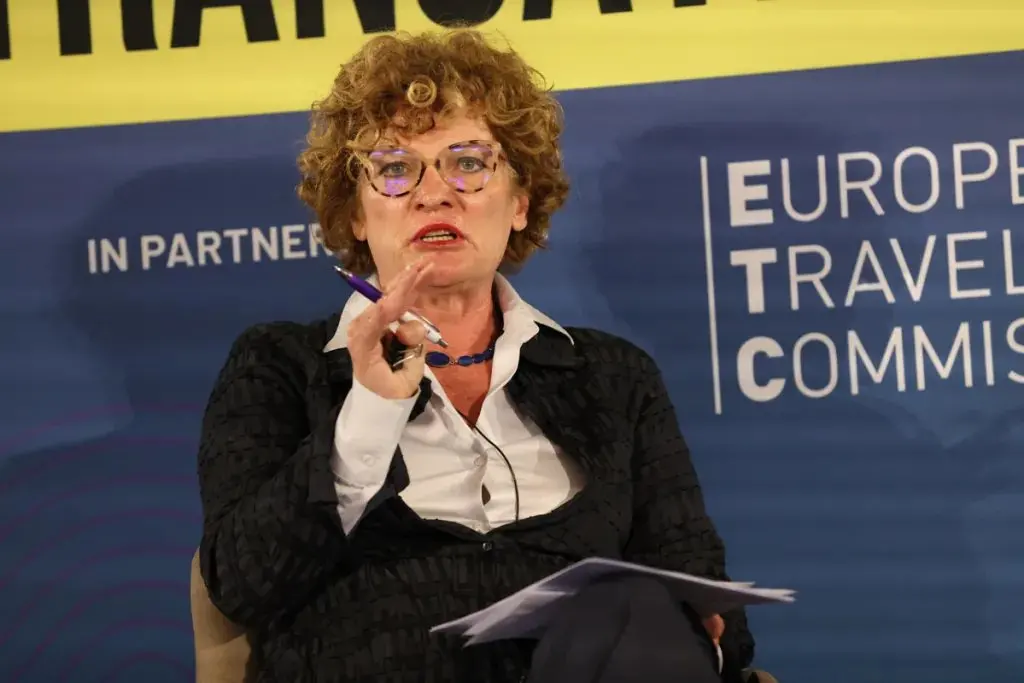
Maja Bakran Marcich, the Commission's deputy director-general for mobility and transport, told the Skift Transatlantic Summit in Dublin that "there will be some further flexibility" on how the system is enforced. Her comments matter because Brussels has been under pressure from two directions. Just a month earlier, the Commission refused to extend member states' emergency powers to soften border checks. Then, days before her remarks, airlines and airports jointly asked for those powers to be restored — a sign of how strained things have become on the ground.
Here's the background. Since April, non-EU visitors entering most of Europe have had to register fingerprints and a facial scan at the border under the Entry/Exit System, known as EES. It replaces the simple passport stamp, and the extra data capture takes noticeably longer per passenger. At busy airports, that slowdown has translated into queues stretching to several hours. Until September, member states had an escape hatch: when lines got unmanageable, they could temporarily skip the biometric step and let people through with a faster manual process. That safety valve has now expired, and airports are feeling the pinch — hence the industry's plea to bring it back.
Marcich's wording stops short of a firm promise, but for a Commission official speaking publicly, it's a meaningful signal. Any new flexibility would likely mean giving member states or border operators more discretion again when queues spike, without scrapping the system itself. EES is a long-term modernisation project — it logs entries and exits digitally across the Schengen area, which should eventually speed up repeat travellers — but the rollout has clearly been bumpier than planned.
For holidaymakers, the practical takeaway for now: if you're a non-EU traveller flying into Europe during peak periods, budget extra time at the border. The queues aren't guaranteed to be long everywhere, but at major hubs in the busiest months they've been bad enough that airlines want emergency measures reinstated. Watch this space, though — with the Commission openly talking about flexibility, the experience of arriving in Europe this winter could be smoother than it was over the summer.
This story matters to anyone planning a trip to Europe from outside the EU, including UK, US and Australian passport holders, who are all in scope for the biometric registration. It's also a rare example of traveller frustration — echoed loudly by the aviation industry — visibly shaping EU policy in near-real time. Whether the flexibility arrives as a formal rule change or a softer enforcement approach, it should directly affect how long you stand in line at the airport.