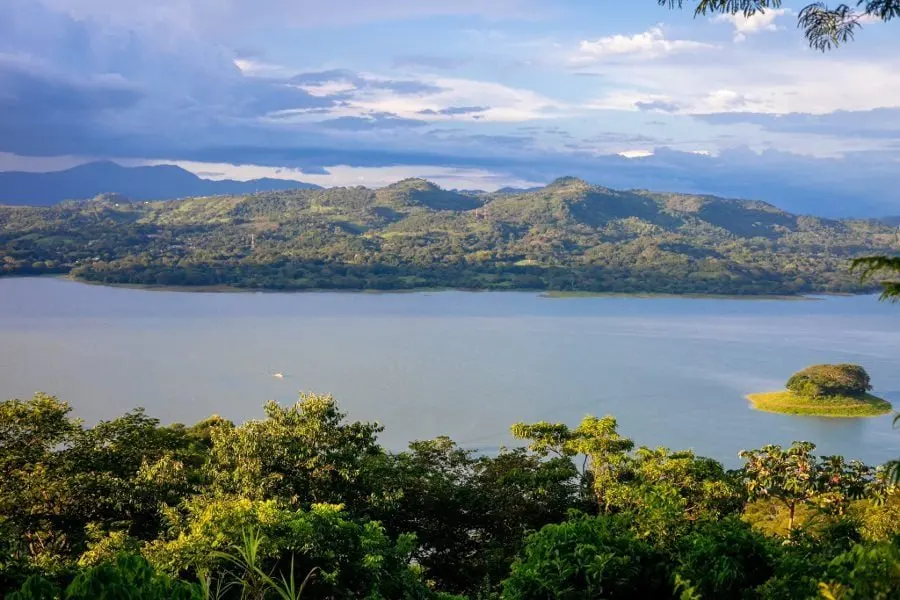
El Salvador may be Central America's smallest country, but it punches above its weight when it comes to lakes. Sitting on the region's volcanic belt, it has a handful of large, striking bodies of water — two formed by collapsed volcanic calderas, one natural border lake, and one huge man-made reservoir. Each offers a different day out, and together they make a solid case for adding a few extra days to any Salvadoran itinerary.
Lake Coatepeque, in the western department of Santa Ana, is the country's most polished lakeside destination. Its deep-blue water fills an old caldera ringed by forested hills, and the shoreline is lined with waterfront restaurants, viewpoints and spots for boat rides and kayaking. It pairs naturally with a trip up Santa Ana Volcano or Cerro Verde National Park, so hikers can bag a summit in the morning and eat beside the water in the afternoon.
Lake Ilopango is the largest natural lake in the country, spanning San Salvador, Cuscatlán and La Paz departments, and it sits close enough to the capital for an easy half-day escape. Formed by explosive eruptions that left a vast caldera, it's best appreciated from the lookout points scattered around its rim.
For something quieter, head north to Lake Güija on the Guatemalan border. It sees far fewer tourists, supports fishing communities and birdlife, and the surrounding area holds archaeological traces of pre-Hispanic settlement. Services are patchy, so it suits travellers happy to go a bit more independently.
Finally, Lake Suchitlán is entirely artificial — created in the 1970s when the Cerrón Grande Dam was built on the Lempa River. Its islands and wetlands are now a magnet for resident and migratory birds, and the handsome colonial town of Suchitoto is the obvious base, with boat tours and birdwatching trips on offer.
Timing matters. The dry season, from November to April, brings the sunniest weather and the best conditions for boat rides and sightseeing. The rainy season, May to October, turns the surrounding hills intensely green, though afternoon downpours can disrupt plans.
A few practical notes: road conditions and transport to rural lakes can be unpredictable, so check ahead; boat tours and restaurant opening hours vary by lake and by season; and don't swim anywhere unfamiliar without local advice on safety. Sunscreen, water and layers for changeable weather are worth packing, and — as anywhere — take your rubbish with you.
Which lake should you pick? Coatepeque if you want scenery plus good food and a lively atmosphere; Ilopango for a quick trip from San Salvador; Suchitlán for birds, boats and the charm of Suchitoto; Güija for solitude and history. Better yet, the lakes sit alongside plenty of the country's other draws — volcanoes to hike, waterfalls, mountain towns and national parks — so they slot neatly into a wider loop of western and central El Salvador.