Sometimes a good idea starts with a lucky glance. In 1996, a Florida fish collector named Ken Nedimyer noticed staghorn coral growing on his live-rock farm, and decided to see whether broken coral fragments could survive and grow if he suspended them in the water column. They could — and nearly three decades on, that observation underpins one of the most widely used coral restoration techniques in the world.
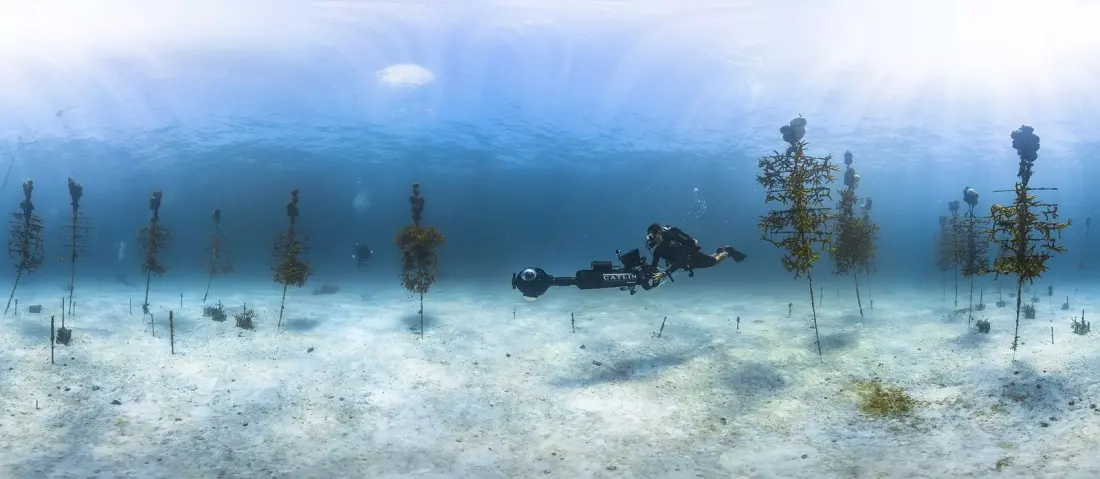
The system, known as the Coral Tree nursery method, is pleasingly low-tech. Coral fragments are hung from branching, tree-like frames anchored to the seafloor. Elevated above the seabed, the fragments get better water flow and face less smothering from algae and sediment. As they grow, divers transplant them onto damaged reefs. Nedimyer's experiments grew into the Coral Restoration Foundation, which now runs large-scale nurseries across the Florida Keys.
The timing matters. Florida's reefs have been hammered by disease, habitat loss and warming water, and 2023 delivered a near-fatal blow. A study published in Science in October 2025 found that between 97.8% and 100% of staghorn and elkhorn coral colonies died in the Florida Keys and Dry Tortugas during that year's unprecedented marine heatwave. These are the branching corals that give reefs their structure — the sheltering, feeding habitat countless fish and other species depend on. Lose them, and the whole ecosystem unravels.
Coral trees offer a way to raise huge numbers of corals offshore, but they're not a complete fix. Conservationists are increasingly focused on genetic diversity: keeping a mix of coral genotypes spread across nurseries and partner facilities so a single disaster — a heatwave, a disease outbreak — can't wipe out the entire genetic bank. And even corals raised successfully in nurseries still have to survive once they're planted back on the reef. The trees can rebuild habitat, but they can't cool the ocean.
For travellers, this story has real relevance. The Florida Keys remain one of the only barrier reef systems in the continental United States, and diving or snorkelling there now comes with a front-row view of conservation in action — some operators work alongside restoration groups, and divers can even volunteer on nursery maintenance dives. Choosing operators that follow reef-safe practices (no touching or standing on coral, reef-safe sunscreen) directly supports the work being done to keep these reefs alive. If you've ever wanted your holiday to leave something behind, the Keys are one of the clearest places to do it.
The bigger picture: a hobbyist's accidental discovery has become a practical tool for rebuilding damaged reef habitats around the world. Whether the corals being grown can survive the warming seas ahead is the question the next few decades will answer — which makes every nursery-raised colony that does take hold worth watching.