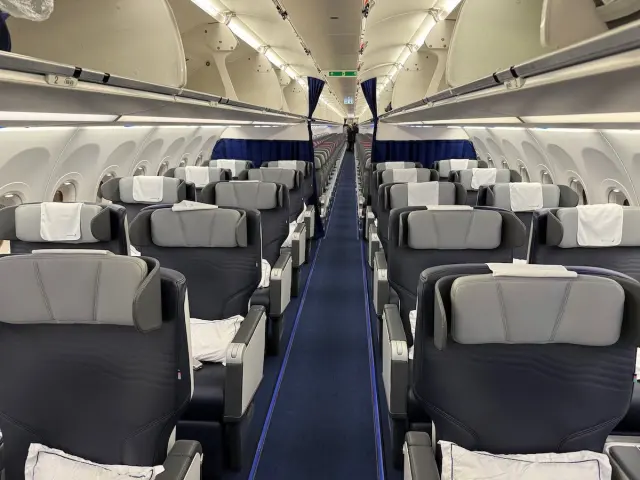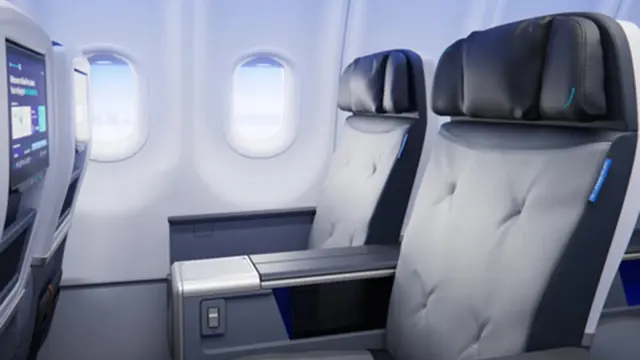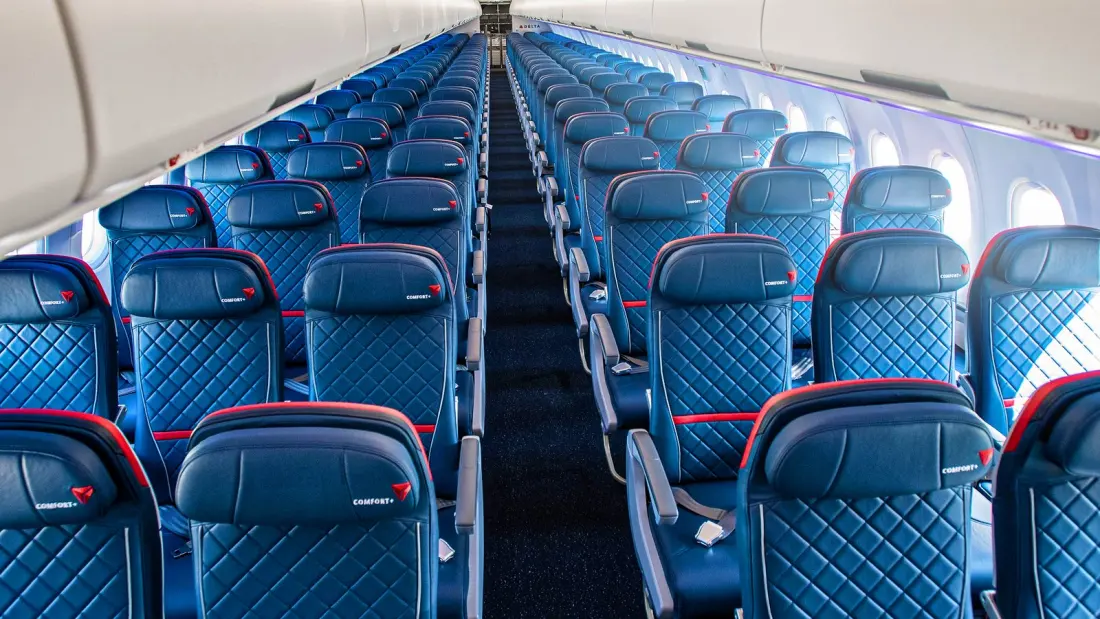
The priciest real estate on a US domestic flight is no longer first class. Delta's second-quarter 2026 results showed premium revenue of $6.92 billion edging past the $6.85 billion brought in by Main Cabin — a first-of-its-kind crossover that captures how thoroughly the US cabin has been rebuilt around paid upgrades. Extra-legroom economy rows, sold as Delta Comfort+, United Economy Plus or American Main Cabin Extra, sit at the heart of that shift: a few added inches of pitch generate first-class-like margins without the cost of lie-flat seats or separate service.
How lucrative is it? United has charged $99 for an Economy Plus seat on top of a $59 base fare between San Francisco and Los Angeles — a 167% premium for roughly six extra inches, on a route of about an hour in the air. The airline's seat-fee income now dwarfs even baggage fees: around $1.3 billion in 2023 versus $1.2 billion from checked bags. Industry-wide, seat selection is projected to grow from a $4.8 billion market in 2025 to nearly $10 billion by 2034, and dynamic pricing means the same seat can cost wildly different amounts on a packed Monday morning versus a half-empty Tuesday afternoon.
The airlines are redesigning cabins accordingly. American plans to lift premium seating from about 25% to 40% across its narrowbody fleet, including the new Airbus A321XLR, while Delta is weighting its incoming A350-1000s heavily toward premium categories. Every new premium row means standard economy seats are removed or squeezed — some carriers have cut pitch down to roughly 28 inches, versus 34-36 inches in the paid rows.
For travellers, the practical upshot is that the seat map is now a pricing negotiation. Loyalty status, credit cards and check-in releases often unlock these same seats free, so it can pay to hold off rather than buy at booking — though airlines are actively tightening that loophole to protect their margins. There's also a natural ceiling: if standard economy gets too uncomfortable, passengers defect, and the premium product only works while a decent cheap alternative still exists. On competitive routes, a $99 surcharge is hard to sustain if a rival sells the same space for less.
The takeaway for anyone booking a US domestic flight: compare the extra-legroom surcharge against your base fare and the competition before clicking, check whether your status or card already covers it, and remember the same seat may be far cheaper on a quieter departure. The rows behind first class have quietly become the most valuable part of the plane — and the price you're quoted is as much a test of your willingness to pay as a reflection of the space.