Salt cod, Manchego, gazpacho, migas and Cantabrian anchovies all look like delicacies on a modern tapas menu. But most of them started life as a workaround. Before refrigeration, Spain's regions each faced the same enemy — spoilage — and their fixes, built on salt, oil, stale bread and patience, became the country's most enduring dishes.
Take bacalao. Basque fishermen sailed as far as Newfoundland and Iceland for cod, and while Norse crews air-dried their catch in cold northern air, Basque boats had salt aboard. Salted, dried cod survived the Atlantic crossing in any climate, and by the mid-1500s it made up a big share of all fish eaten in Europe. Today it's soaked for a day or more, then turned into dishes like bacalao al pil-pil, where gelatin from the fish slowly thickens garlic-and-chili olive oil into a pale, creamy sauce.
Inland, in the dry plains of Castile-La Mancha south of Madrid, sheep milk spoiled within days, so shepherds pressed it into a firm salted cheese. That's Manchego, a cheesemaking tradition thought to stretch back to the Bronze Age. The zigzag pattern on the rind originally came from the woven esparto grass baskets used to drain the whey — modern molds still reproduce it. Under the PDO rules, only milk from Manchega sheep counts, wheels must age at least 30 days (60 for larger ones), and every genuine wheel carries a numbered casein label.
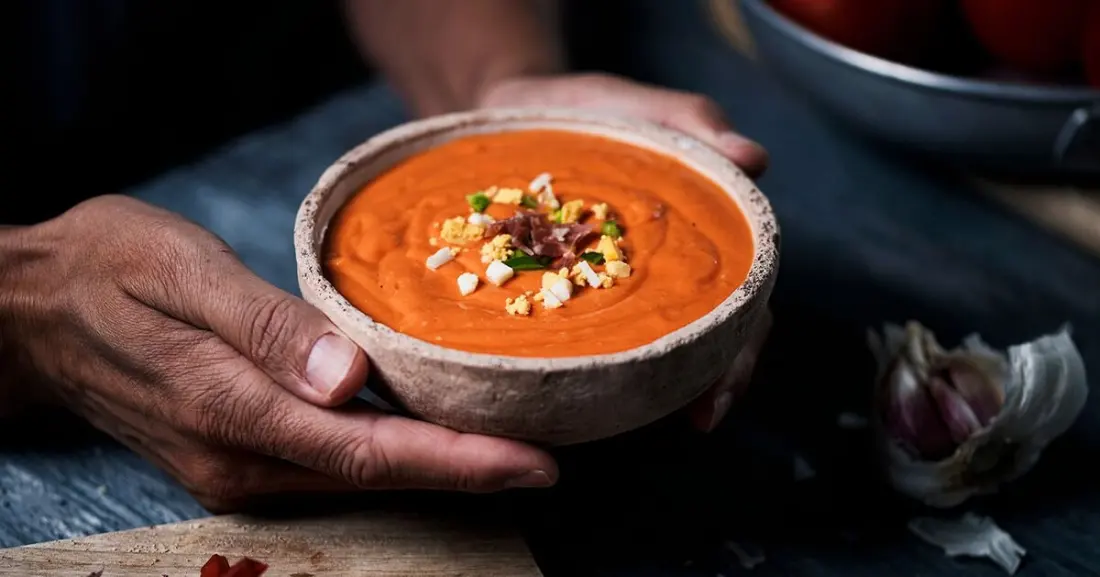
Andalusia's problem was heat rather than spoilage: cooking meant warming an already sweltering house. Gazpacho — tomatoes, peppers, cucumber, day-old bread, garlic and olive oil, blitzed and served chilled — needed no stove at all. Its Córdoban cousin, salmorejo, uses even more bread for a thicker, creamier result, typically crowned with jamón and chopped hard-boiled egg. Both are cheap, filling and now defining dishes of the region.
In Extremadura, shepherds carried bread into the fields and refused to waste it once it went hard. The answer was migas: crumbs moistened overnight, then fried in olive oil with garlic, paprika, peppers and chorizo or pork belly, often finished with a fried egg or, in summer, grapes. It's still on tapas bars and family tables across the region.
The one food with an outside nudge is the Cantabrian anchovy. Santoña, a port on the Bay of Biscay, had fatty spring anchovies but little tradition of preserving them until Italian salters arrived in the late 1800s. A Sicilian began filleting and canning the cured fish in the 1880s, and the town became Spain's anchovy-canning capital. What was once seasonal is now served year-round as tapas and pintxos nationwide.
For travellers, the point is that these foods taste different at their source — salt cod in a Basque cider house, gazpacho on a Seville afternoon, anchovies a few streets from Santoña's canneries. It's a ready-made eating itinerary across four regions, each dish with a story baked (or salted, or chilled) into it. — Matador Network