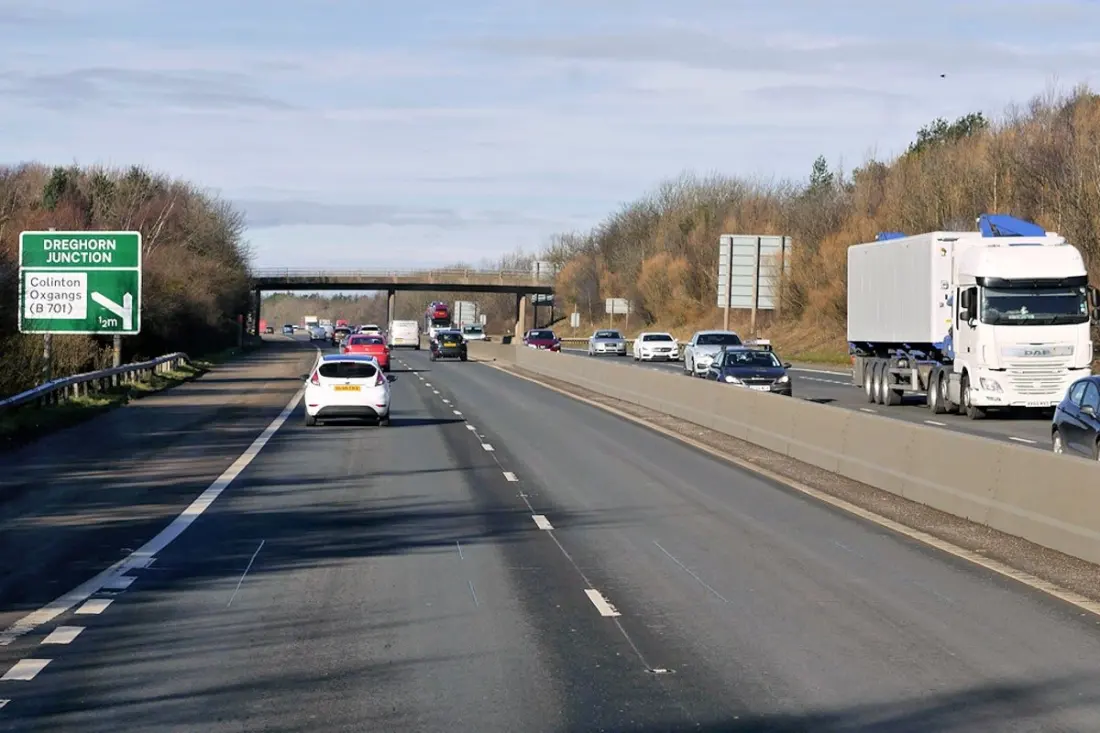
A 47-year-old woman died after being hit by a vehicle on the A720 Edinburgh City Bypass on the evening of 11 November, and the fall-out rippled well beyond the scene of the crash. Police closed the busy orbital route in both directions between Dreghorn junction and Hermiston Gait for collision investigation work, and it stayed shut until roughly 2.45pm the following day — a closure lasting nearly 18 hours.
Emergency services were called at around 8.55pm after a collision involving a pedestrian and a black Citroën Berlingo. The woman was pronounced dead at the scene. Police Scotland has since arrested a 22-year-old man in connection with a road traffic offence, and enquiries remain ongoing.
For anyone travelling in or around Edinburgh the next morning, the closure was a serious headache. Traffic monitoring service Inrix reported severe delays and queueing traffic from the M8's Hermiston Gait junction to Dreghorn Link, with congestion stretching back towards Livingston. Queues also built on main routes into the city centre, including the Lanark Road, Calder Road and roads through Cramond. Edinburgh Travel News warned of lengthy delays across much of the city's west and south west through the rush hour, urging drivers to avoid the bypass entirely.
Police have appealed for witnesses, asking anyone with dash-cam footage or information about the woman's movements beforehand to come forward, quoting incident number 3870 of 11 November.
Why does this matter to travellers? The A720 is the main southern ring road around Edinburgh, and it's the route most visitors use when driving between the city and the M8 towards Glasgow, or heading to the airport area from the south. When it closes, there's no quick alternative — traffic floods onto smaller urban roads that simply aren't built for the volume. If you're driving in Edinburgh and hear about an incident on the bypass, build in serious extra time or consider parking up and using the tram or rail links instead, since the city's public transport often moves faster than a snarled-up road network during major disruption.