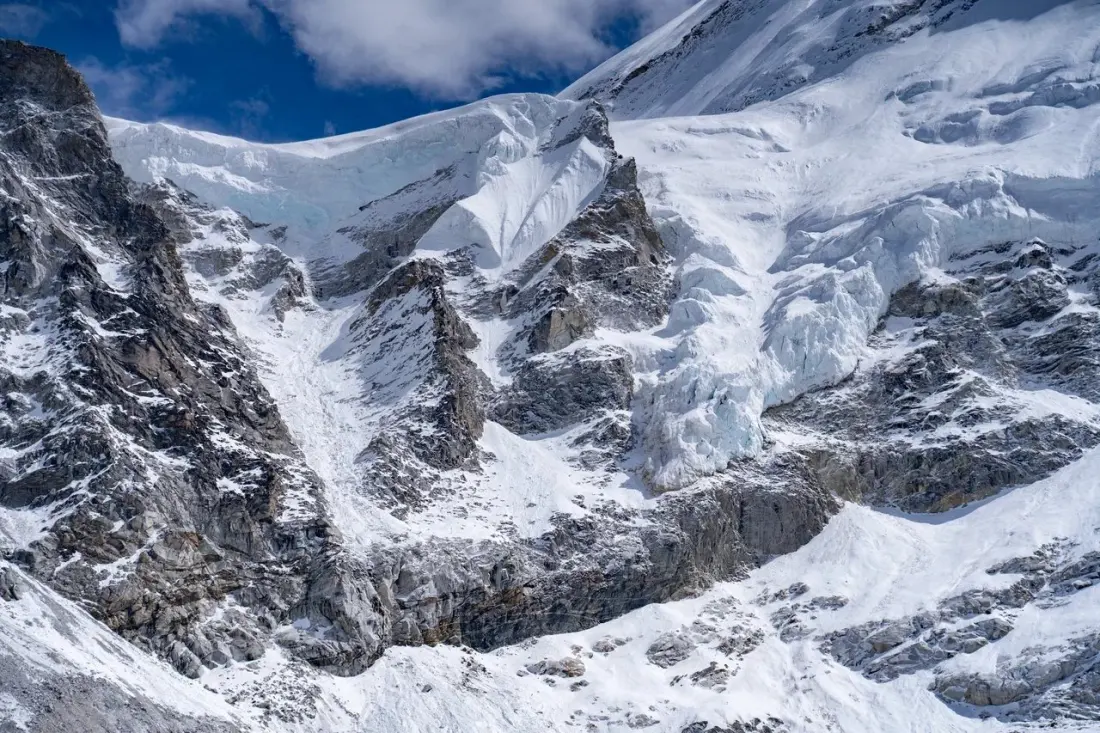
A small Russian team trying to climb Everest by its rarely attempted West Ridge has been driven off the mountain by savage winds — at least for now.
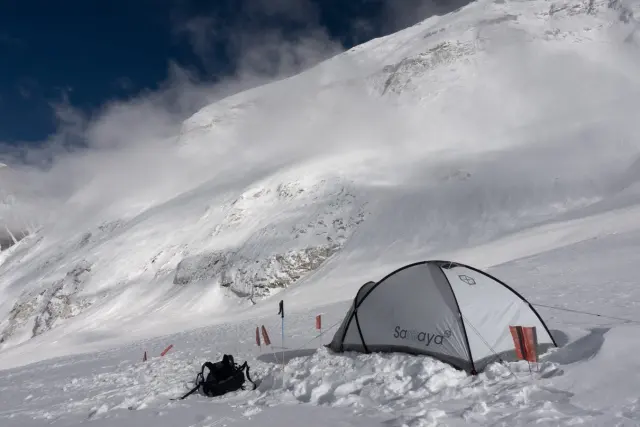
Led by veteran Andrei Vasiliev, the three climbers (with Sergey Kondrashkin and Vitaly Shiilov) left for Everest's West Shoulder knowing the forecast was grim. They managed a night in a snow cave at 6,400m, and had fixed three pitches above them, hoping the snow would firm up as the terrain steepened. It didn't matter. By the end of the day the winds were so violent that Vasiliev radioed down that it was simply impossible to work any higher. The team has retreated to a tent at 5,600m, below the Lho La Pass, likely on the Khumbu Glacier.
The context makes this attempt unusual. The trio set out last Monday on their third push of the season, aiming for the summit via the West Ridge with no oxygen, no external support, and the mountain entirely to themselves. Progress had been slow but steady: trailbreaking through fresh snow cost them time, though they reported better, compacted snow higher up — they could even spot their own tracks from a previous rotation. Vasiliev counted four pitches climbed on old fixed ropes plus eight of their own, with ropes fixed only at the hardest sections.
The forecast is the real enemy. Portuguese meteorologist Vitor Baia, who has been advising on the expedition, says the winds will stay high every day until next Tuesday, easing from Wednesday onwards. A brief window of variable winds may appear tomorrow before the jet stream slams into the mountain at full force. So the team faces a three-way call: sit it out at 5,600m, drop back to their base in Lobuche, or abandon the expedition altogether. Vasiliev still believes the route is doable, but wind delays are eating into the time they have left.
For armchair adventurers, this is a useful reminder of what separates Everest's normal routes from its serious ones. The West Ridge — climbed only a handful of times since the landmark 1963 American ascent — demands self-sufficiency, route-finding and weeks of patience, not just a weather window and a Sherpa-supported bottlenecks-and-ladders plan. Timing against the jet stream is everything on Everest in any season, and even elite teams can lose an entire expedition to a week of wind. If the weather map cooperates from Wednesday, this story may yet have a summit in it.