After nearly six months and more than 2,000 miles on foot, a long-distance hiker known on trail as Ice Cream has finished the Continental Divide Trail, arriving at the route's southern terminus on the US–Mexico border. The final instalment of a 55-part series on The Trek closes out the story with the last miles of desert walking, a stone monument marking the trail's end, and the small rituals that come with finishing one of America's toughest through-hikes.
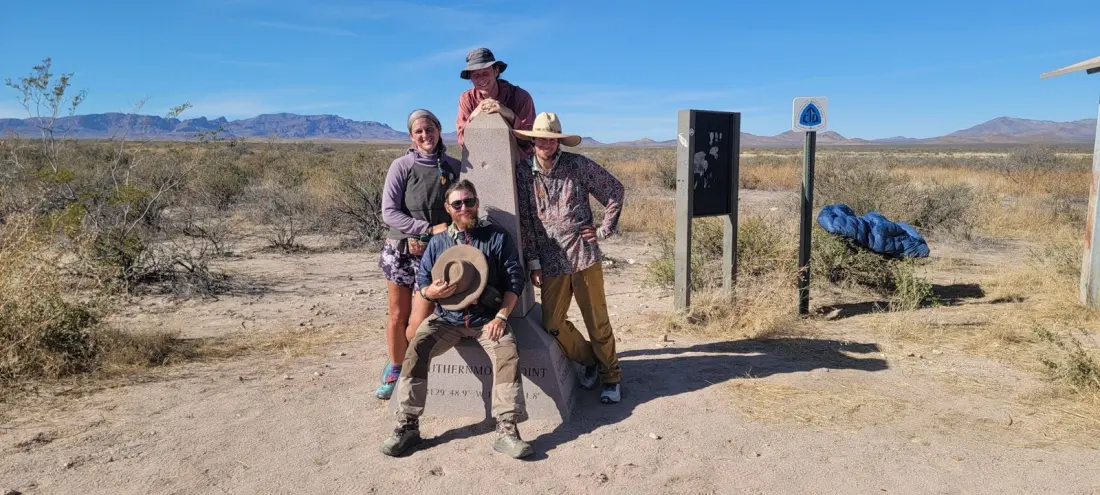
The endpoint itself is deliberately remote. There's no visitor centre or trailhead parking lot — just a corrugated steel shade structure and a small stone monument standing beside the loose barbed-wire fence that marks the border, in a stretch of New Mexico desert. On the other side: farmland and an ordinary, everyday life in another country. Hikers typically arrive here after weeks of dry, exposed desert walking in southern New Mexico, often sharing the final miles with other finishers they've leapfrogged up and down the trail all season.
The finish-line customs are part of the appeal. As in this account, hikers pose for photos at the monument, collapse into whatever shade they can find, and wait for a pre-arranged shuttle — essential, since the terminus sits miles down rough dirt roads from any paved highway. The story also captures the post-hike ritual of a gas station stop: cold drinks, ice cream, and long chats with locals, complete with one man's detailed account of a hairless sasquatch sighting.
For anyone considering the CDT, this final chapter is a useful window into what the trail actually feels like at the end. It runs roughly 3,100 miles from the Mexican border in New Mexico up through Colorado, Wyoming, Idaho and Montana to Waterton Lake, and most hikers take four to six months to complete it. The southern terminus at Crazy Cook Monument is the traditional starting or finishing point, and logistics there — water caches, shuttles, timing around desert heat — are among the trickiest of the whole route.
Why does this matter to travellers? Because long trails like the CDT have moved well beyond hardcore hiker culture. Even a section of it, or the final desert stretch approached as a shorter trip, offers a rare kind of wilderness travel in the American Southwest. And stories like this one show the experience honestly: not just scenery, but the odd, quiet, human moments at the edges of a huge adventure — a stranger's letter pinned to a corkboard, a pipe left on a post for someone to carry back to Montana, and a long ride out through the dust with people you've walked half a year beside.
Story via The Trek.