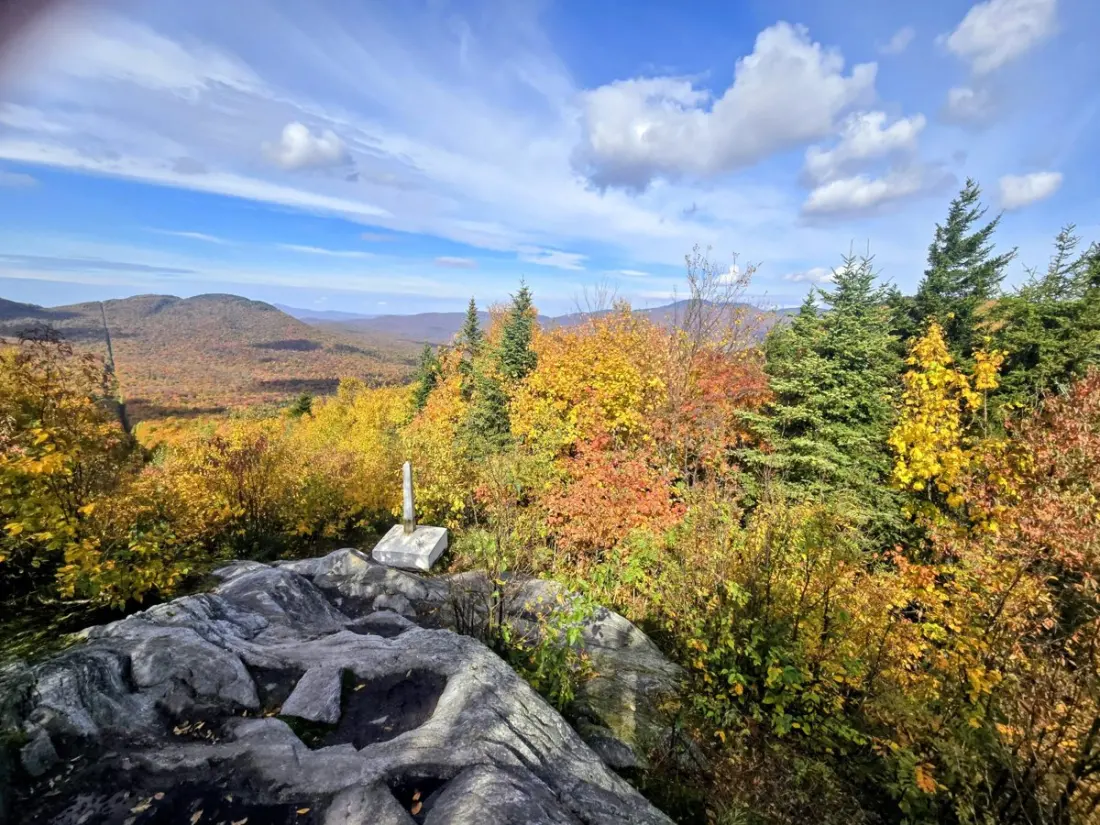
After 42 days on foot, two hikers recently stood on a granite outcrop at the northern tip of Vermont, Canada stretching out in front of them and Massachusetts far behind. Their Long Trail thru-hike was done — and it ended, fittingly, on a gorgeous New England fall morning.
The Long Trail is the oldest long-distance hiking trail in the United States, running roughly 273 miles the length of Vermont from the Massachusetts border to Canada, mostly along the spine of the Green Mountains. This account comes from the final day of a 42-day trek, a short four-mile stretch from North Jay Pass to Journey's End, the northern terminus near the border monument. It sounds easy on paper — under 700 feet of ascent — but the Long Trail's reputation as one of the country's toughest trails held right to the end. The last miles delivered a mud slough and sudden hundred-foot drop-offs that required hands and feet together, prompting one hiker to mutter that the trail just had to have the last word.
What made this hike unusual was the style of it. Rather than camping rough every night, the pair mixed backpacking sections with hotel stays, finishing each day clean in real sheets — a strange novelty for a long-distance hike, where grime is usually a badge of honour. On the final morning they came out of a resort to suddenly blazing sunlight lighting up fall foliage at its absolute peak, and spent the last climb stopping every few feet for photos, one hiker joking it was turning into a Vogue shoot.
The day carried the weight hikers know well: the deliberate slowing of pace on the final ridge, the practice of treating each moment as if it were the last time, the sniffles at the finish. A resort employee who had done the trail himself chased them down at breakfast to share stories and wish them luck. And when the terminus sign finally appeared, the hiker's partner had parked the car at Journey's End and hiked up to meet them, so they could finish the last mile and a half together — the same way they had started, weeks earlier.
For anyone curious about a Long Trail thru-hike, this final chapter is a useful window into the experience: expect technical, muddy, root-and-rock terrain even on short days, expect peak foliage to be a genuine highlight if you time a September–early October start, and expect the emotional jolt of the finish to sneak up on you. It's also a reminder that there's no single right way to walk a long trail — hotel nights and section-style hiking can suit plenty of people who would find a fully supported camp-every-night approach too much.
The hikers signed off saying reflections and trip statistics would follow, with the trail itself having delivered the verdict. Four miles of steep, slick scrambling at the very end — the Long Trail doesn't hand out its finishing line gently.
Credit: The Trek.