Six weeks after a devastating flood tore through Nepal's Trisuli Valley, a second massive debris flow hit the neighbouring Budi Gandaki Valley in the early hours of 11 October. This time, though, the loss of life was far lower — and the reason is a story every mountain traveller should pay attention to.
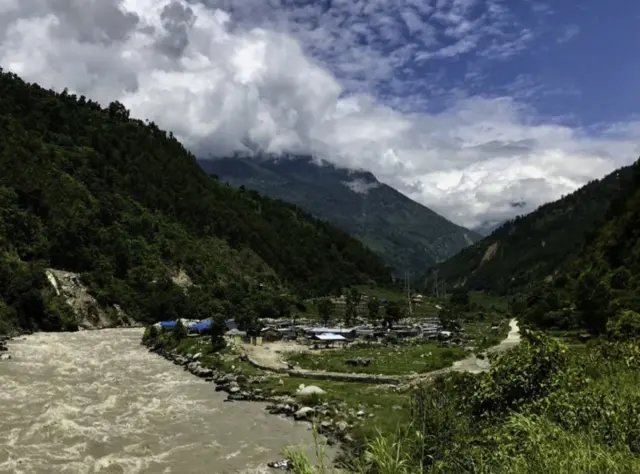
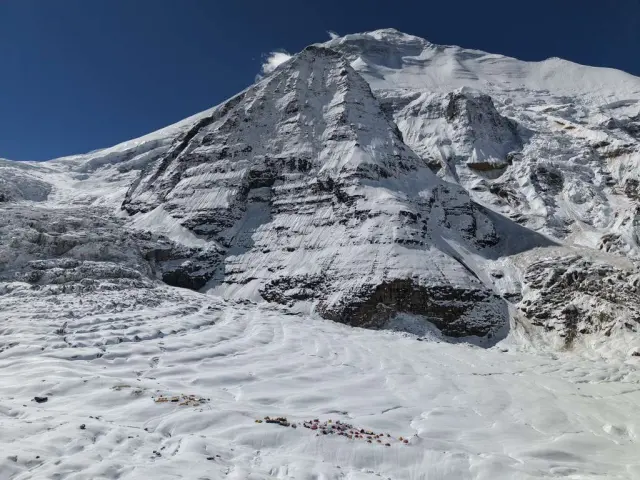
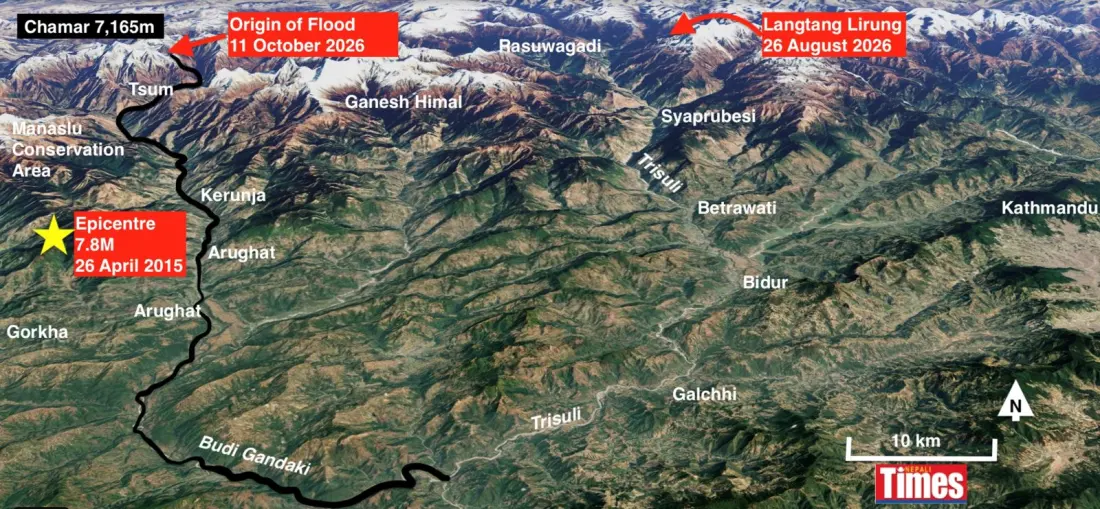
The flood appears to have begun high on the east face of Mt Chamar (7,165m), the tallest peak in the Sringi Himal massif, where a rock face, glacier or both likely collapsed. That collapse sent a torrent of mud and boulders down the Ungilung Khola into the Tsum Valley, where it dammed the Syar Khola before bursting through again and surging down the Budi Gandaki. Locals filmed the river stopping entirely just before a wall of black sludge arrived — a chilling detail, and one that gave downstream villages their clearest warning.
Boulder-laden slurry travelled up to 40km downstream, wiping out highway and trail bridges, a post-2015-earthquake cantilever path above Yaru, and damaging the Chhote Khola and Budi Gandaki hydropower projects. Sections of the Manaslu Circuit trek were swept away. About ten yak and sheep herders near the source in Tsum Valley are missing, but every trekking group on the trail — Nepali and foreign — made it out safe, thanks largely to phone alerts from upstream residents and warnings from the government's disaster agency. After the Trisuli catastrophe in August, nobody ignored the alerts.
What triggered it? There had been no heavy rain in the catchment that weekend, though central Nepal saw enormous early-October blizzards dumping more than three metres of snow. Scientists at ICIMOD, the Kathmandu-based mountain research centre, point to a combination of that snow load, global warming, and the long shadow of the 2015 magnitude-7.8 earthquake, whose epicentre lay just 10km away. Analysts suspect a temporary landslide dam burst, releasing a sediment-choked flood. The region is no stranger to this: a smaller flood hit the same river in April 2024 when part of the Manaslu Glacier crashed into a glacial lake.
The episode also exposed gaps in Nepal's official early-warning infrastructure — there is little functioning remote sensing on rivers below glaciers, and downstream detectors often sound only when it's already too late. On 11 October, it was communities alerting each other that did the job.
For travellers, the practical takeaway is direct: the Manaslu Circuit and Tsum Valley Trail are among Nepal's most rewarding treks — Tsum is one of the Himalaya's sacred 'beyul' valleys, dotted with monasteries like Mu, Rachen and Lungdang — but they run through active hazard corridors. Check trail status before setting out, take local alerts seriously, and know your escape routes to higher ground. Bridges and trail sections may take months to rebuild, so confirm current conditions with trekking agencies before booking.