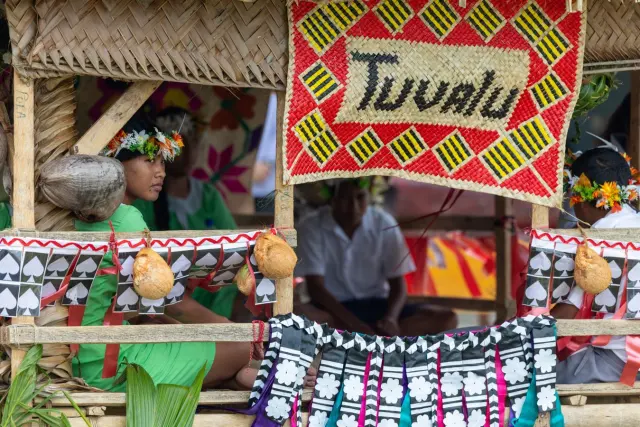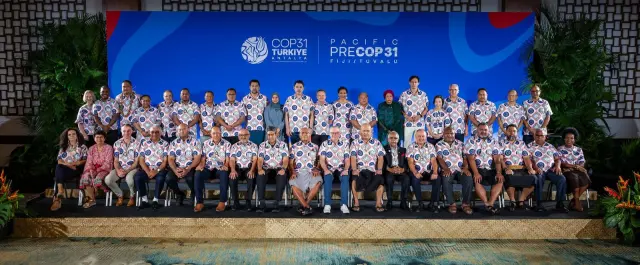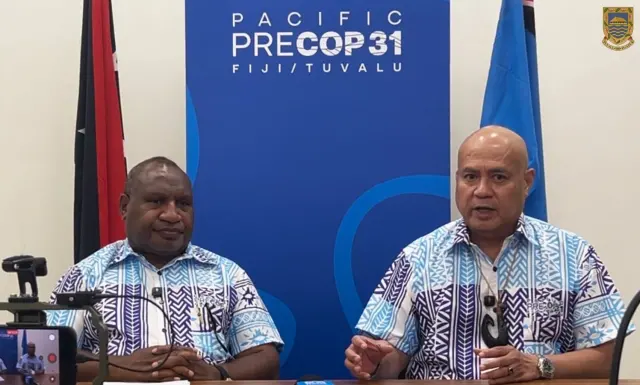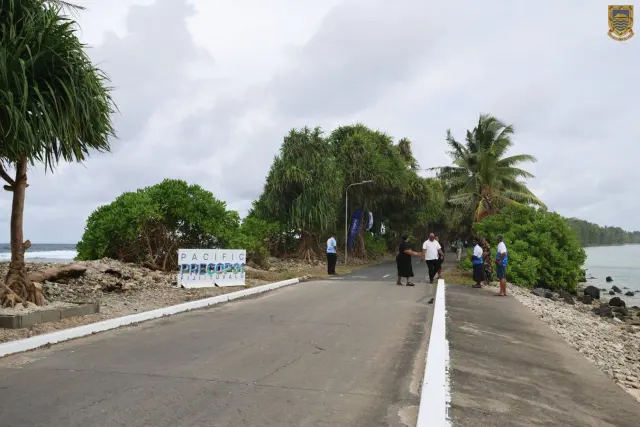
In early October, fourteen heads of government flew to Funafuti, Tuvalu's capital, for an unusual summit. The runway they gathered on sits barely two metres above the sea, doubles as a beach at high tide, and was chosen deliberately: the point was to see, not negotiate. The visit bookended four days of pre-COP31 ministerial meetings in Nadi, Fiji, ahead of the formal COP31 conference in Antalya, Turkey, which Australia co-hosts and which begins in November.
The numbers tell a story of ambition meeting reality. More than 50 countries attended, and Fiji pledged US$2.2 million, yet the Taku Pakasoa Declaration — backed by around thirty countries — remains mostly words. The Pacific Resilience Facility, set up to cut through the bureaucracy of existing climate funds and deliver money straight to communities for sea walls, water security and resilient fishing, has a target of US$500 million that is still largely unmet.
Australia's position is the awkward one. Canberra positioned the pre-COP as proof that Pacific voices matter, and Climate Minister Chris Bowen duly posed for photographs on the airstrip. But Australia remains one of the world's largest fossil fuel exporters — a contradiction Tuvalu's Prime Minister Feleti Teo addressed directly, asking partners for climate finance that doesn't undermine local decision-making. The Australia–Tuvalu Falepili Union Treaty, which offers Tuvaluan citizens a residency pathway to Australia, carries its own uncomfortable questions about sovereignty for a nation the ocean is slowly claiming.
The strangest thread is Taiwan. As one of Tuvalu's few remaining diplomatic allies, it is arguably its most useful partner on the ground — yet absent from every official record because it holds no UN seat and cannot join the UNFCCC or sign the Paris Agreement. Unofficially, its fingerprints are everywhere: Taiwan-listed Billion Electric Group has installed solar and battery systems across Tuvalu, Palau and the Marshall Islands, generating 495 kilowatts, storing nearly 2,000 kilowatt-hours and cutting roughly 800 tonnes of emissions a year. Taiwan's ICDF has run desalination, agriculture and vocational programmes in Funafuti for years — fast, conditional-free aid that the multilateral system is still trying to replicate.
For travellers, the takeaway is blunt: Tuvalu is one of the least-visited countries on Earth and one of the most physically vulnerable. Seeing it — its lagoon, its runway-beach, its community-run adaptation projects — is a rare and time-sensitive experience, and the money flows described here determine how long that stays true. Go with realistic expectations and a light footprint.