A family trip to Tokyo sounds like a lot: 14 million people, neon everywhere, a train map that looks like spaghetti. But one travelling family — Japan veterans on their fourth trip to the country, first with their four-year-old daughter Kaleya — came back convinced the city is one of the easiest big-city destinations for young children anywhere.
Their verdict rests on a few practical truths. Tokyo is safe, extremely clean, and once you crack the train system, genuinely simple to get around. You don't need Japanese either: pointing, gestures and translation apps carried them through backstreets with zero English signage. And the city entertains kids at their own height — gachapon capsule toy machines on corners, convenience store snack rituals, department store basements hiding entire floors of food.
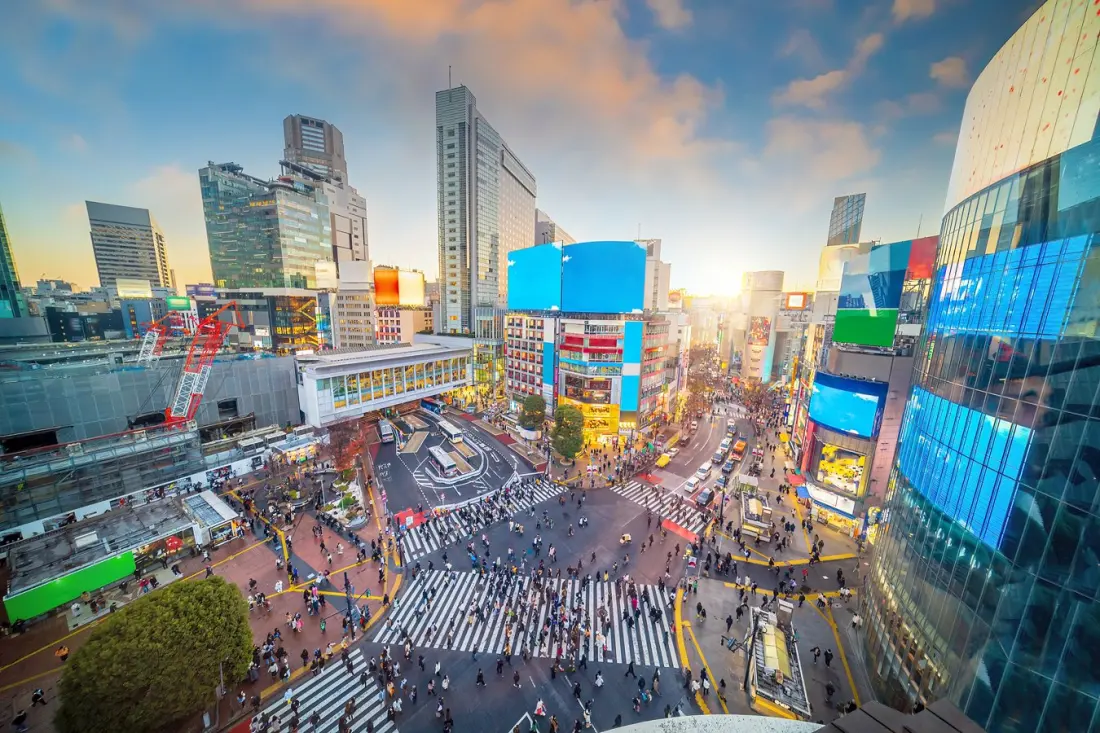
The trip itself mixed icons with improvisation. They stumbled into Shibuya Crossing at rush hour and watched the chaos resolve into choreography in under a minute. They got lost around Akihabara's arcades and found quiet side streets stacked with old electronics. From the observation deck of Tokyo Skytree — over 600 metres tall — their daughter spotted landmarks she already recognised. Slower stops proved the most memorable: a morning in Yoyogi Park, a walk through the forested grounds of Meiji Jingu (planted with roughly 100,000 donated trees), watching sumo wrestlers train, and getting absorbed in teamLab's responsive digital art rooms.
Cultural experiences turned out to be very kid-compatible. At Senso-ji, Tokyo's oldest temple said to date from the 7th century, they walked up through the Nakamise shopping street; a tea ceremony later showed how much intention goes into one bowl of matcha. Dressing in kimono for an afternoon — a fiddly, laugh-out-loud group effort with layers and sashes — was their top recommendation for visiting families.
Food was a highlight throughout: cheap konbini meals that outperformed their price, department store basement food halls, and one standout dinner of table-cooked wagyu shabu-shabu in a private tatami room at Kisoji. Harajuku delivered the sugar-rush version — pillow-sized rainbow cotton candy and neon grilled cheese. One caveat: an owl cafe they wandered into was memorable but left mixed feelings, since animal welfare standards vary widely across Japan's themed cafes. Their advice is to research any cafe before going.
The bigger lesson is pacing. Their best hours weren't the ticketed ones but the in-between ones — and their advice for families planning Japan is to leave more room for slow mornings than seems reasonable. Their one logistical warning: Tokyo is a cluster of centres rather than one downtown, so picking the right base matters more than you'd expect, because a good location saves real time every day.
For anyone hesitating over whether Tokyo is "too much city" for a small child, this family's answer is a firm no. It's a place that rewards curiosity, runs on small delights, and — per their daughter, years later — is still the trip she talks about.