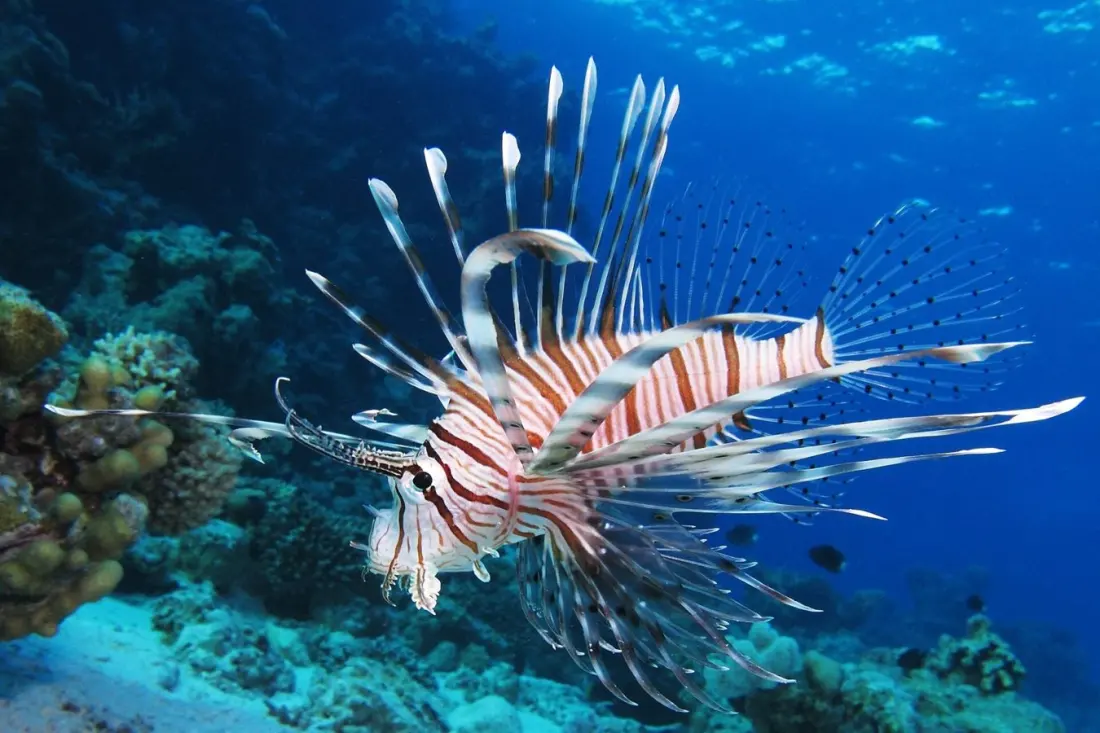
Florida's annual war on the lionfish just hit a milestone. The state's Fish and Wildlife Conservation Commission announced on 19 October that the 2026 Lionfish Challenge removed 36,187 of the invasive predators — more than 5,000 more than the previous year. Between 22 May and 14 September, 533 registered divers and harvesters made 1,468 dive trips to pull the spiny invaders off Florida's reefs.
The competition is free to enter and open to anyone in the state. Recreational divers drop off lionfish tails at checkpoints as proof, while commercial entrants are ranked by harvest weight. Six titles were up for grabs in 2026: Hunter Ledbetter of Monroe County took Lionfish King with 1,541 fish and also won the Veteran Champion category. Helen Rodney of Broward County was crowned Lionfish Queen just 53 fish behind, David Garrett of Volusia County harvested a winning 1,136 pounds commercially, Texan Meagan Huffman claimed the Junior Champion title with 185 fish, and Dive Pros in Pensacola earned Top Checkpoint for accepting over 5,000 tails. Prizes are handed out as catches accumulate through the season.
Why bother? Lionfish, native to the Indo-Pacific, first appeared off Florida in 1985 — likely released through the aquarium trade — and have since spread across the western Atlantic, Caribbean and Gulf of Mexico. They eat voraciously, breed fast and prey on reef species that hold food webs together. Their spines are venomous, but the flesh is safe and tasty once the fish is handled and cleaned properly.
That last point is exactly what one Colombian island is betting on. On Providencia, marine biologist Josselyn Bryan Arboleda and her partner Jostiffer Garcia Henry are pushing lionfish onto restaurant menus to give fishers a financial reason to keep hunting it. At Caribbean Place Donde Martin, chef Martin Quintero serves it as ceviche, fried fillets, in garlic sauce, steamed or on skewers, and describes the flavour as delicate, similar to snapper. Colombia formalised its own control plan back in 2013 through Resolution 675, covering capture and disposal in the Caribbean. Florida rewards removals with competition prizes; Providencia is trying to build a market. Both depend on people actually getting the fish out of the water.
For travelling divers, this is more than a curiosity. The Florida challenge is a rare conservation programme you can join as a visitor — register, dive, hand in tails, win prizes. Diving operators across the state, from the Panhandle to the Keys, are already tuned into lionfish hunts. And in the Colombian Caribbean, ordering lionfish ceviche is a genuinely useful act: it helps build the demand that makes reef protection pay for itself. Either way, you get a good story and, quite possibly, a good lunch.