A century-old military fort on Baltimore's waterfront has found a strange second life. Fort Armistead, built between 1897 and 1901 as a coastal defence installation, never fired a shot in anger — it spent both world wars storing artillery before being handed over to the city. Today it's Fort Armistead Park, a curious mix of fishing spot, graffiti canvas and maze of pitch-dark tunnels.
The fort's underground passages link four old gun batteries — Winchester, McFarland, Irons and Mudge — and exploring them has become the park's main draw for urban explorers. They're genuinely unlit and unmaintained, so a flashlight isn't optional. The site also hosted the Starscape electronic music festival from 1999 to 2012, but the park has declined since the event was cancelled, and visitors should expect some litter and a rough-around-the-edges atmosphere (feral cats included).
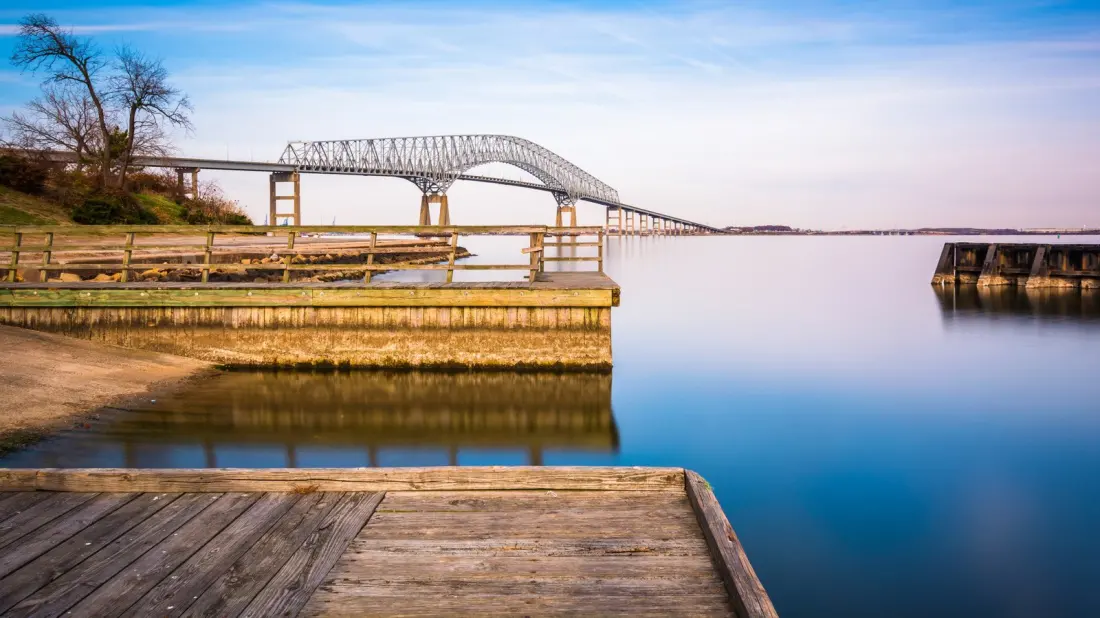
Beyond the tunnels, there's plenty to keep you busy above ground. The park sits on the Patapsco River with views over the Chesapeake Bay — including the remains of the Francis Scott Key Bridge, which collapsed in March 2024 after being struck by a container ship. Anglers can cast for striped bass and channel catfish from the shore, a boat or a kayak, and true to Maryland form, crabbing is popular too. There are trails, open green space and a decent tree canopy for summer shade, plus picnic tables if you pack your own food — there are no vendors on site.
Getting there is easy: it's about 20 minutes from Baltimore/Washington International Airport, an hour's drive from Washington, D.C., and just over two hours from Philadelphia.
A few cautions are worth heeding. The park has a slightly shady reputation, some railings along the water and pier are missing, and locals generally advise against hanging around after dark. If you go into the tunnels, don't do it solo — it's easy to get turned around in the branching passageways. Go in daylight, bring a light, keep your phone charged and let someone know where you are.
Fort Armistead won't rival Maryland's polished state parks for hiking or scenery, and that's rather the point. It's for travellers who like their history a bit decayed — photographers chasing industrial textures, anglers after a quiet shoreline, or anyone who wants to poke around a forgotten piece of American coastal defence without driving far from Baltimore or D.C. Think of it as a half-day detour, best paired with a proper crab feast back in the city.