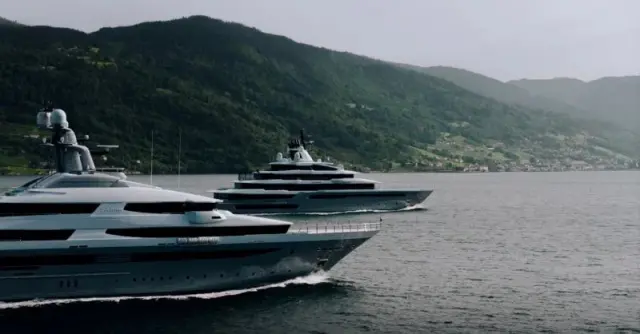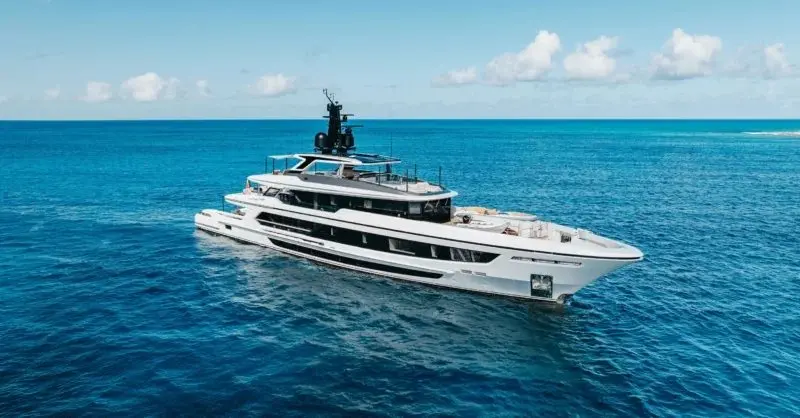
Speaking at the Monaco Yacht Show, Anders Kurtén, CEO of brokerage and charter house Fraser Yachts, made a case that will shape how luxury sailors book trips for years: the yachting industry can't reach net zero by swapping in new eco-friendly builds, because new builds are simply too rare a drop in the bucket. Around 200 yachts are delivered each year against a global fleet of roughly 7,000 to 8,000 — so even if every new boat ran on hydrogen, methanol or electricity, the maths wouldn't work.
His answer is a practical four-point plan aimed at the boats already in the water. First, switch from conventional diesel to HVO, a synthetic fuel he says cuts 80 to 90 percent of emissions (particle emissions aside). Second, slow down: dropping cruising speed by a knot to a knot and a half trims emissions with, he argues, barely any impact on the trip itself. Third, pick marinas with green shore power — a meaningful lever when yachts can spend more than half their time moored. And fourth, keep training captains and crew on sustainable, circular practices onboard, work he self-deprecatingly describes as his "traveling preacher man" routine.
Kurtén knows the industry from every angle. Fraser Yachts, founded in 1947 and now part of the MarineMax group, runs 19 offices (the largest in Monaco) with 230 staff, handling sales, charter, management and crew placement, with about 140 yachts in its managed fleet. A strong year for the firm means around 50 sales transactions of yachts 30 metres and up — out of a global market of roughly 430 at that size.
Beyond sustainability, the interview sketches how the charter market itself has changed. Before Covid, first-time buyers and charterers made up about 10 percent of the market; the pandemic spiked that number — privacy was the big draw — and while some newcomers have drifted away, the share remains higher than pre-2020. These arrivals are younger: the average charterer's age has fallen significantly in 15 years, bringing wealth that didn't arrive via grandpa's boat. They expect their onshore life to continue seamlessly at sea, which means bigger usable open decks, interiors that flow into them, and crew skills well beyond navigation. Connectivity is now a dealbreaker too — Kurtén says Starlink Maritime Business across Fraser's fleet lets clients genuinely work from the boat for extended stretches. Working from yacht, literally.
Why should a traveller care? If you're weighing a charter, these trends work in your favour: younger fleets being retrofitted with cleaner fuel options and shore power, itineraries that favour slower cruising, and boats set up so you can disappear for two weeks without vanishing from your job. And you can vote with your wallet — asking a charter broker for HVO-capable boats or green-marina routes is now a perfectly reasonable request.