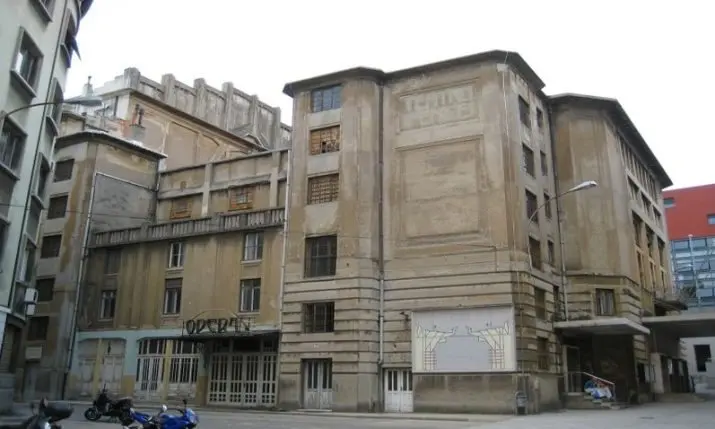
A piece of Rijeka's cultural history is officially on the market. Teatro Fenice, one of the Croatian port city's most recognisable historic buildings, is being sold for a starting price of €1.4 million — and that figure only buys you nine-tenths of it.
The theatre was designed by architect Theodor Träxler with builder Eugenio Celligoi and opened on 2 May 1914 with a performance of Puccini's Tosca. For its time it was a genuine engineering statement, built on a reinforced concrete frame, and its auditorium held roughly 2,000 people. After the Second World War it carried on as the Partizan cinema, keeping a cultural programme going right up until 2007. Since then it has sat largely idle and gradually deteriorated.
The sale comes via bankruptcy proceedings involving the company Rijekakino, which owns 90% of the building. The remaining tenth is tied to apartments sold off to former tenants in the 1990s, so any buyer gets the lion's share of the property — not all of it. The administrator is selling strictly as-is, with no warranties on condition.
Two complications make this more than a normal property listing. First, Teatro Fenice has been protected cultural property since 2003, so any renovation must clear heritage requirements. Second, there is currently no professional structural assessment or restoration cost estimate available to the city, so prospective buyers — and residents — genuinely don't know the size of the bill. A plan to secure €100,000 for urgent protective work fell through because Rijeka no longer had formal caretaker status over the building.
The city hasn't walked away entirely. It is monitoring the bankruptcy and in talks with the Ministry of Culture and Media about possible expropriation, and has weighed buying the property itself, though no decision has been announced.
Why should travellers care? Rijeka — European Capital of Culture in 2020 — has a habit of reviving grand old structures, and Teatro Fenice has been part of the city's identity for over a century. What happens next will shape whether this early 20th-century landmark returns to life as a venue or continues its slow decline. Anyone visiting Rijeka's theatre district and Korzo promenade today is seeing the building at a genuine crossroads. For heritage-minded visitors, it's a story worth following — and a reason to see the interior's original ambition while its future is still undecided.
The open question, as the source puts it plainly: will a new owner have both the money and the will to bring it back?