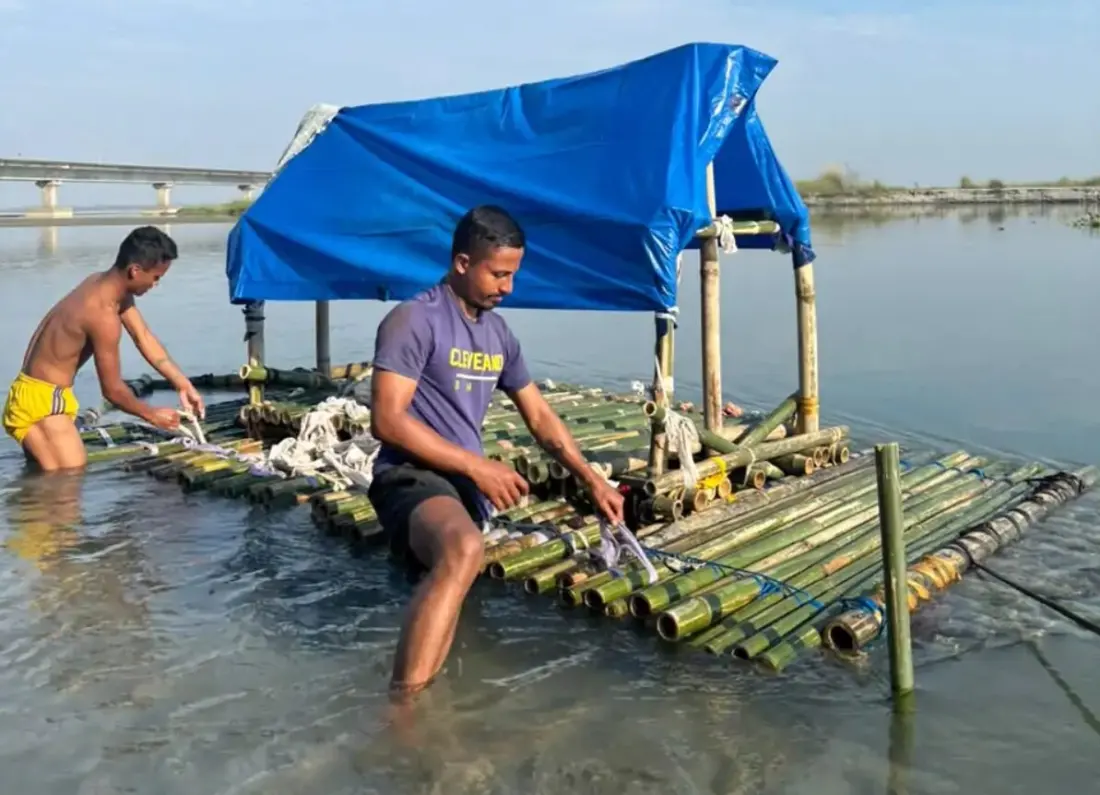
Indian adventurer Shekhar Bordoloi is currently drifting down one of Asia's great rivers on nothing but a hand-lashed bamboo raft. He launched from the Dhola–Sadiya Bridge in Assam on November 1, aiming to cover the full 891km of the Brahmaputra within India and finish at Dhubri in 22 to 25 days. It's a solo run — no support crew, no motor, just bamboo, current and whatever he can find along the banks.
The raft itself follows a long local tradition. Bamboo rafts like his are still used across the region for fishing and moving goods, and Bordoloi built his own by lashing poles together over several days. For the first stretch he's been riding the Lohit, one of the Brahmaputra's many channels and tributaries, and conditions have been calm so far. They won't stay that way necessarily: the Brahmaputra is the ninth-largest river in the world by discharge, notorious for flooding and strong currents, and picking the right channel through its braided, shifting system is one of the biggest challenges of the trip.
Bordoloi is no stranger to this water. In 2020 he rafted 400km of the Brahmaputra with two friends, and back in 2015 he joined an 11-day trip organised by the Assam Mountaineering Association. This expedition more than doubles the distance and strips away the company — a serious step up in endurance and self-reliance. On past trips he carried little or no food, living off foraging and local knowledge; with three-plus weeks on the water, those skills will be tested harder than ever.
There's a bigger idea behind the drift, too. Bordoloi, who is from Assam, believes many stretches of the river are underexplored and that careful mapping could open up river tourism — done responsibly — for communities along its banks. If his route works, it could double as a blueprint for low-impact river travel in a region where the river is the economic and cultural spine.
For travellers, the story is a nudge to look at Assam beyond its famous tea gardens and Kaziranga's rhinos. The Brahmaputra valley offers boat travel, riverine villages and a slow, water-level view of northeast India that few visitors bother with. Bordoloi is posting daily updates on Facebook and Instagram, so you can follow the raft's progress in real time — and start plotting your own gentler version of the route.