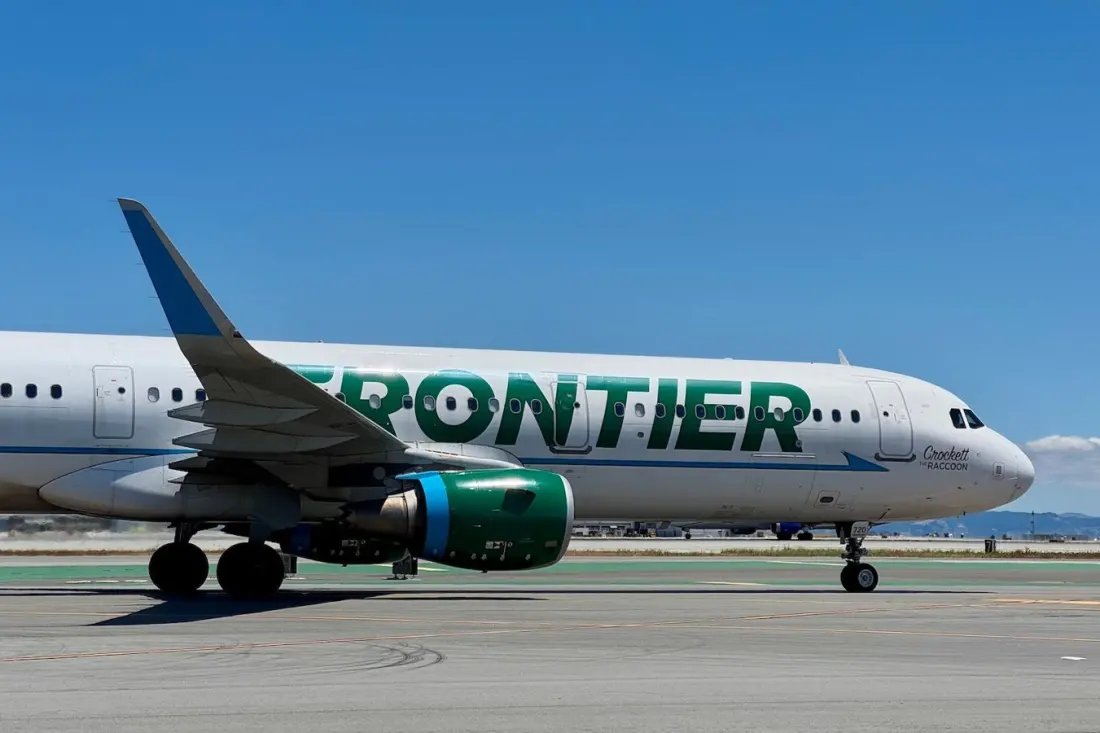
Budget flyer Frontier Airlines has crossed a line it spent decades on the wrong side of: as of this week, you can actually book a first-class seat on its planes. Bookings opened for flights from March 5, and the airline has already started retrofitting its Airbus fleet, so some travellers may spot the new cabin even earlier. Full rollout is expected by March.
So what do you get? Two rows at the front of the plane in sleek black recliners with a green Frontier emblem on the headrest. They look much like standard domestic first-class seats on the big US carriers, with one quirk: they don't physically recline — the airline insists they're "ergonomically reclined." Don't expect frills beyond the seat, either. Snacks and drinks still cost extra.
Pricing is the pitch. Introductory one-way "first" bundles start at $129 and include two free checked bags, while $90 one-way premium bundles get you an extra-legroom seat. Rows 3 through 8 will become extra-legroom seating, with at least one row per flight keeping Frontier's UpFront Plus setup (guaranteed empty middle seat). USB-C charging ports are going into the first eight rows — notable on an airline whose planes currently have no power outlets at all.
Booking gets a bit more layered, too. Frontier is now selling four tiers: basic, an economy bundle (standard seat plus full-size carry-on), a premium bundle (extra legroom) and the first bundle. Loyalty members should pay attention: passengers with Frontier Miles elite status can upgrade into first class when they buy an economy or premium bundle, with earlier upgrade windows for higher tiers. It's arguably the most valuable perk the programme has ever offered.
There's more on the horizon. Starlink Wi-Fi installations begin in early 2027, taking Frontier from zero inflight internet to what's widely seen as the fastest service in the sky. Whether it'll be free or fee-based hasn't been announced.
Frontier isn't acting alone. JetBlue is launching a new domestic first-class product next month and Allegiant rolls out new seats in 2027 — low-cost carriers are all chasing premium dollars. If that supply keeps growing, it could push down what you pay for a front-cabin seat across the board. For anyone who flies US domestic routes on a budget, competition like this is worth watching.