Kazakhstan has come fourth out of 41 countries in a global survey of how optimistic young people feel about the future, scoring 4.17 out of five. The study, run by UK-based Oxford Scholastica Academy, asked 1,433 students across five categories: their personal prospects, the economy, the environment, politics and the future of society.
Kazakhstan's strong showing came largely from two areas. Its students rated their personal optimism at 4.71 and economic confidence at 4.56 — both notably high — and its political optimism score of 3.76 was the third-best in the survey. Only Sri Lanka (4.32), Kenya (4.31) and Nepal (4.24) finished ahead, with Kazakhstan sitting comfortably above Cyprus, Canada, Nigeria, Indonesia, Russia and Armenia.
The wider picture is interesting for anyone who keeps an eye on how different countries feel from the inside. Globally, students were most upbeat about their own futures (4.4 average) and least convinced about politics (3.29). Western nations landed mid-table: Canada was the strongest at sixth, the US scored 3.99, Germany 3.73, the UK 33rd at 3.61, and France just 3.22 — with French students posting the survey's lowest environmental optimism at 2.25. Kuwait came last overall at 2.92, with particularly grim scores on politics and society's direction. Rwanda, Türkiye and France filled out the bottom four.
The survey's authors framed the results around the uncertainties young people currently face — the rise of AI, war and the cost of living among them — noting that national attitudes toward those pressures vary sharply. The especially low political optimism scores in some European countries, Italy among them, stood out to the study's co-director.
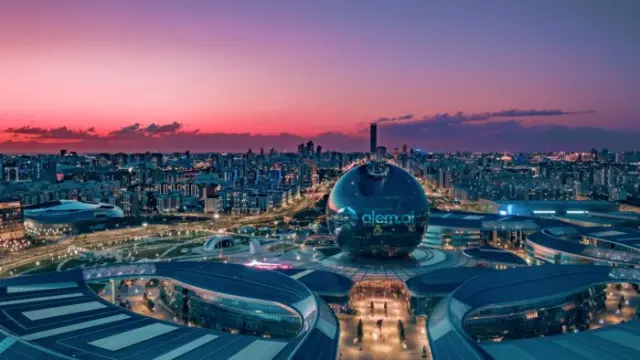
So why should a traveller care? Optimism among a country's under-25s is a rough but real proxy for how a place feels on the ground: energetic, open, and building rather than retreating. Kazakhstan has spent the past decade quietly building a tourism identity — futuristic Astana, the steppe, the Silk Road towns of the south and the mountains outside Almaty — and a confident young population is part of that story. For visitors, it tends to show up in practical ways: a lively café and startup scene in the big cities, growing English among younger people, and a general welcome for travellers who are still relatively rare.
It's worth reading the survey with a little caution, of course. It relied on at least five student respondents per country and measured self-reported optimism, not living conditions. But as a snapshot of mood, Kazakhstan ranking alongside Kenya, Nepal and Sri Lanka — and well ahead of much of Western Europe — is a genuinely striking result for a country most travellers still haven't considered.
If it nudges Kazakhstan onto your list, so much the better: visa rules have been eased for many nationalities, and the country remains one of the world's most under-visited large destinations.