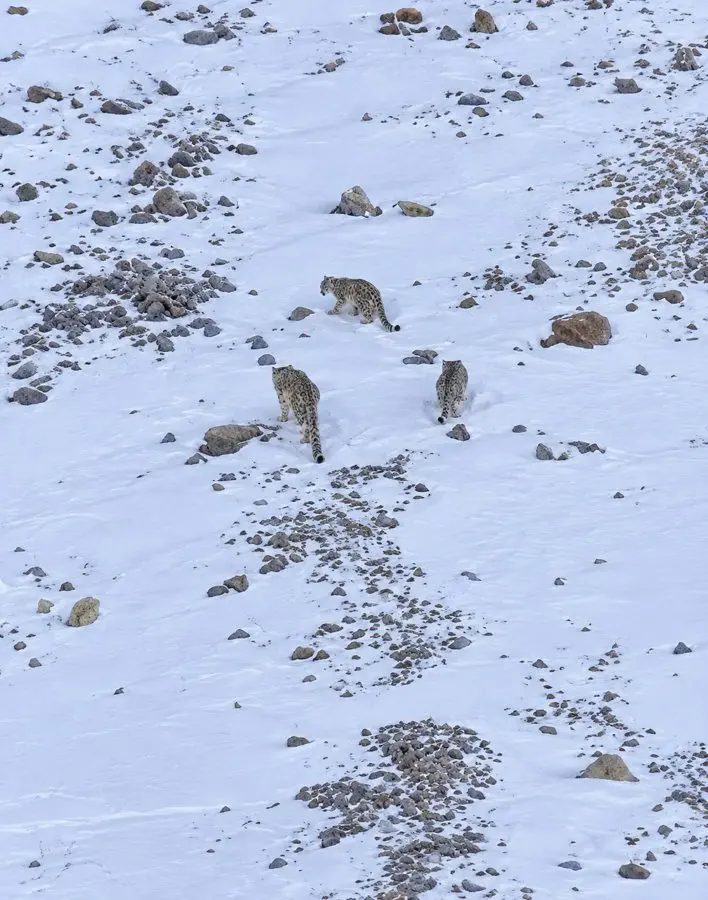
Camera work from rangers in central Kyrgyzstan has captured something most travellers will never see in person: three snow leopards moving together along a mountain slope, calmly climbing toward higher ground. The animals were filmed inside a state nature reserve in the Naryn region by staff from the regional department of the Ministry of Natural Resources, Ecology and Technical Supervision during a routine inspection.
Naryn and neighbouring Issyk-Kul are considered the stronghold of the snow leopard in Kyrgyzstan — the country's high ridges and remote valleys offer exactly the kind of habitat these solitary cats need. Seeing three at once is genuinely unusual for an animal so famously elusive that researchers often go years relying on camera traps rather than direct sightings.
The snow leopard, known locally as Ak Ilbirs (white leopard), holds the status of a national symbol in Kyrgyzstan, which explains why conservation there gets real political weight. A notable milestone: the Ak Ilbirs Research and Rehabilitation Center opened in the village of Ananyevo, in Issyk-Kul region, billed as the first facility of its kind in Central Asia. It focuses on research, rehabilitation and protection of the species.
For visitors, this is more than a wildlife newsflash. Kyrgyzstan remains one of the few accessible places where you can hike or horseback-ride through documented snow leopard territory without crowds or heavy infrastructure. Naryn region in particular offers high-altitude trekking, community-based guesthouses and a real chance of spotting ibex, marmots and golden eagles — with the leopard itself as the long-shot jackpot. The reserve where this footage was taken is protected, so access is regulated, but the surrounding valleys are very much open to respectful travellers who go with local guides.
Why it matters: if spotting a snow leopard is on your lifetime wishlist, Kyrgyzstan is quietly building the conservation credibility to make it plausible, not just possible. Supporting local ecotourism around Naryn and Issyk-Kul directly funds the kind of ranger patrols and rehab centres that keep these cats alive.