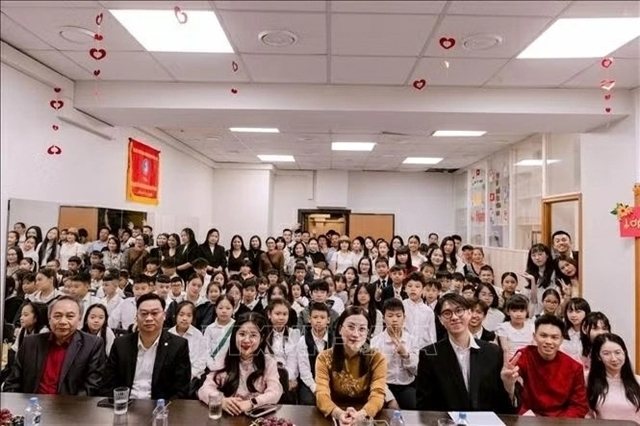
A volunteer-run Vietnamese language school in Moscow has kicked off its 2026–2027 year with its largest intake yet. Fun Vietnamese, organised by the Vietnamese Students' Association in Russia, held its opening ceremony on September 27 and welcomed 73 students — a solid jump in scale for a community programme. Most of the class, 69 children, come from Vietnamese families living in Russia, but there's a small twist: four native Russians have signed up too, drawn by an interest in the culture or by family ties.
The teaching side has grown along with enrolment. The team now counts 22 members — eight on academic affairs, ten teaching assistants and four handling communications. That structure lets the school layer culture, history and everyday Vietnamese life into lessons, adjusted to each age group rather than taught as one-size-fits-all.
The big change this year is the formal adoption of Chào Tiếng Việt (Hello Vietnamese), a textbook series by Nguyễn Thụy Anh. The idea is to move classes away from grinding through sentence patterns and towards something more experiential — connecting the language to food, festivals and daily life in Vietnam. It's part of a longer-term effort to keep refining how the school teaches and raise the overall standard.
The opening ceremony also came with a packed calendar. On the agenda are celebrations for Vietnamese Teachers' Day on November 20, Vietnamese Language Honouring Day, the 86th anniversary of the Hồ Chí Minh Vanguard Children's Union, and the 137th birth anniversary of President Hồ Chí Minh.
Mai Nguyễn Tuyết Hoa, First Secretary in charge of education at the Vietnamese Embassy in Russia, used the occasion to praise the volunteer team for keeping the classes going, and voiced hope that Fun Vietnamese would keep expanding its activities in the years ahead.
Why should a traveller care? If you're spending time in Moscow and hear Vietnamese being spoken by school-age kids outside class, this is part of the reason why — a small but growing effort to keep a heritage language alive through culture-first teaching. And for families in the Vietnamese diaspora considering a stay or study period in Russia, it shows there's a ready-made community structure to plug into. It's also a neat example of how language schools abroad increasingly lean on cultural immersion, the same approach that makes short language courses in Vietnam appealing to visitors.