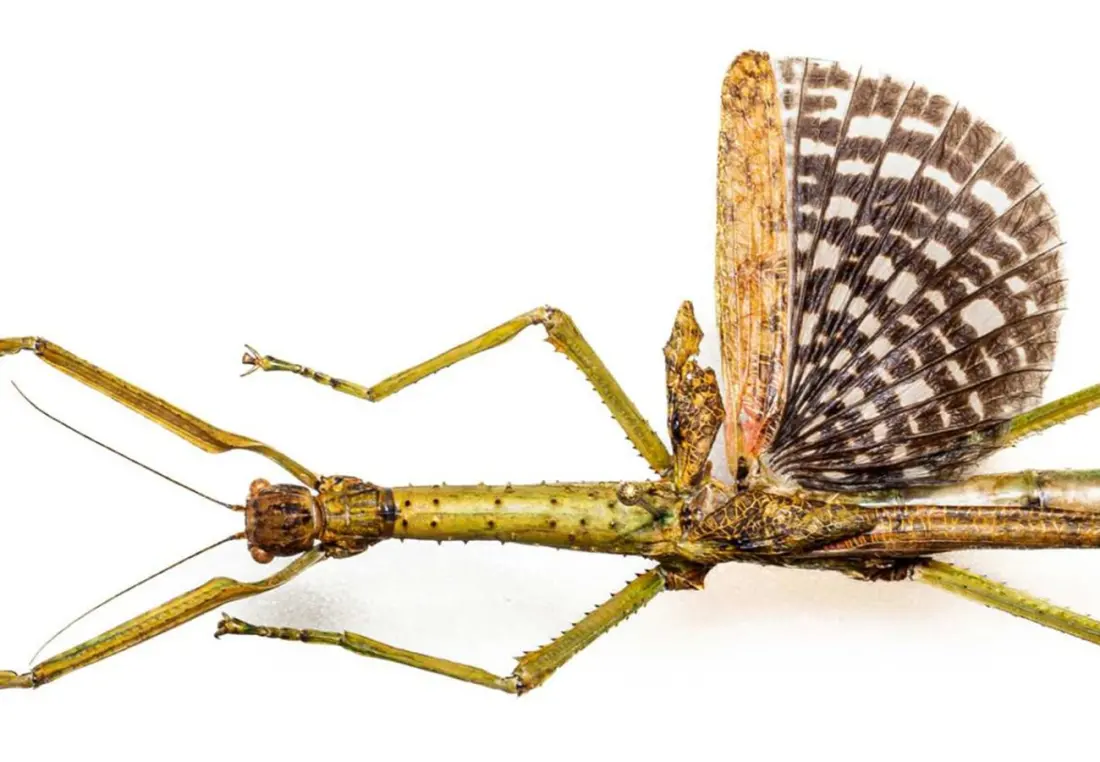
Australia's most familiar stick insects turned out to be a lot less familiar than anyone thought. Researchers at the University of Sydney have reclassified the genus Anchiale, revealing that what scientists long treated as two species are actually five, ranging from northern New South Wales up the Queensland coast and into the tropics. One of them, Anchiale robusta, is a large insect that naturalists and hobbyists had been photographing and misidentifying for decades before DNA work, museum specimens and citizen science records finally showed it was something new entirely.
The study, published in Austral Entomology, also unveiled Anchiale mabiensis, found in the Mabi rainforest on Queensland's Atherton Tablelands — a critically endangered ecosystem that covers only a tiny fraction of its former range. This species made entomological history with its eggs, which feature a structural lid unlike anything recorded in stick insects or their closest relatives. The team believes there may be yet another undescribed species lurking on Cape York, pending more specimens.
What makes the story genuinely surprising is how much data already existed. More than 1,000 citizen science observations had been logged on iNaturalist and the Atlas of Living Australia, yet the species still slipped through. Lead author Dr Braxton Jones compared taxonomy to detective work, noting that even among Australia's most photographed insects, species can escape scientific recognition for generations.
There's a practical side too. One Anchiale species is notorious for plague-like outbreaks that can strip foliage from trees, and researchers discovered it's actually several species lumped together. Sorting out which is which will help forestry and agriculture managers predict and respond to outbreaks — a reminder that naming things correctly has real-world consequences.
For travellers, the takeaway is that Australia's everyday bushland and even suburban gardens are still full of undocumented life. A night walk in a rainforest with a torch is often the best way to spot stick insects, and the wet tropics around Cairns and the Atherton Tablelands — where Mabi forest fragments survive — are among the richest places to look. Citizen science platforms like iNaturalist mean an ordinary holiday photo could end up contributing to a scientific discovery. As Dr Jones put it, species may be lost before we ever name them, which makes documenting and protecting these habitats while visiting them all the more worthwhile.