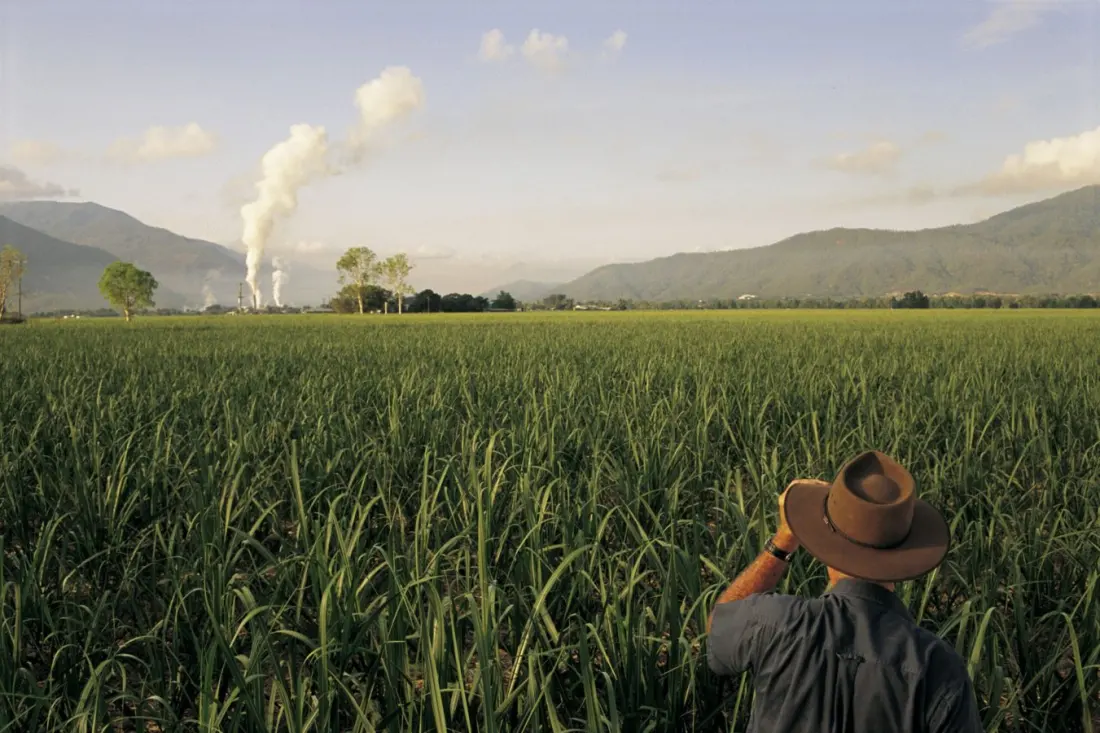
Sitting between the Daintree rainforest and the Great Barrier Reef, the Far North Queensland town of Mossman has spent more than a century defined by one thing: sugar. Its mill has crushed cane since 1894, and today the town — administrative centre of Douglas Shire — runs on roughly 160 growers feeding a farmer-owned co-operative. That way of life now hangs by a thread.
In September 2002 the bank warned the Mossman Central Mill that foreclosure was imminent. Chairman Bill Phillips-Turner, a fourth-generation grower and director since 1990, has spent the years since making brutal calls: the workforce has been slashed from 230 in 1998 to under 100, assets sold and maintenance cut. Shareholders have taken repeated cuts to cane payments — first $1 a tonne, then $1.60 — with promises of repayment if fortunes turn. The stakes are enormous because there is no plan B: the nearest alternative mill is 90km away at Tableland, making it financially pointless to truck cane there. Locals estimate every sugar dollar generates seven more in the wider community, so closure would be catastrophic.
The squeeze is industry-wide. Australia harvests 30–40 million tonnes of cane annually, and a federal Sugar Industry Reform Package offered over $400 million in 2004 to encourage growers to exit; about 1000 are weighing the incentive, letting survivors buy up land for better economies of scale. The human cost is real — counselling services in Cairns report rising distress, and the average grower is now over 65. Farmers like Sandy McDonald work off-farm to get by, and 30-year-old Doug Crees is a rarity simply for staying.
What makes Mossman interesting is the unlikely alliance behind cane. Douglas Shire mayor Mike Berwick, a former Daintree blockade environmentalist, argues the region is close to a formula for sustainable cane growing. Studies cited by CSIRO's Dr Brian Roberts show soil loss in North Queensland has fallen from a record 380 tonnes per hectare a year to below five, thanks to mulching, minimal tillage and careful fertiliser use — cane, per hectare, pollutes less than bananas or unsewered housing. The mill is also exploring futures beyond raw sugar exports through Queensland Sugar Ltd: ethanol, co-generation from cane waste, or reinventing itself as a branded "food factory".
For travellers, Mossman is usually a stop on the way to the Daintree or Port Douglas. But this is a live case study in what happens when a tourism boom coexists with a struggling farming town — over 80 per cent of Douglas Shire is World Heritage listed, yet the mill's survival will decide whether Mossman keeps its working heart or becomes another resort corridor. If you pass through, you're seeing an Australian industry at a genuine crossroads, one that could reshape the region's countryside within a few seasons.