Virgin Atlantic's latest schedule filing shows the UK's second-biggest long-haul airline planning just 14 destination countries for the first half of 2027 — and two big Gulf names are missing. Both Saudi Arabia and the United Arab Emirates have been dropped from the map, ending the airline's entire presence in the Middle East for the time being.
The Saudi exit came first. Virgin launched Heathrow-Riyadh only in March 2025, flying daily with a 262-seat, four-class Airbus A330-900 and banking on one of aviation's fastest-growing cities. It lasted barely a year: the last flight operated on March 7, 2026, shortly after the outbreak of the war in Iran. Virgin cited the "evolving situation in the Middle East", alongside demand and operating costs. The route had been codeshare-linked to fellow SkyTeam member Saudia, and Virgin had been building ties with the new Riyadh Air.
There was also a supply problem. Riyadh-Heathrow capacity had ballooned — nearly 1.2 million round-trip seats were scheduled in 2025, up 38% year-on-year and roughly triple the 2019 figure — thanks to Virgin's entry and British Airways doubling to two daily flights. That kind of growth tends to wreck fares on what was always a premium-heavy local London market. Riyadh Air, which debuted at Heathrow in 2025, wasn't even selling seats publicly at that point, merely protecting its slots before regular service began in 2026.
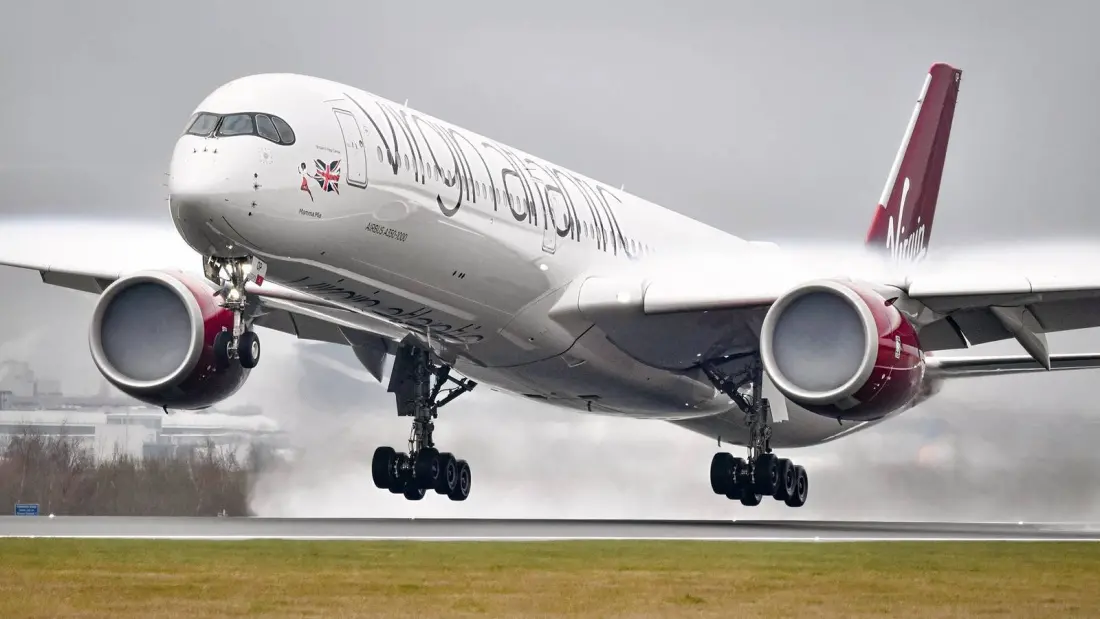
Dubai went a day earlier, on March 6, 2026, ending the UAE operation entirely. Virgin has served Dubai on and off since 2006, pulled out in 2019, and returned in 2023 — most recently with daily flights using its biggest aircraft, the 397-seat A350-1000. The difference here is that Virgin says it intends to return to Dubai in winter 2027/2028. It would be re-entering a market still well served: British Airways kept a reduced daily Dubai service through at least October 2027 (down from its usual three daily, including an A380), Emirates still flies up to seven times a day to Heathrow plus multiple Gatwick and Stansted departures, and Royal Brunei continues to stop there en route to London.
The Iran war has clearly reshaped Gulf flying — several carriers have suspended or delayed routes, and demand confidence has dropped. But Virgin's twin retreat is also a reminder that flooding a premium route with seats rarely ends well, war or no war.
What does this mean for travellers? Anyone holding Virgin bookings to Riyadh or Dubai should check their reservation for changes or refunds. For now, getting from London to either city means British Airways, Emirates or other Gulf carriers — often with strong competition keeping fares reasonable. If Virgin does return to Dubai in winter 2027/2028, expect it to reappear as a seasonal, demand-led operation. Meanwhile, Virgin is redirecting its long-haul energy eastwards: Thailand is new to its network, with a Heathrow-Phuket service launched on October 18, 2026, and South Korea joining the map for the first time — a notable shift from the Gulf towards Southeast Asia.