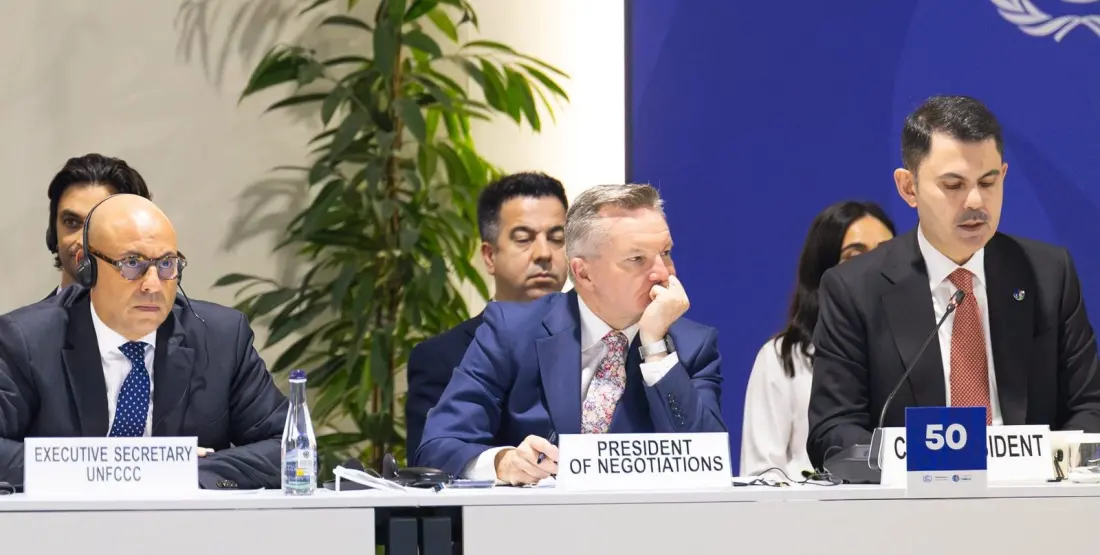
The UN climate talks known as COP31 have wrapped up without the big political agreement many were hoping for. Decisions were adopted on existing work programs — adaptation, just transition, climate finance — but no overarching cover decision was secured, and the failure says a lot about where climate leadership now sits.
The drama started when Australia stepped aside from its bid to host the summit in November 2025, with Türkiye taking the hosting role while Australia's Chris Bowen was appointed President of Negotiations. Canberra pitched this as a diplomatic win that would let it champion its Pacific neighbours. Twelve months on, the Australia–Türkiye presidency produced a proposed deal — the Antalya Pact — that conspicuously avoided mentioning fossil fuels. It declined to reaffirm the COP28 commitment to transition away from fossil fuels in energy systems, leaning instead on scaling up carbon capture and storage to gigatonne levels by 2035.
More striking was what disappeared along the way. Earlier drafts, beginning with the first text circulated on November 16, welcomed the International Court of Justice's advisory opinion of July 23 2025. The November 19 revision watered that language down, and the final November 22 draft — the one parties rejected — cut it entirely. That opinion, won through years of Pacific-led campaigning, clarified that states failing to protect the climate system, including through fossil fuel production, licences and subsidies, may be committing internationally wrongful acts.
Australia's awkward position is hard to miss. It is the world's largest metallurgical coal exporter and second-largest overall, and the IEA projects it could become the biggest coal exporter outright under current policies. Domestically, approvals for new coal and gas stretch decades out: some coal mining into the 2060s, Woodside's North West Shelf gas extension to 2070, and an Australia Pacific LNG project approved in March 2026 that runs to 2081. Bowen blamed the lack of consensus among countries for the fossil fuel stalemate, but the article's argument is blunt: international agreement isn't a precondition for national action, and Canberra could end new fossil fuel approvals tomorrow if it wanted.
Meanwhile, the Pacific is getting on with it. Vanuatu, which led the ICJ campaign, rejected the proposed cover decision outright, refusing consensus at the cost of its people's survival. The bloc of nations backing a Fossil Fuel Non-Proliferation Treaty grew to 30 countries during the summit, and Tuvalu and Ireland will co-host a major conference on transitioning away from fossil fuels in July 2027. The Santa Marta Process, launched in Colombia in April 2026, offers yet another route for countries willing to move without waiting for unanimous UN agreement.
For anyone who travels to the Pacific, this matters. The islands many of us visit for their reefs and coastlines are facing rising adaptation costs, threats to food and water security, displacement and damaged infrastructure — and they are increasingly shaping international law rather than waiting on aid. The piece's closing message flips the usual script: Pacific nations should stop looking to Australia for climate leadership. Australia should look to the Pacific.