Trail aches usually get blamed on boots, packs or mileage. A lesser-known movement system called Gyrokinesis offers another explanation: joints and small muscles that never get moved through their full range, especially in the feet and ankles. Originally designed to help dancers recover from injury, it turns out to be unusually well suited to hikers.
Gyrotonic, its equipment-based sibling, was developed for dancers rehabbing injuries. The machines resemble pilates apparatus, but the movement principles borrow from qigong and tai chi: slow, breath-led sequences built around circular and spiralling motions that take joints through their full range. Gyrokinesis uses the same ideas but needs no equipment at all — just a stool or a mat, which makes it easy to practise at home or even in camp after a day on trail.
Certified instructor Leslie Hubbard, who owns Hidden Root Studio in Maple Falls, Washington, describes the method as circular, three-dimensional and whole-body. The point is to get multiple biological systems working together — better blood flow, cell repair, mobility — while building strength from the core outward. For hikers lugging a loaded pack over uneven ground, that full-body stability matters more than strong legs in isolation. It can also help with stubborn stiffness, old injuries and general post-hike soreness.
One appeal is how individual the practice is. Hubbard tailors sequences to whoever is in front of her — there is no fixed routine everyone must complete. Her advice for self-guided practice is to chase what feels good rather than forcing joints into extreme positions. Even a tiny range of motion can be deeply satisfying after a long day of walking, she says, and you should stop if anything hurts.
Some of the sequences are refreshingly simple. A spine mobiliser done seated on a stool — or a rock or log in camp — involves arching and curling the back, spiralling side to side and moving the spine in a wave, all driven from the pelvis rather than the neck. Think seated cat-cow.
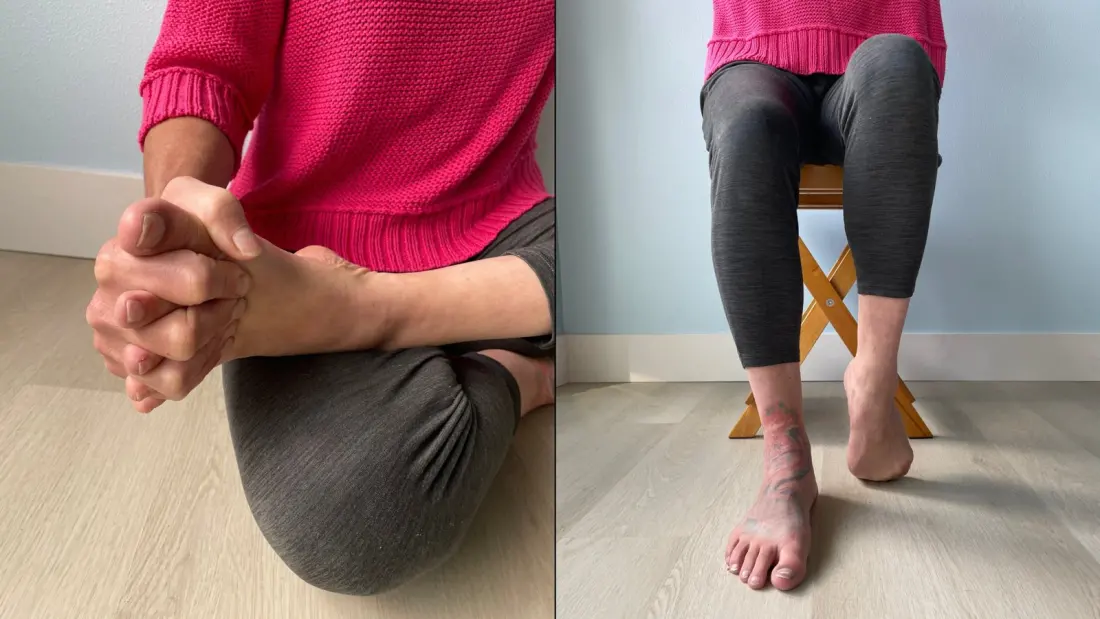
The foot routine is where hikers will feel the payoff. Shoes and socks off, one ankle crossed over the opposite knee: massage the sole with your thumbs from heel to toes, stretch each toe and the webbing between them, then thread your fingers between your toes and draw the foot and ankle in circles to create space and strength at the joint. Finish by slapping the sole to push blood into the tissue and shaking the ankle loose. Practitioners report an instant, visible difference between the treated foot and the untouched one.
A floor sequence follows: stretching the tops of the toes against the ground to open the front of the ankle, rolling the joint from big toe to little toe, then lifting, spreading and scrunching the toes to wake up the arches. Standing ankle circles — on the balls of the feet, hands braced on something solid, core engaged — round it out. Hubbard's benchmark: it should feel like a massage, not a stretch you have to endure.
For anyone planning a multi-day trek, this is a low-effort recovery tool that costs nothing and needs no gear. Ten minutes in camp could mean fresher feet tomorrow — and fewer blisters and rolled ankles along the way.