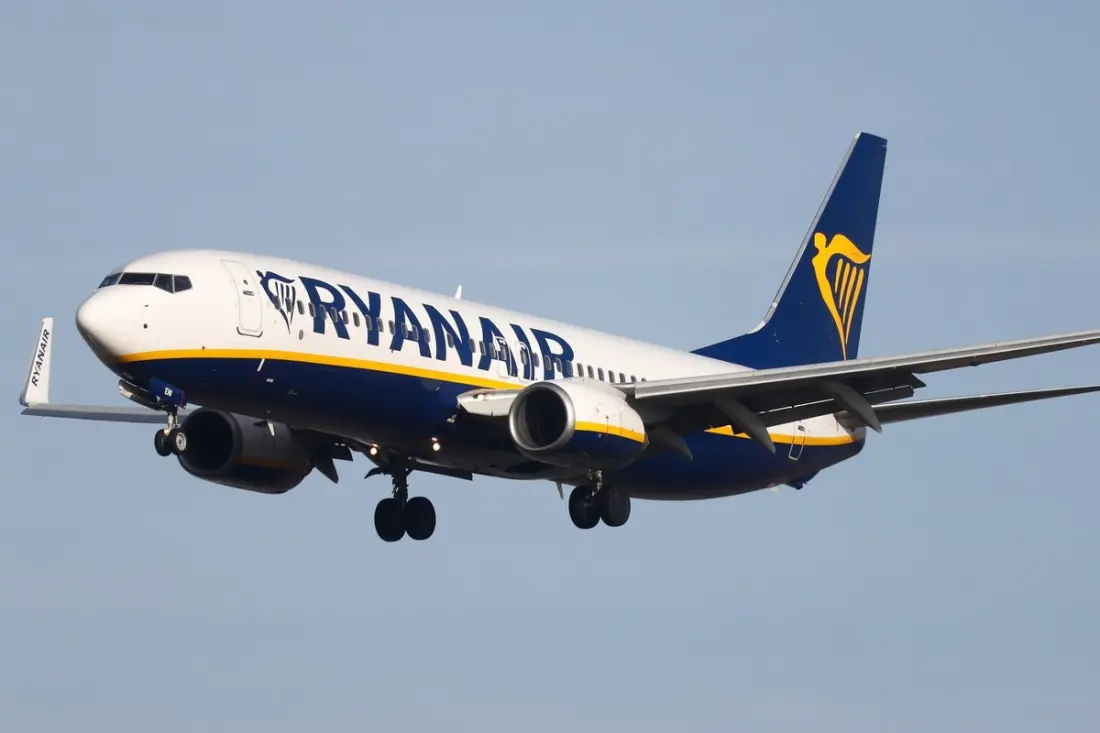
A Ryanair flight from Pisa landed in Manchester in October 2025 with barely enough fuel to keep flying for another ten minutes, after a failed diversion and a communications failure left it circling Britain in the teeth of Storm Amy.
The Boeing 737, carrying 171 passengers and six crew, was scheduled to fly from Pisa to Prestwick near Glasgow on 3 October, the day a major cyclone was hitting the UK with heavy rain and gale-force winds. Ryanair had warned crews about the storm in advance, so the pilots loaded extra fuel and agreed Manchester would be their backup airport thanks to its calmer weather. The flight was delayed by nearly an hour and a half before departing.
Things unravelled on arrival. With surface winds at Prestwick around 33mph gusting to 52mph, the pilots hit a windshear warning just 264 feet above the ground on their first approach — triggering a siren and an escape manoeuvre. A second attempt fared no better. Told that Manchester could not accept them, with no explanation given, they redirected to Edinburgh. While waiting five minutes for that diversion to be approved, the crew discussed a mayday but judged the situation didn't yet warrant it.
Then Edinburgh failed too — another windshear escape — and the commander pushed on to Manchester despite being 700kg below the fuel needed to land with final reserves. The fuel predictor showed they'd touch down with just 300kg, far under the 1,101kg final reserve, prompting a "MAYDAY MAYDAY MAYDAY FUEL" call. The plane landed at 7.52pm with 363kg of fuel, dropping to 240kg once engines were shut down. A Boeing 737 burns roughly 363kg in ten minutes, meaning there was little margin left — and no room for another aborted landing.
An Air Accident Investigations Branch report into the serious incident identified a "breakdown in communication" at Manchester, which should have accepted the diversion under its own policies. It also noted that stressed, overloaded pilots never considered nearer options like Newcastle, and may have been anchored by Manchester being their preferred alternate from the start. Manchester has since re-stated to stakeholders that diversion decisions rest with the airport, not handling agents.
For travellers, the story is a rare window into what happens when weather, fuel planning and air traffic coordination collide — and reassuring in one sense: the safety system caught a failing flight in time. Pilots had done everything right before departure, taking extra fuel for a storm they knew was coming. What failed was coordination on the ground, and that's now been addressed. If you're flying during big autumn or winter storms, expect approach aborts and diversions to be part of the picture — and know that a flight landing somewhere unexpected is often the safest outcome, not the scariest one.
The full findings come from the UK Air Accident Investigations Branch report covered by The Independent Travel.