Half an hour's drive from Newcastle upon Tyne, on the North Sea coast of County Durham, sits Easington Colliery — a village built from scratch in the early 1900s around a coal mine that once employed thousands and produced over a million tons of coal a year at its peak. Today the mine is gone (closed in 1993), but the village has quietly reinvented itself as a spot for coastal walks, wildlife and a dose of industrial history.
The story here isn't all gentle. In 1951 an underground explosion killed 83 men, one of the worst mining disasters in UK history, and the village later became a flashpoint of the 1984-85 miners' strike. If any single place sums up Britain's coal era, this is it — which is why "Billy Elliot" was filmed here.
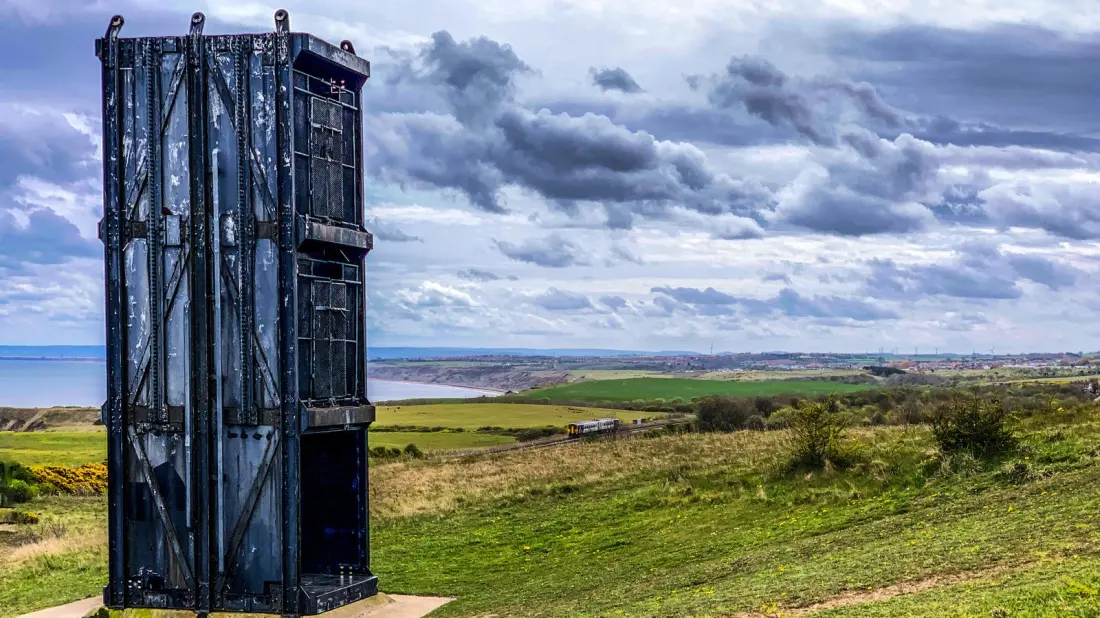
The heart of a visit is the Easington Colliery Nature Reserve, designated in 2014 on the old colliery site. The spoil heaps — mounds of mining waste — have been grassed and planted with trees and wildflowers, and now attract skylarks in spring and butterflies in summer. A replica mine shaft stands as a landmark, with plaques explaining the site's past. Walkers can choose an easy one-mile family loop or a 2.3-mile trail down to the coast, where views stretch over the North Sea.
Just before the reserve entrance is the Memorial Garden, first created after the 1951 disaster and inaugurated in 1954 on its third anniversary. Its centrepiece is a pit head wheel filled with coal, honouring everyone who worked the mine. It's small and enclosed, but it's the emotional anchor of the village.
For longer walking, paths connect to the Durham Heritage Coastal Path, a 17-mile stretch from Ryhope to Crimdon that forms part of the King Charles III England Coast Path — set to be the world's longest managed coastal route at nearly 2,700 miles once complete. Down at Easington Beach, a pebbly shore reached via steps (wear decent shoes), beachcombers report sea glass, iron deposits and old bricks from the industrial era, plus fossils against a backdrop of cliffs and dunes.
Why bother? Because this is the North East at its most honest — no crowds, no gift shops, just a working-class village that turned its industrial scars into a nature reserve and remembers its people properly. It pairs well with a Newcastle city break, or with nearby coastal spots like Newbiggin-by-the-Sea. Driving from Newcastle takes about half an hour; the Go NorthEast bus runs the route too, though it takes closer to an hour and 45 minutes. Go in spring or summer for the wildflowers and birds, and give yourself half a day to do the reserve, the garden and the beach justice.
Story sourced from Islands.