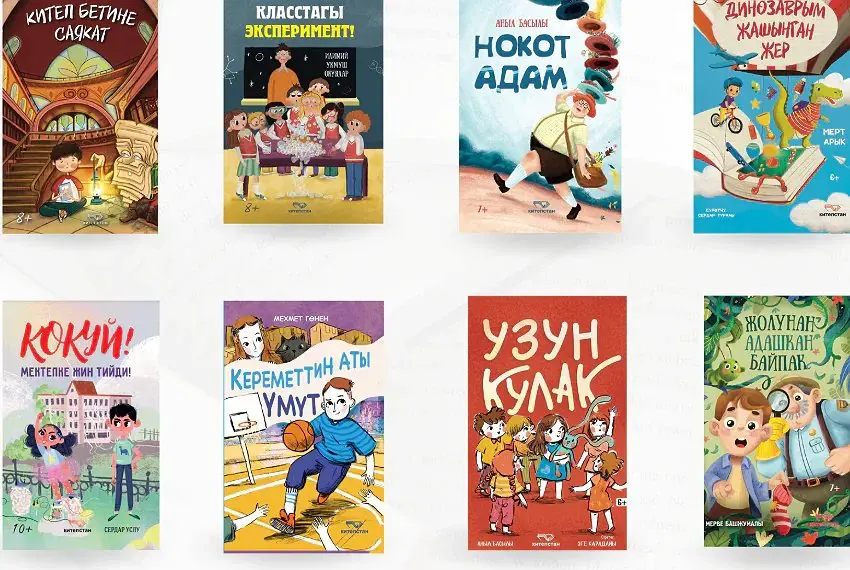
Kyrgyzstan published 1,350 book titles in 2025, with a combined print run of 927,000 copies — and roughly 70 percent of them came out in the Kyrgyz language, according to the country's National Statistical Committee. For a nation of under seven million people, that is a healthy publishing output, and the language split tells you something useful if you're heading there: this is a country where the national tongue is doing real cultural work, not just surviving.
There's a catch in the numbers, though. Speaking in parliament, MP Saltanat Amanova pointed out that religious literature makes up somewhere between 60 and 70 percent of everything published in the country. Strip that out, and the space devoted to fiction, history, poetry and general interest looks considerably thinner. It's a debate many post-Soviet states recognise: a revitalised national language, but a market skewed heavily toward one genre.
The government is paying attention. The Ministry of Culture, Information and Youth Policy is drafting a publishing development programme running through 2030, which aims to broaden what gets printed. Whether that translates into more bookshops, translations and literary festivals remains to be seen, but the intent signals that culture is on the policy agenda.
So why should a traveller care? Because Kyrgyzstan rewards travellers who look past the postcard. In Bishkek, the state-run bookshop on Chuy Avenue and the second-hand stalls near the Ethnomir and Osh bazaar area sell Kyrgyz-language editions of the Manas epic, Soviet-era classics and modern novels, often for the price of a coffee. A Russian translation or a thin English-language volume on Kyrgyz history is a far better souvenir than another fridge magnet, and language is central to how Kyrgyz people talk about their own identity — especially outside the capital, where Russian fades and Kyrgyz dominates.
The country's literary tradition is oral as much as printed: the Manas epic, at hundreds of thousands of lines, is one of the longest poems anywhere, and manaschy performers still recite it at celebrations. If you time a trip around Nowruz in March or a village toi (a family feast), you might hear living tradition that no print run can quite capture.
For culture-minded travellers pairing mountain trekking with city time, this is a good moment to go: the publishing scene is small but evolving, Bishkek has a handful of independent cafés and reading spaces worth an afternoon, and conversations about language and identity are happening openly. Just don't expect an English-language bookstore on every corner — bring a phrasebook or a translation app, learn a few words of Kyrgyz, and you'll get a warmer welcome almost everywhere.