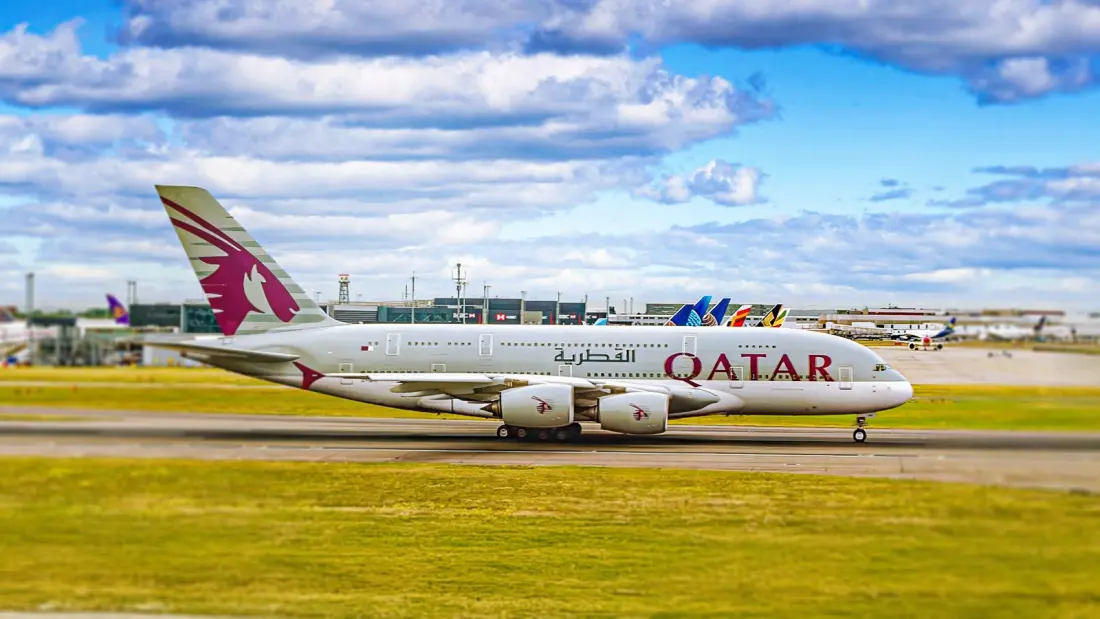
London Heathrow has spent decades arguing about a third runway, and after fresh government backing in 2025 it now expects one to be flying by the mid-2030s. The timing isn't casual. In 2026, Istanbul overtook Heathrow as Europe's busiest airport — the two traded places month by month, but Istanbul edged ahead — and the Gulf is building on another scale entirely.
The core problem is simple: Heathrow's two runways are effectively full. The airport caps itself at around 480,000 flights a year, handles more than 84 million passengers annually, and often cites runway utilisation of 99%. That makes its slots among the priciest on the planet and leaves airlines almost no room to add routes.
The approved plan is Heathrow Airport Holdings' $66 billion (£49 billion) scheme — chosen in November 2025 over the Arora Group's cheaper £25 billion "Heathrow West" alternative. It involves a full-length 3,500-metre northwest runway, a new T5X terminal, expanded cargo facilities, and tunnelling the M25 motorway underneath. Once done, capacity jumps 50% to 756,000 flights and up to 150 million passengers a year, with at least 30 new routes promised.
The competition is sobering. Istanbul is adding a fourth runway to lift capacity from 90 million to 120 million passengers, with long-term plans reaching 200 million. Dubai's Al Maktoum International is building a first phase opening in the early 2030s with capacity for 150 million, eventually targeting 260 million. Riyadh's King Salman International aims for 120 million passengers by 2030 and 185 million by 2050, with six runways.
The economic case is contested. Heathrow claims more than 100,000 UK jobs supported and a 0.43% GDP boost by 2050, but Department for Transport modelling suggests regional airports could lose out — Birmingham alone an estimated 7.5 million fewer passengers a year by 2050 — with aviation jobs drifting towards London and the South East.
For travellers, the practical takeaway is this: expect more route options, more competition and potentially softer fares out of Heathrow in the 2030s, but expect congestion and high fares to persist until then. If you're flying long-haul via the Gulf or Istanbul in the meantime, those hubs will only keep getting bigger — and often cheaper to connect through.
Story via Simple Flying.