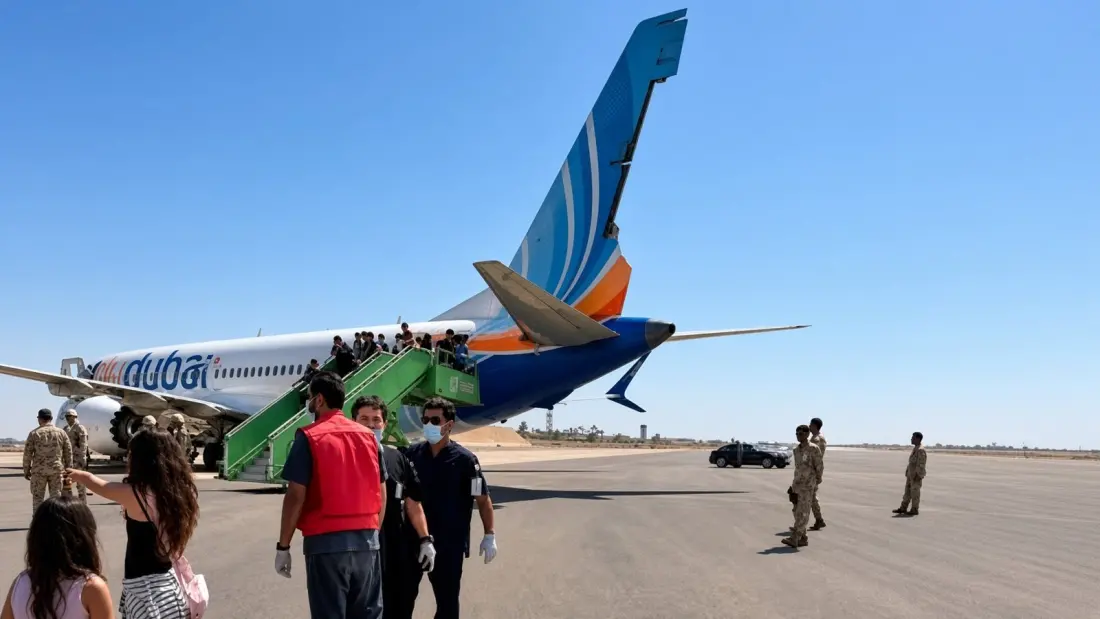
Investigators now say the flydubai first officer who attacked his captain mid-flight on 30 September intended to fly the Boeing 737 MAX 8 into the terminal at Ben Gurion Airport, keeping up appearances until the final approach. Instead, the aircraft ended up on the ground in Tabuk, Saudi Arabia, and all 170-plus people aboard survived.
The alleged attacker, 29-year-old Omani national Hamam al-Hammami, appears to have planned the operation before he was even hired. Reports say he researched airlines serving Tel Aviv, used a June visit to Ben Gurion to gather information, and abandoned an earlier July attempt because a friend was working that flight. Before joining flydubai he had reportedly been pulled from flying at Oman Air over extremist material found in 2024, moved to a desk job and put through a deradicalization program — and was also rejected by Royal Air Maroc after three months of training.
In the cockpit, the captain described the copilot asking to pray, then striking him on the back of the head minutes later. Blinded by his injuries and feeling the aircraft descend, the captain still managed to reach the door handle — the reinforced cockpit door, ironically, had been keeping rescuers out. Once it opened, passengers swarmed in. Plumber Yaniv Hayun put the attacker in a chokehold and briefly held the controls steady, later crediting the TV show Air Crash Investigation for knowing what to do. A dentist, Dr Shota Musaev, bound the attacker with headphone wires and treated the captain's wounds. Two off-duty pilots on board landed the jet in Tabuk. The plane had plunged roughly 16,000 feet in about 30 seconds; photos show heavy rudder damage.
The fallout is significant for anyone flying between the Gulf and Israel. Israeli authorities are working on the theory he acted alone but have asked the UAE to interview the flight attendants; the US President has floated an Iranian link without public evidence. A thorny question has surfaced: Israel bars pilots from countries without diplomatic relations from operating these routes, yet dozens of Omani pilots had apparently been flying them. Flydubai flights to Tel Aviv are now suspended, and the incident lands mid-dispute over security arrangements for Israeli carriers serving the Emirates.
For travellers, the practical takeaways are simple: check carrier status before booking Dubai–Tel Aviv routes while flydubai operations remain paused, and expect tighter scrutiny of crew vetting across Gulf carriers. The story is also a rare case where reinforced cockpit doors cut both ways — they keep threats out, but nearly kept rescuers from reaching a dying captain. Anyone who flies these routes regularly will be watching how Israel and the UAE reconcile crew-security rules in the months ahead.