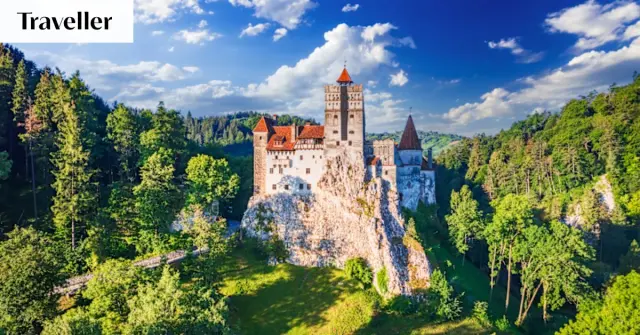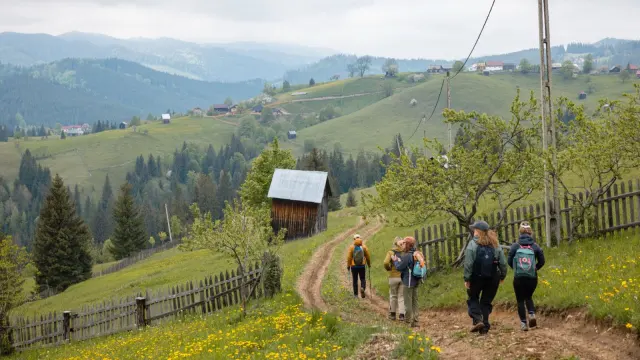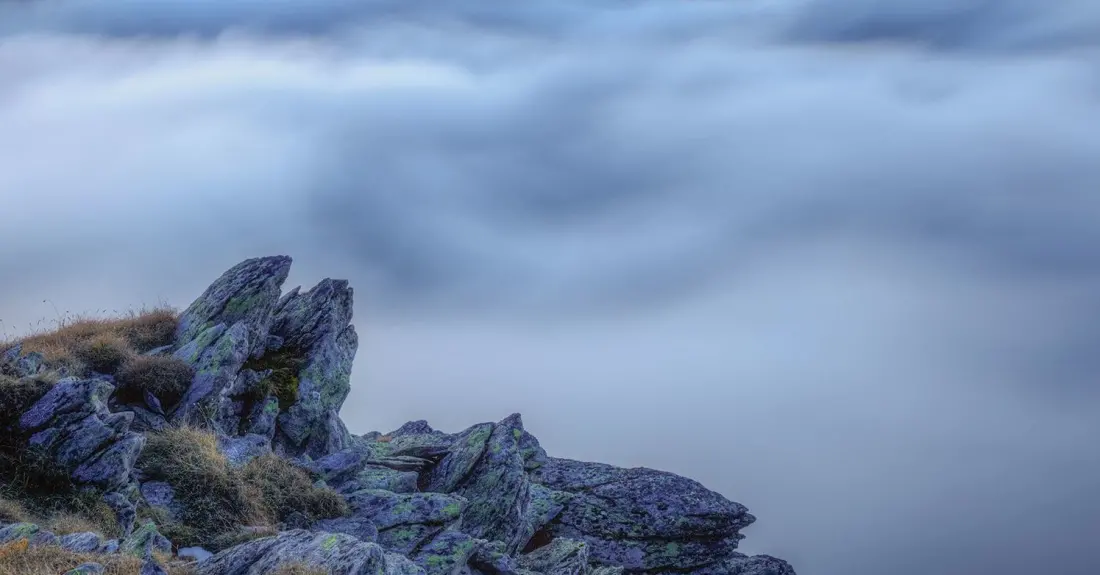
A 62-mile hut-to-hut traverse of the Făgăraş Mountains in southern Romania might be Europe's most atmospheric long hike — and one of its least known outside Eastern Europe. Two American backpackers did it in mid-October, reading Bram Stoker's Dracula aloud each night in mountain huts, and found the route lived up to both its wildlife credentials and its spooky reputation.
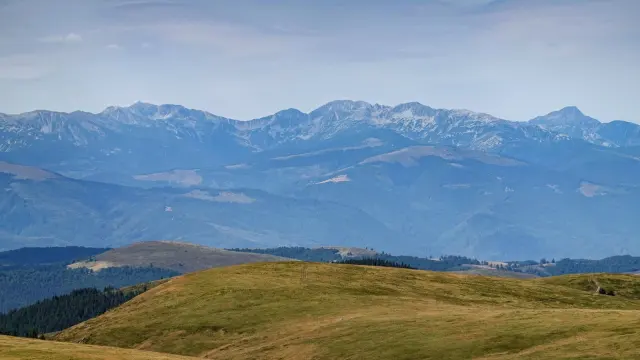
The trail runs along the serrated spine of the Transylvanian Alps, taking in Moldoveanu (8,346 ft), Romania's highest peak, and Negoiu (8,317 ft), the second highest. The route is well marked with signs and painted boulders, but it's serious mountain country: knife-edge arêtes with sheer drops, bolted chains and cables across rock towers that turn into a via ferrata in fog, and fast-changing weather. Snow fell on the hikers' bivouac at 4 a.m. one night, and lightning chased them off Negoiu's summit. Locals warn that ill-prepared hikers die in the Făgăraş every year — the two writers only managed some days because they were experienced rock climbers.
Accommodation is rustic. Stone refuges like Refugiul Vistea Mare are little more than sleeping platforms (one had anti-communist graffiti as decoration), while Cabana Podragu sits dark beside a black lake below the ridge. Book mountain lodges like Bâlea Lac and Cabana Podragu ahead — the writers were told Podragu was full, and bivvied behind a stone windbreak instead, under a 35°F bag that proved barely adequate.
The real star is the wilderness. Romania holds as many as 2,500 wolves — roughly 15% of Europe's population outside Russia — plus up to 5,000 Eurasian brown bears and around 2,000 lynx. The hikers found fresh wolf prints bigger than a fist on the summit descent, and watched a herd of distinctive black-and-white Carpathian chamois leap off rock buttresses. The wolf connection runs deep here: Transylvania's coat of arms is a wolf's head with a dragon's body, and Stoker's Count summons wolves at every sinister turn. Some researchers even link vampire myths to rabies — historical records tell of single rabid wolves biting dozens of people, with nearly all victims dying — and to pellagra, the corn-heavy medieval diet deficiency that causes sunlight sensitivity and bleeding gums.
For fit hikers, this is a rare combination: a genuinely demanding alpine traverse through one of Europe's last large-carnivore ecosystems, wrapped in the folklore that gave the world its most famous vampire. Go light but go prepared — and maybe pack a copy of Dracula.